Get Full Government Meeting Transcripts, Videos, & Alerts Forever!
Get email alerts on the Refugees Humanitarian Aid topic
No spam. Unsubscribe anytime.
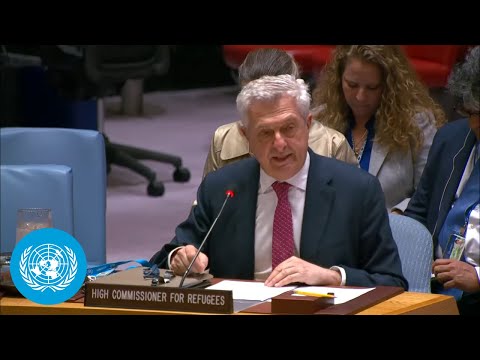
UN High Commissioner warns Security Council of worsening global displacement and urges renewed aid and diplomacy
Summary
Filippo Grandi, UN High Commissioner for Refugees, told the UN Security Council that global displacement is rising across Sudan, Ukraine, Myanmar, Syria and elsewhere, warned that humanitarian funding is falling and urged member states to act to protect refugees and support returns.
Filippo Grandi, the United Nations High Commissioner for Refugees, told the UN Security Council that the world is in “a season of war” and that 123 million people are forcibly displaced worldwide, urging the council and donor countries to increase humanitarian funding, prioritize diplomacy and take political and economic risks to enable safe returns.
Grandi said the scale and geographic spread of displacement — from Sudan and the Sahel to Ukraine, Myanmar and Syria — has placed extraordinary strain on host countries and humanitarian responders and warned that shrinking aid budgets are already producing “fatal consequences.”
Grandi opened by thanking the council and the French presidency for the invitation and said this address was “quite likely” his last as high commissioner. He described multiple crisis fronts: widespread fighting in Sudan that has uprooted roughly one in three people in parts of the country; more than 3 million Sudanese refugees hosted regionally with Chad and South Sudan especially affected; and a regional refugee appeal that is only 11% funded. He said he had recently visited Chad and met families who had fled El Fasha and Zamzam and that civilians in Darfur are frequently blocked from fleeing and sometimes actively targeted.
“This is a season of war. This is a time of crisis,” Grandi said. He cited an International Committee of the Red Cross finding that about 120 conflicts continue worldwide and said modern wars often produce multiple armed groups and local militias, intensifying displacement and complicating aid delivery.
On Ukraine, Grandi said UNHCR works closely with the government and local partners and warned that planning for eventual returns must include security, housing, services and jobs. He recalled that more than 10 million Ukrainians are displaced, about 7 million of them refugees, and said returns will depend on conditions that ensure returnees’ safety and livelihoods.
Grandi described the Rohingya situation as stagnating for years and noted that about 1.2 million Rohingya remain refugees, mostly in Cox’s Bazar, Bangladesh, where half the refugee population is under 18. He said Bangladesh has provided refuge but that refugees in the camps lack opportunities and depend on precarious humanitarian aid.
On Myanmar, Grandi urged the council to seize unexpected opportunities for dialogue and to support humanitarian access once security allows. On Syria he said there are signs of returns: “we estimate that over 1,000,000 people have already returned” since December 8, but cautioned that durable returns will require eased sanctions, early recovery support, private investment and sustained humanitarian assistance.
Grandi repeatedly framed aid as essential to stability and warned against retreating from multilateral approaches. “Aid is stability,” he said. He noted donor countries are prioritizing national spending and defense in some cases but said those choices are not inherently incompatible with continued humanitarian support.
He warned that shrinking aid budgets risk abandoning displaced people and undermining the stability of host countries, and urged the Security Council to prioritize peace, negotiate where possible and not “resign yourselves to the defeat of diplomacy.”
The address noted other displacement pressures, including more than 200,000 Sudanese in Libya and broader spillover effects into neighboring countries. Grandi called on member states to be “more committed and more united” in meeting obligations to refugees and host communities.
The session concluded with a formal acknowledgement from the council president and Grandi’s thanks to the body. Grandi emphasized the need for sustained financing and political will to turn potential openings into durable solutions for displaced people.