Get Full Government Meeting Transcripts, Videos, & Alerts Forever!
Get email alerts on the Gaza Humanitarian topic
No spam. Unsubscribe anytime.
UN warns Gaza aid access collapsing; legal counsel urges compliance with international law at ICJ
Summary
The United Nations said Feb. 27 that humanitarian operations in Gaza are “severely constrained” and that ongoing attacks and the blocking of goods have left aid stocks critically low, forcing community kitchens to close and worsening child malnutrition.
The United Nations said Feb. 27 that humanitarian operations in Gaza are “severely constrained” and that ongoing Israeli attacks and the blocking of commercial goods have left aid stocks critically low, forcing community kitchens to close and worsening malnutrition among children.
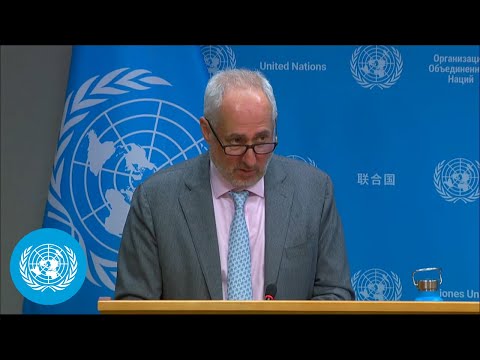
UN spokesperson Stéphane Dujarric told reporters that partners reported 16 community kitchens closed over the weekend and more closures expected as supplies run out. “People in Gaza rely on these meals as their only consistent source of food assistance,” he said.
The UN legal counsel presented the organization’s written statement to the International Court of Justice on Feb. 27 and told the court that "all parties to a conflict, not just Israel, must comply with all their obligations under international law, including international human rights law and international humanitarian law at all times," according to Dujarric's briefing. The statement, the spokesperson said, was submitted to the court on Feb. 27.
Why it matters: the spokesperson framed the situation as a rapidly worsening humanitarian emergency that also raises questions about the protection of UN personnel and the organization’s ability to deliver aid. With stocks depleted, partners reported rising acute malnutrition among children and a shrinking ability to provide trauma and surgical care.
More facts from the briefing: - Humanitarian partners reported about 10,000 cases of acute malnutrition among children since the start of the year, including roughly 1,600 cases of severe acute malnutrition. - Warnings that stocks depletion would force kitchen closures preceded the recent shutdowns; partners say more kitchens may close this week. - Water production has dropped about 20% over the past three weeks because fuel is inaccessible or in hard‑to‑reach areas, affecting well extraction and distribution points. - Medical warehouses have run out of therapeutic milk, certain intravenous antibiotics and painkillers, and spare parts for ambulances and oxygen stations, the spokesperson said. - Aid operations have faced increasing denials of access for specialist emergency medical teams, including orthopedic and plastic surgeons.
Dujarric said reports of looting had increased amid scarcity, and that some incidents over the weekend involved armed individuals. "Whether people who are stealing aid are doing it out of desperation, whether it's criminal, gangs or other groups doing it to steal and then sell, I don't know," he said. "But what we do know is that there's less and less material, commodities in Gaza."
The spokesperson reiterated the UN position that, as "the occupying power," Israel has obligations under international law to facilitate relief and ensure civilians and aid workers are protected. The legal counsel’s presentation to the ICJ, Dujarric said, addresses "crucial issues related to the protection of the work of the UN on the ground, not just in the occupied Palestinian territory, but elsewhere in the world."
The briefing also noted secondary impacts: increased displacement after orders by Israeli forces, reduced access to mental‑health and child services, and widespread interruptions to schools and teachers.
The UN continues to call for unimpeded humanitarian access and for all parties to respect obligations under international humanitarian law. No new, binding enforcement action or change of UN policy was announced at the briefing.