Get Full Government Meeting Transcripts, Videos, & Alerts Forever!
Get email alerts on the Property Tax Charitable Housing topic
No spam. Unsubscribe anytime.
Committee weighs proposal to address tax treatment after court ruling on charitable housing
Summary
Following a court ruling that some charitable housing operators are tax‑exempt, Senate File 2915 would clarify state law so assessors do not place personal property tax burdens on low‑income tenants. County assessors testified the ruling has created valuation and administration issues; the committee laid the bill over to pursue a solution.
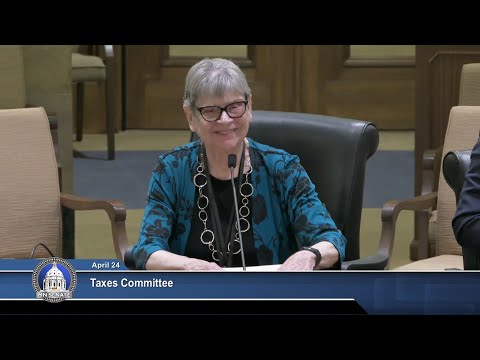
Senate File 2915, presented April 24, 2025 by Senator Rest, responds to a court ruling (Alliance Housing) that found certain housing owned by institutions of purely public charity is exempt from property tax. The decision has led county assessors to consider taxing tenants via personal property accounts for leases, which assessors and county officials said would shift tax burdens to low‑income residents. The Taxes Committee heard assessors’ concerns and laid the bill over.
Senator Rest framed the problem: the court’s decision removed property‑tax liability from the owner for some housing operated by charities, but state law still provides mechanisms (statutes 272.01 and 273.19 were discussed in testimony) that assessors use to tax private use or other characteristics, potentially resulting in personal property tax accounts placed on tenants. Assessors told the committee they have issued valuation notices and face administrative difficulties because exempt owners have declined to provide tenant data needed to set up individual accounts.
Josh Hoagland, Hennepin County Assessor, testified on behalf of the Minnesota Association of Assessing Officers that the ruling and the interaction with statutes could force assessors to place personal property tax liability on tenants. “At this point there are several dozen that have already received valuation notices for the '25 assessment and will be liable for taxes in 2026,” he said. Ben Thomas, deputy county assessor for St. Louis County, said the decision already resulted in an exempted $5.2 million apartment property in Duluth and petitions that could extend to more than $200 million of 4D low‑income housing classification in his county; he urged statutory clarification to preserve tax-base administration and stability.
Senator Rest presented the bill as an idea to address the competing policy goals—honoring the court ruling and protecting low‑income tenants—and said he did not necessarily advocate the precise language but wanted the committee to take it up. The panel laid the bill over and said further work with stakeholders will continue.