Get Full Government Meeting Transcripts, Videos, & Alerts Forever!
Get email alerts on the Budget topic
No spam. Unsubscribe anytime.
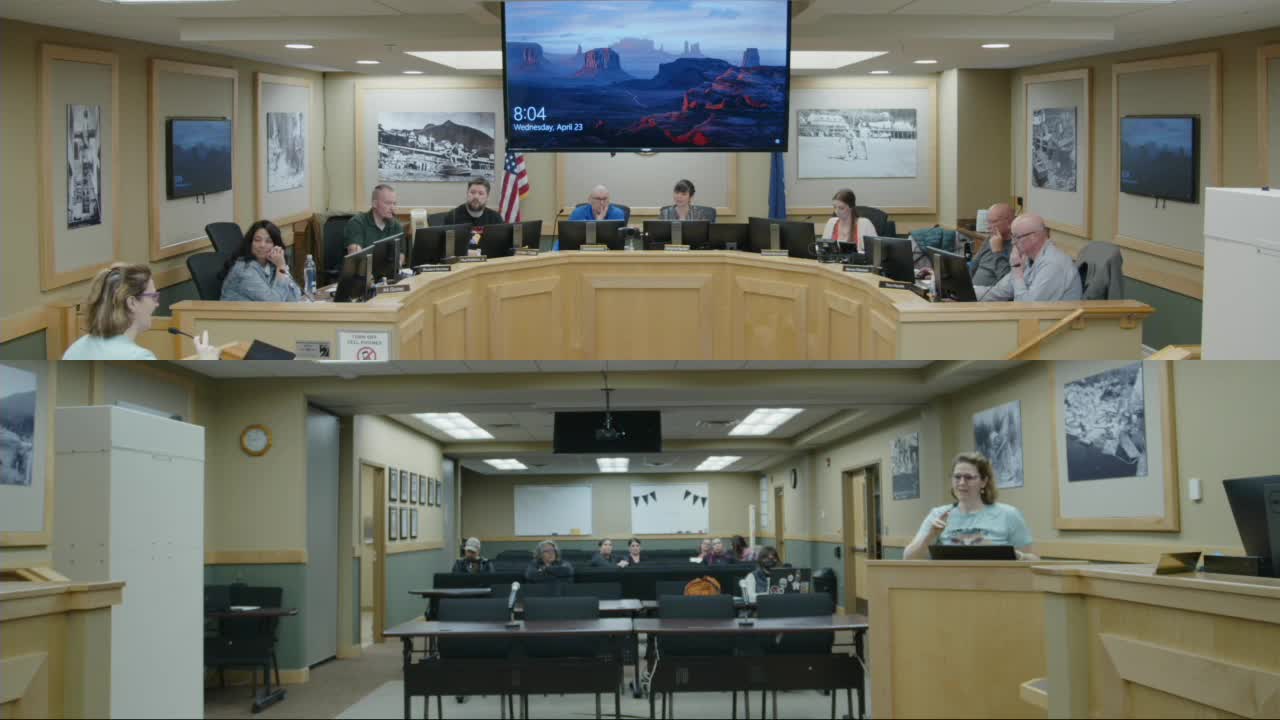
Ketchikan school board approves first reading of FY26 budget after heated public criticism
Summary
The Ketchikan Gateway Borough School District board approved the proposed fiscal 2025–26 budget on first reading 5–1 on April 23 after a public hearing at which residents raised concerns about missing numbers, restricted funds and a $4 million negative beginning fund balance.
The Ketchikan Gateway Borough School District Board of Education approved the district’s draft fiscal year 2025–26 budget on first reading at its April 23 meeting, voting 5–1 to move the plan to a second public reading next week.
The budget passed with votes from Board members Paul Robbins Jr., Hewitt, Vice President Tabb, Stephen Thomas and President Catherine Tatsuta. Member Ginter cast the lone no vote, saying she was not yet comfortable approving a first reading without more time to review.
The vote followed a public hearing in which several residents sharply criticized the budget document as incomplete and inconsistent. “There are so many zeros and dashes where there should actually be numbers,” said resident Ms. Urquhart during citizen remarks, citing discrepancies she found between line items and asserting the budget showed a $4,000,000 beginning fund balance deficit based on the district audit.
District business manager Daniel Schueller, joining the meeting by Zoom to present the budget, said the $4,000,000 figure cited by speakers is the beginning fund balance carried into FY26 and “does not mean that this budget is in deficit.” He said the budget as presented anticipates results from operations for FY26 that would be positive if revenues materialize as projected.
Schueller told the board the draft assumes additional state funding, roughly $6.80 per student outside the State Base Student Allocation (BSA), on which the district relied in constructing the FY26 plan. He cautioned that if the legislature and governor do not provide the assumed increase the district would need “extreme cuts” of roughly $3.5 million to close the gap.
Speakers at the hearing raised multiple concerns about transparency and accounting. One resident who reviewed both the budget and a proposed five‑year computer lease said she found multiple spelling errors in the contract and asked whether the district had accurately estimated return, shipping and insurance costs for leased devices. Another attendee asked whether restricted funds for transportation or food services had been used to cover general shortfalls; Schueller and board members said the district is not transferring money out of the food services fund and that transportation currently lacks an available fund balance.
The presentation included budget details the district used to build the proposal: a projected adjusted average daily membership (ADM) of 1,917 students; an assumption of the $6.80 BSA increase outside the base used in legislative proposals; and estimated staffing reductions of roughly 13 full‑time equivalents in the operating fund. Schueller said employee benefits and utilities will compose over 92% of the spending plan, limiting options for cuts.
Board members debated the prudence of building a budget on an assumption of additional state funding. Several members said repeating last year’s approach — adopting a conservative “austerity” plan that forced layoffs and pink slips — had been disruptive to staff and community, and they preferred to budget using the anticipated state increase while retaining the ability to revise the plan if funding falls short. Member Ginter said she could not responsibly support even a first reading without more time to digest the packet.
The board will hold a second public reading and vote on the budget at the April 30 meeting. The district must submit its appropriation request to the Ketchikan Gateway Borough by May 1; Schueller said the borough’s planned discretionary contributions and in‑kind items (including building insurance and banking fee support) are already factored into the proposed appropriation.
The board directed staff to collect written questions from members and the public and return consolidated answers in time for the next meeting. The superintendent indicated he and staff would provide follow‑up detail on restricted funds, grant allocations and the projected schedule for eliminating the district’s health insurance note receivable if borough contributions remain as proposed.
The vote on the first reading was recorded by roll call: Robbins Jr. — aye; Hewitt — yes; Tabb — aye; Thomas — yes; Ginter — no; Tatsuta — yes. Motion carried 5–1.