Get Full Government Meeting Transcripts, Videos, & Alerts Forever!
Get email alerts on the Wastewater topic
No spam. Unsubscribe anytime.
Bangor outlines wastewater challenges, consent‑decree work and upcoming interlocal agreement talks with Hermon and Hampden
Summary
City staff summarized wastewater system scale, progress under a 2015 EPA consent decree, staffing and technical upgrades, and described renegotiation of 1996 interlocal agreements with the towns of Hermon and Hampden.
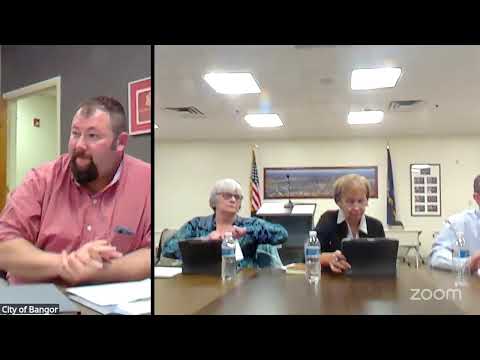
Amanda Smith, director of Water Quality Management for the City of Bangor, told the city’s Infrastructure Committee on April 23 that the department treats about 3,000,000,000 gallons of sewage a year and faces intensive work during the final five years of a 15‑year EPA consent decree.
Smith said the department operates one of the state’s largest and oldest sewer systems, with roughly 150 miles of public sewer lines and numerous private lines. “We are heading into the last 5 years of a 15 year EPA consent decree, so it's going to get busy really fast,” she said. She described two departmental divisions — a Sewer Collection System Division and the Treatment Plant — and said the treatment plant is a grade 5, biological system that requires licensed operators.
The nut of Smith’s presentation was operational capacity and compliance. She said the city has been focusing on succession planning after a wave of retirements and turnover since 2019. “Our sewer crew average tenure is 2.7 years,” Smith said, and the plant recently added a third grade‑5 licensed operator, bringing the grade‑5 operator count to three. Smith credited staff for exceeding consent‑decree inspection targets: the decree requires inspecting and documenting 10% of lines annually (about 15 miles), yet the department inspected more than 27 miles and cleaned over 70 miles in the past year.
Smith described a recent SCADA upgrade — the plant’s control system — and the operational changes that upgrade required. “It was probably the most technical and the most stressful project that that department has ever done,” she said, and added the upgrade has “changed the way we operate literally every single component in that plant.” She also highlighted the Davis Brook storage tank, a roughly 3,800,000‑gallon tank that doubled the city’s wet‑weather storage and helped reduce overflow volumes and sanitary sewer overflow occurrences, though it did not reduce the number of combined sewer overflow (CSO) events citywide.
Smith explained CSOs to the committee and the treatment limits the plant can accept: “The treatment plant is taking the maximum flow that it can, which is 43,000,000 gallons in a day; anything above and beyond that cannot go through the treatment plant, and it needs to go somewhere.” She said the city has nine licensed CSO outfalls and that the long‑term control plan — required under the consent decree — aims to reduce CSO events to four per year or fewer. Smith reported the city experienced 21 CSO events last year and said changing storm patterns (more intense, short‑duration rains, and rain on frozen ground) are complicating progress.
Smith also described ongoing work on interlocal wastewater agreements with the towns of Hampden and Hermon. The current agreements date to 1996 and expire at the beginning of next year. Under the 1996 framework, Hampden purchased roughly 8.33% of plant capacity and bills its own customers; Hermon holds a much smaller share but currently enters the Bangor collection system at two points and relies on Bangor for collection operation and billing. Smith said Hermon’s delivered flows during wet weather are “about double what we're actually billing to their customers,” and one pump station that serves Hermon — Perry Road — is over capacity and limits development.
To address that, Smith said the new interlocal agreements will seek to align Hermon with Hampden’s model: Hermon would bill its own customers and establish a revenue source to maintain its collection system. She described a proposed approach tying additional developer sewer capacity to projects that remove extraneous inflow and infiltration on a gallon‑for‑gallon basis. “As they remove extraneous flow gallon for gallon, we can free up capacity for them to approve development,” she said.
Smith said the city is preparing a draft agreement and has engaged outside counsel for drafting advice, and she said staff will pursue a capacity study (an RFP is being prepared) to determine available plant capacity and reserve needs. She said she has queried the Maine Department of Environmental Protection about whether recent changes in the federal government would affect the state revolving fund loan match; DEP advised there was no anticipated impact at the time of the meeting.
The committee asked follow‑up questions about institutional knowledge loss after long‑time retirements, and about how the interlocal agreement would handle emerging contaminants and regulatory changes. On that point, Smith said the agreement will include language addressing emerging contaminants generally — not naming specific compounds — and that costs would be allocated depending on origin. “If the PFAS contamination, for example, creates costs for us based on PFAS that was in Bangor, those towns wouldn't be burdened with that. But if the PFAS, for example, is coming from one of those towns, then Bangor’s ratepayers would not be burdened with that,” she said.
The department also noted investments the committee previously approved, including asset‑management software and a recently purchased replacement sewer flusher truck, and invited committee members to tour the treatment plant.
Ending on next steps, Smith said staff will return with draft interlocal agreement language, a capacity study RFP and related materials.