Get Full Government Meeting Transcripts, Videos, & Alerts Forever!
Get email alerts on the Newborn Screening Midwifery topic
No spam. Unsubscribe anytime.
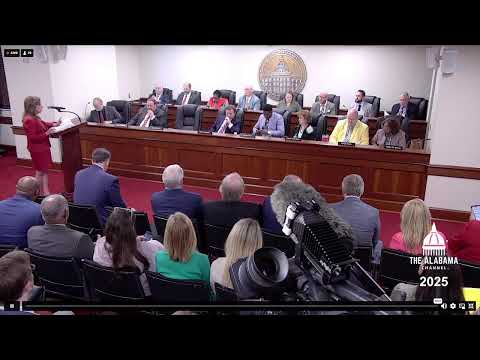
House Health Committee backs bill allowing limited newborn screening changes amid split testimony
Summary
The House Health Committee gave Senate Bill 87 a favorable report April 23 after a divided public hearing on whether certified midwives should be permitted to perform parts of the state-mandated newborn screening process.
The House Health Committee gave Senate Bill 87 a favorable report April 23 after a divided public hearing on whether certified midwives should be permitted to perform parts of the state-mandated newborn screening process.
SB 87, carried to the committee on behalf of Senator Stutz (introduced to the committee as a Senate bill carried by a representative), was described by the sponsor as a measure that originally included language about freestanding birthing centers and three newborn screening tests; two of those tests were removed in the Senate substitute that passed before the bill reached the House committee.
Why it matters: Witnesses told the committee the change affects access to care in rural counties that lack hospital obstetrics. Supporters said midwives frequently provide postpartum and newborn screening services where hospitals are distant; opponents — including pediatric and hospital representatives — said the clinical interpretation of results and follow-up care should remain in a medical-home setting.
Supporters and rural access Aaron Crawford, president of the Alabama Birth Coalition, framed the change as an access and lifesaving issue: "58000 babies are born in Alabama yearly. 290 of that 58000, or 1 in 200, face silent killers, metabolic disorders, heart defects," he said, arguing midwives are "lifelines, especially where doctors are scarce." Crawford said states such as Oregon and New Mexico demonstrate trained midwives can match hospital screening results.
Mariah Cranford, who identified herself as a certified professional midwife and former clinical director for a large midwifery education program, told the committee certified professional midwives are trained "in the care of mothers and newborns through the first 6 weeks postpartum" and that her clinical work in other states has included performing newborn exams, administering newborn screening specimens and conducting critical congenital heart screening with referrals to pediatric cardiologists when needed. "Per our national accreditation, certified professional midwives are trained and educated in the care of mothers and newborns through the first 6 weeks postpartum," she said.
Concerns from pediatricians and hospitals Linda Lee, speaking on behalf of the state's pediatricians and reading a statement from Dr. Nola Jean Ernest, said home-birth midwives do not have equivalent training or clinical experience to pediatricians or neonatologists and emphasized follow-up testing and interpretation "should be performed by the pediatrician, family physician or nurse practitioner within the context of a medical home."
Dane Howard of the Alabama Hospital Association said hospitals "have not abandoned labor and delivery" and signaled support for the version of the bill that passed the Senate while urging continued work to improve access to care.
Committee action and next steps A motion for a favorable report was made and seconded by Representative Francis Hope Jones; the committee recorded that "the bill passes with a favorable report." The committee did not record a roll-call tally on the floor transcript excerpt but the measure advanced from committee as favorably reported.
Discussion versus decision The record shows extensive discussion in public comment and among committee members about training, clinical oversight, and rural access. The committee took formal action to give SB 87 a favorable committee report; no committee-level amendments or substantive conditions were recorded in the excerpted transcript.
Clarifying details - Sponsor note: The sponsor said the bill originally included freestanding birthing center language and three newborn screening tests; two tests were removed in the Senate substitute (details on which specific tests were not specified in committee testimony). Source: sponsor remarks to committee. - Workforce/context: Witnesses said only 24 counties have hospital obstetrics while midwives serve many rural counties; one witness stated "There are 43 counties abandoned," attributed to a midwifery advocate. - Transfers and outcomes: At one point a speaker summarized six years of reported midwifery statistics as "200 transfers out of 1902 births, and that's 11 percent," and said there had been no maternal or infant deaths in that period; the transcript did not provide an external citation for those figures.
What the committee did not decide The committee record included no new statutory text citations, no specific implementation timetable in committee, and no committee-level requirement that certain screenings be interpreted only by named provider types; testimony referenced the "state-mandated newborn screen" and the Alabama Department of Public Health screening language but did not include statutory citations in the hearing transcript.
Ending note With the committee's favorable report, SB 87 will move to the next step in the legislative process; proponents and opponents left the committee with sharply different views about balancing access in rural areas against centralized clinical oversight and follow-up care.