Get Full Government Meeting Transcripts, Videos, & Alerts Forever!
Get email alerts on the Wildfire Mitigation topic
No spam. Unsubscribe anytime.
Lake Elsinore officials briefed on new Local Responsibility Area fire-hazard maps, adoption deadline in July
Summary
City staff and Riverside County Fire presented new Local Responsibility Area (LRA) fire hazard severity maps, explained new building and defensible-space requirements, and said the city must adopt the maps within 120 days of receipt (deadline in July). Councilmembers asked about enforcement, homeowner responsibility and fence materials.
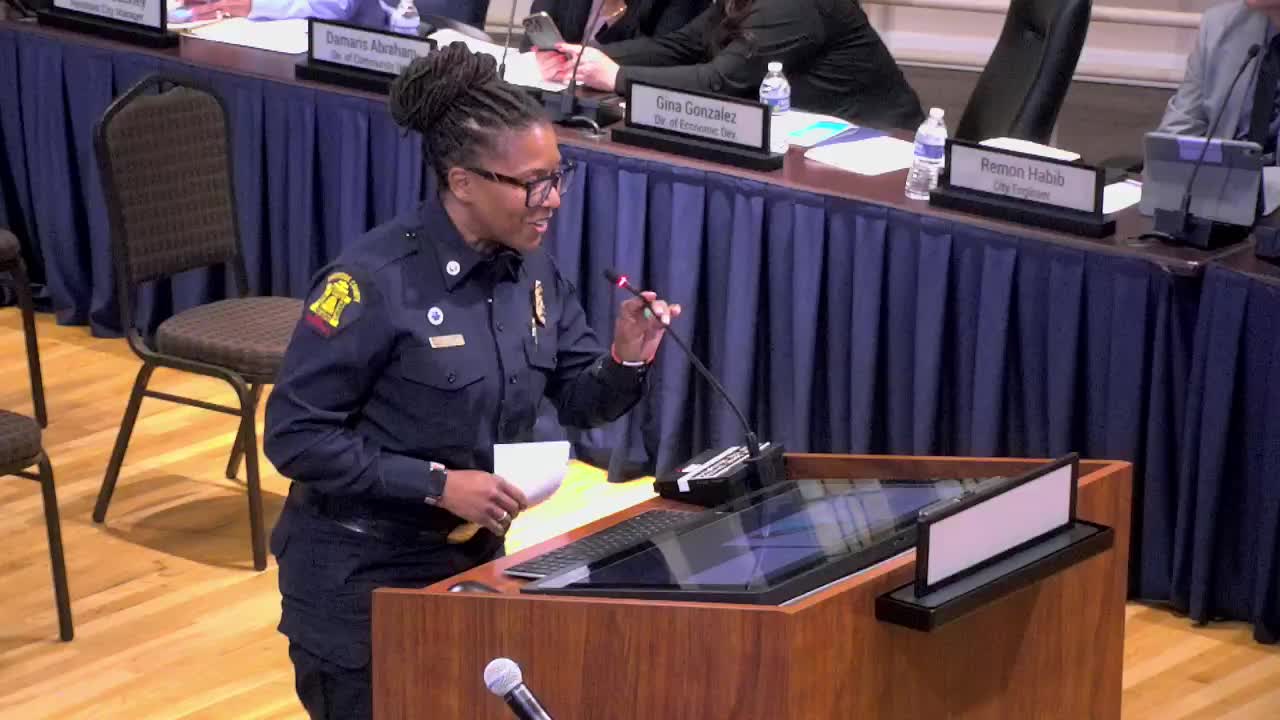
Tracy Williams, the city’s fire marshal, and Kylie Tillama, assistant fire marshal with Riverside County Fire, told the Lake Elsinore City Council that the state has issued updated Local Responsibility Area (LRA) fire-hazard severity maps and that local agencies must adopt those maps within 120 days of receipt — establishing an adoption deadline in July.
Williams said the new maps expand designated high- and very-high-risk areas within the city and will carry new requirements tied to each designation. She said the maps “do not supersede the state responsibility areas” but will coexist with them and that local agencies may not reduce map coverage though they may increase it.
The presentation outlined layered requirements tied to map designations. Williams described the defensible-space framework and home-hardening guidance that will apply in expanded zones: a Zone 0 ember-resistant area from 0 to 5 feet around structures, a 0–30 foot “lean, clean and green” zone of removed dead or dying material and cleared gutters, and thinning out to roughly 100 feet for spacing of vegetation. She said some remodels or additions may trigger additional requirements. Williams said one new requirement in the high-fire area will take effect January 1, 2026, and the city is “highly recommending people do it now.”
Assistant Fire Marshal Kylie Tillama explained materials guidance for the 0–5-foot zone: "a wooden vinyl fence wouldn't be allowed in that 0 to 5 foot space," she said, and noted final regulations are pending Board of Forestry rulemaking with anticipated releases and a public workshop. Tillama said the 0–5-foot rules are aimed at creating an ember-resistant zone where “you can have nothing flammable.”
Councilmembers pressed staff on enforcement and homeowner obligations. Williams said maintenance in the high-fire zone is recommended and that in very-high-fire zones maintaining defensible space is required; enforcement would take place through the city’s weed- or hazard-abatement program and could result in notifications and code-enforcement fines where violations are identified during abatement actions. On responsibility for vegetation on larger adjacent parcels — such as levees or common open space — Williams said responsibility depends on prior agreements, tract maps or CC&Rs and encouraged residents to seek city assistance to identify responsible parties.
Williams summarized outreach steps: the maps were published with a 30-day public-comment window at issuance, and the city has 120 days to adopt and forward materials to the Board of Forestry. She said the maps expand local-area designations by an estimated 20–23 percent for Lake Elsinore and directed residents to the city and Riverside County Fire websites for interactive maps and more guidance.
Councilmembers asked for additional public examples and photos to clarify what compliance looks like for ordinary yards and emphasized the city will provide resources and keep public comment open through the adoption process.
The presentation repeatedly framed the map updates as state-mandated: Williams and the council noted the mapping and rule framework derive from state law and Board of Forestry processes, and that local adoption is required rather than discretionary.