Get Full Government Meeting Transcripts, Videos, & Alerts Forever!
Get email alerts on the Public Safety Human Trafficking topic
No spam. Unsubscribe anytime.
Long Beach council orders study after residents decry years of visible trafficking on Long Beach Boulevard
Summary
Councilmembers asked the city manager to produce a 120‑day assessment of human trafficking along Long Beach Boulevard, after residents, school principals and nonprofits described persistent solicitation, unsafe conditions near schools and gaps in enforcement tied to state law changes.
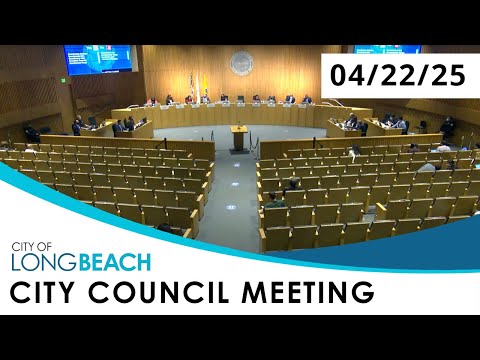
The Long Beach City Council on April 22 directed the city manager to prepare a coordinated report within 120 days on human trafficking and related public‑safety impacts along Long Beach Boulevard in North Long Beach.
The motion, introduced by Councilmember Rick Soady and co‑authored by Councilmember Joanie Ricks‑O'Dey (Thrash Ntuk), requests an assessment of current city efforts, barriers to enforcement, potential changes to nuisance‑motel and nuisance‑abatement rules, and state and federal legislative options to strengthen tools and survivor services. "This is a long‑time, 50‑year issue on the Long Beach Boulevard corridor," Soady told the council as he described the historical pattern of motel conversion and displacement of illicit activity.
Residents, school leaders and nonprofit representatives gave more than two dozen public comments describing daily solicitation, discarded condoms and drug activity near schools, child‑care centers and businesses. Star King Elementary Principal Jendela Faulkner said students and parents regularly witness sexualized activity: "Children have reported seeing women half naked and engaging in acts they don't understand," she said. "We need a multi‑pronged safety campaign that includes enforcement, prevention, access to services and community‑based restoration."
Councilmember Thrash Ntuk urged an integrated, survivor‑centered approach. She asked staff to focus on four pillars: "police powers, partnerships, properties, and policy," noting regional coordination with neighboring cities and L.A. County is essential. She also cited the 2022 state law change: "The recent decriminalization of loitering for the purpose of prostitution under Senate Bill 357 has limited enforcement tools," she said, adding that the change makes it harder for officers to intervene before visible solicitation.
Chief Isaiah Hebesh of the Long Beach Police Department told the council residents should continue to report suspicious activity to dispatch because that data helps prioritize deployment and shape operations. City staff said they will propose short‑, medium‑ and long‑term actions in the 120‑day report and reactivate an interdepartmental team to coordinate enforcement, code and public‑health responses.
Speakers representing Long Beach City College, neighborhood associations, businesses and survivors urged immediate steps, including stronger nuisance enforcement, lighting and cleaning of public spaces, targeted outreach to people being exploited and regional strategies to avoid displacement of activity into adjacent cities. A trustee for Long Beach City College, reading a statement from a colleague, said LBCC supports a public‑health informed strategy addressing root causes and survivor support.
The motion passed with the council announcing "motion is carried" in the record; no roll‑call tally was provided in the meeting transcript. Councilmembers said the item responds to repeated neighborhood requests and to the city's strategic goals on community safety and racial equity.
City staff will return with the requested assessment and recommendations within 120 days and were asked to specify short‑term steps that can be implemented quickly while the broader strategy is developed.
Community members who testified will be able to meet briefly with councilmembers after the meeting for further discussion; staff said neighborhood engagement will be part of the planned assessment.