Get Full Government Meeting Transcripts, Videos, & Alerts Forever!
Get email alerts on the Public Safety Human Trafficking topic
No spam. Unsubscribe anytime.
Long Beach council asks city manager for review of human‑trafficking activity, nuisance‑motel enforcement along Long Beach Boulevard
Summary
After extensive public testimony, the council approved a request that the city manager report back within 120 days on human‑trafficking activity and enforcement options along Long Beach Boulevard, with emphasis on impacts near schools, nuisance‑motel tools and regional coordination.
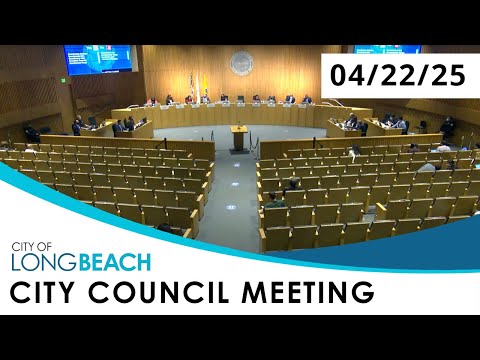
The Long Beach City Council on April 22 voted to ask the city manager to prepare a comprehensive review of human‑trafficking and related public‑safety impacts along Long Beach Boulevard and return to the council within 120 days.
Councilmembers Rick Soady and Joanie Ricks‑Odey brought the item after months of neighborhood requests and dozens of public comments describing visible solicitation near schools, day cares and businesses in North Long Beach. The motion, which the council carried, asks the city manager to catalog the scope of activity, the city’s current programs, enforcement barriers and potential legislative or operational options to better protect residents and survivors.
Councilmember Rick Soady said the corridor has been a long‑standing hotspot for solicitation and trafficking, and he urged a “renewed attention and resource realignment” after staffing and pandemic shifts reduced earlier enforcement capacity. Soady cited earlier data prepared for a 2018 nuisance motel pilot showing the Luxury Inn and another motel generated about 1,500 calls for service between January 2014 and May 2017; the pilot then recorded a roughly 30% reduction in calls at targeted motels. He also told the council that, in current patrol data, North Division handles 86% of prostitution‑related calls citywide.
Councilmember Thrash Ntuk framed the proposal around four pillars: local law‑enforcement coordination, survivor‑centered partnerships and public‑health responses, nuisance‑motel property strategies (including land‑use tools and possible verification requirements), and legislative advocacy to shore up enforcement tools. She and other speakers emphasized that recent state law changes — cited in the meeting as Senate Bill 357, which removed loitering for the purpose of prostitution as an automatically arrestable offense — have constrained earlier tactics and made a multiagency, public‑health approach necessary.
Chief of Police Hebesch urged residents to continue reporting suspicious activity to police dispatch even where arrests are not immediately possible, because calls for service help shape operations and resource allocation. Several principals and school officials urged greater protections near campuses; Star King Elementary Principal Jendela Faulkner said students are seeing solicitation and that one violent altercation occurred in front of the school carpool line.
Residents and business owners from neighborhoods including Coolidge Triangle, Longwood and College Square told the council they face littering of used condoms, public urination and threats to customers and staff at fuel stations and storefronts. Property‑management representatives and longtime residents said the conditions have driven customers away, depressed property values and led some homeowners to sell.
The council’s request asks the city manager to assess: current city programs, staffing and data collection; opportunities for updated nuisance‑motel and nuisance‑property rules; survivor support and diversion programs; and coordination with neighboring cities and Los Angeles County. It also specifically requests identification of relevant state and federal legislation and options for the council to adopt formal positions.
Mayor Rex Richardson and several councilmembers stressed the item is intended to produce short‑, medium‑ and long‑term work plans and that some updates would take longer than 120 days. The council unanimously carried the motion at the end of the public hearing.
Next steps include formation of an interdepartmental task group, a review of existing metrics since 2022 and outreach to regional partners and county public health officials for survivor support and prevention services.