Get Full Government Meeting Transcripts, Videos, & Alerts Forever!
Get email alerts on the Michigan Tuition Grant topic
No spam. Unsubscribe anytime.
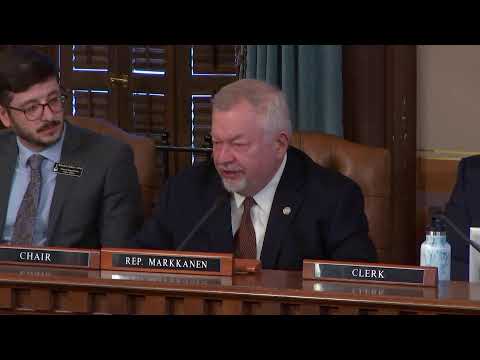
College leaders and students urge restoration of Michigan Tuition Grant for adult, part‑time learners
Summary
Presidents and students from Michigan independent colleges told the House Appropriations Subcommittee on Higher Education that the phase-out of the Michigan Tuition Grant (MTG) has left adult and part‑time students without critical support and asked legislators to reinstate funding specifically for those learners.
Tarek Sop, president of Lawrence Technological University, and leaders and students from Davenport University and Madonna University urged the House Appropriations Subcommittee on Higher Education and Community College to restore and expand the Michigan Tuition Grant (MTG) for adult and part‑time students.
The speakers told the committee that the MTG’s phase‑out removed aid many returning, working, and part‑time students depend on and that the Michigan Achievement Scholarship does not cover these learners because it targets recent full‑time high‑school graduates. "I strongly urge you to take bold action in advancing and expanding the Michigan tuition grant," Sop said, asking the subcommittee to prioritize reinstating support for adult and part‑time students.
Why it matters: Committee members heard that adult and part‑time students make up a sizable share of enrollments at independent colleges and that losing MTG aid can directly reduce enrollment and completion. Sop said Lawrence Tech awarded MTG to 1,735 students last year, totaling more than $4.9 million, with an average award of about $2,690 per student. Rick Pappas, president of Davenport University, told the panel that about 750 Davenport students expected MTG awards this year and that the program’s elimination created roughly a $2 million shortfall for students; Davenport used nearly $400,000 of unbudgeted funds to help some affected students.
Committee members pressed for outcomes and retention data. Sop and other presidents described employer connections, internships and co‑ops, and high placement rates as factors that keep graduates in Michigan and argued MTG support is an investment in the state workforce. "More than 93% of our students stay in Michigan," Sop said. Pappas said private independent colleges award nearly 20% of all bachelor’s degrees in the state and noted that many of their students are first‑generation and older than 25.
Students described personal impacts. Emma Turnquist, a Davenport student graduating this week, credited the MTG with making college "possible and manageable," saying the grant allowed her to focus on academics and athletics without taking on prohibitive debt. Sharte Cotton and Shardae Cotton, students at Lawrence Tech, also described returning to college as adult learners and said MTG awards were essential to staying enrolled.
Presenters emphasized that the Michigan Achievement Scholarship, while valuable, is limited to full‑time recent high‑school graduates and does not replace the MTG for returning or part‑time students. Chris Dougherty, president of Madonna University, said Madonna previously awarded MTG to more than 600 students, and that figure has since fallen to just over 300; Madonna reported that about 521 undergraduates receive federal Pell grants, representing roughly 40% of its undergraduate population.
No formal committee action to reinstate or modify the MTG was recorded at the hearing. Committee business concluded with routine motions to accept minutes and to excuse absent members; both motions passed without objection. Advocates asked legislators to consider restoring the MTG allocation for adult and part‑time learners in the state budget or other legislative action.
The presentations and personal testimonies framed the MTG restoration as a targeted step lawmakers could take to support degree completion and workforce needs while arguing that restoration would preserve access for older, working, and nontraditional students.