Get Full Government Meeting Transcripts, Videos, & Alerts Forever!
Get email alerts on the Housing Warrant Outreach topic
No spam. Unsubscribe anytime.
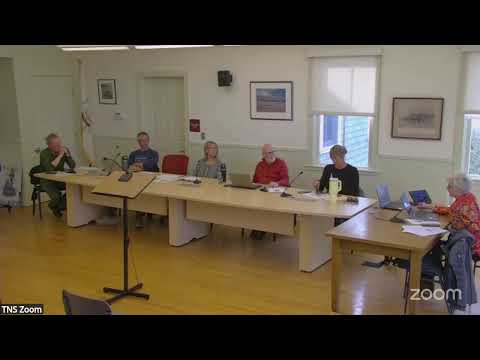
Block Island Housing Board narrows voter message for $2 million warrant ahead of May 5 financial town meeting
Summary
The Block Island Housing Board refined wording and outreach plans for a $2 million warrant it plans to ask voters to approve at the May 5 financial town meeting, emphasizing a $105 average annual cost figure tied to a $1.5 million house and stressing professionally managed units and flexibility on ownership/rental mix.
Mark Maguire, chair of the Block Island Housing Board, said the board will ask voters at the May 5 financial town meeting to support a $2 million warrant to fund a housing project tied to the Paul O’Brien site.
The board focused on how to present the warrant to voters, agreeing to simplify advertising copy and emphasize the typical annual cost to homeowners. “Support of this warrant will result in an average cost of of a hundred and $5 per year per taxpayer,” Maguire said, adding the number is based on a $1,500,000 house.
Board members debated whether to list a projected unit count and whether to describe units as “rentals” or “homeownership.” The group opted for flexible language — describing the project as a combination of homeownership and professionally managed rentals rather than a fixed number of units — to avoid committing to a specific mix before financing and final design are settled.
The board reviewed sample advertisement copy and graphics for local print and online distribution and directed a small subgroup to finalize posters, handouts and a short newspaper ad. Members also agreed to produce one simplified printed flyer for the town financial meeting and a more detailed electronic packet for hosting online.
Legal and programmatic limits also shaped the outreach. Board members discussed how state funding requirements affect eligibility rules and whether locally funded units could use different affordability rules. A board member summarized the state position: the state will count homeownership toward the town’s “10% affordable” goal at a 120% threshold for state purposes, while the town has historically considered a 140% threshold for local definitions; the state’s rules determine what counts toward the state-calculated 10% goal.
Maguire and other members said the board wants messaging that highlights community and economic benefits — keeping year-round residents and supporting local services — while avoiding technical tax or mortgage terms that could confuse voters. The group planned to run the ad once in the Block Island Times and to place posters and handouts at public locations and at the financial town meeting.
The board did not take a formal vote on the warrant language or on financing details at the meeting; members directed staff and a small volunteer subgroup to finalize materials and submit an ad to the newspaper on the publication deadline.
Ending: The board scheduled follow-up work to finalize the ad and outreach materials and to identify a short list of community members who could speak in favor of the warrant at the town meeting if needed.