Get Full Government Meeting Transcripts, Videos, & Alerts Forever!
Get email alerts on the Ai Ethics Court Filing Hallucinations topic
No spam. Unsubscribe anytime.
Court of Appeals holds show‑cause hearing after petition contained AI‑generated, nonexistent authorities
Summary
The Utah Court of Appeals held a hearing after a petition was filed containing case citations generated by AI that were incorrect or nonexistent; petitioners' counsel acknowledged a law clerk used ChatGPT and the firm offered to pay opposing counsel's costs.
A three-judge panel of the Utah Court of Appeals held an Order to Show Cause hearing after a petition for interlocutory relief filed in Gardner v. Cadence included case citations that do not exist or that were cited to support propositions they do not actually hold. Counsel for the petition's filers acknowledged that a law clerk used ChatGPT to draft portions of the filing and that the firm failed to verify the authority before filing. The court said it would take the matter under advisement.
"This filing was a serious mistake," Matthew Barnett told the panel on behalf of respondents to the show‑cause order, explaining that the petition bore the name of Douglas D'Urbano but was signed and filed by Richard Bednar. Barnett said Bednar had not reviewed every citation and that a law clerk had used ChatGPT to draft portions of the petition. "He did not know that AI had been used to generate anything in connection with the brief until after the fact," Barnett said.
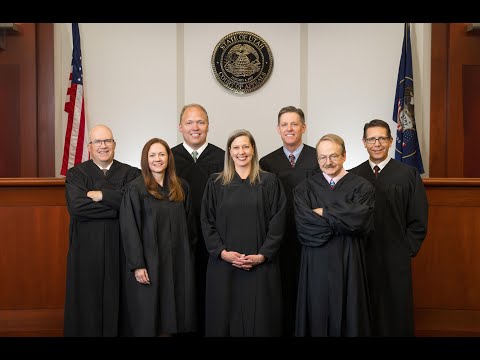
Judges on the panel — identified in the record as Judge Michelle Christensen Forster, Judge Gregory Orme and Judge Amy Oliver for a different matter earlier in the session — repeatedly stressed the judiciary's reliance on counsel's candor and the difficulty courts face in policing every citation. "We depend very much on the honor system of those attorneys who practice before us," one judge said, adding that fabricated authorities pose a distinct and serious problem for the judiciary.
Opposing counsel accepted the firm's prompt offer to make the responding party whole and said the offer to pay attorney fees incurred in responding to the defective petition remained on the table. The petitioners' counsel told the court the firm had adopted a formal policy for future filings that involve cited authorities.
The hearing record identifies at least one non‑existent case, Royer v. Nelson, cited in the petition; counsel said the name corresponds only to a table citation in another state's database and provides no substantive support for the petitioners' propositions. The panel noted that courts around the country have sometimes imposed modest monetary sanctions in similar circumstances and asked the attorneys to address whether a sanction beyond making opposing counsel whole would be appropriate. Counsel said petitioners would not charge such expenses to their client and that the attorneys would assume responsibility for any sanctions or fee awards.
The panel also questioned whether the conduct rose to negligence or to a higher mens‑rea standard such as recklessness or willful misconduct. Counsel for the respondents urged the court to consider Rule 3.3 of the Utah Rules of Professional Conduct (duty of candor) and Rule 40 (sanctions), and judges discussed the definitions of negligence, recklessness, and gross negligence in Utah precedent when assessing possible discipline.
No sanction was imposed from the bench. The court said it would take the matter under advisement and issue a written decision. Petitioners' counsel confirmed the client, Mr. Gardner, had been notified of the proceedings and that an offer to reimburse costs incurred by the opposing side remained available.
Why it matters: The hearing spotlights practical and ethical issues raised by attorneys' use of generative AI tools. The court emphasized that lawyers bear responsibility for filings they sign, including verifying cited authority, and that fabricated or hallucinatory citations undermine the court's reliance on counsel and could prompt sanctions.
What happened next: The Court of Appeals took the matter under advisement and will issue a written order addressing whether sanctions or other remedies are appropriate.