Get Full Government Meeting Transcripts, Videos, & Alerts Forever!
Get email alerts on the Ticketing Consumer Protection topic
No spam. Unsubscribe anytime.
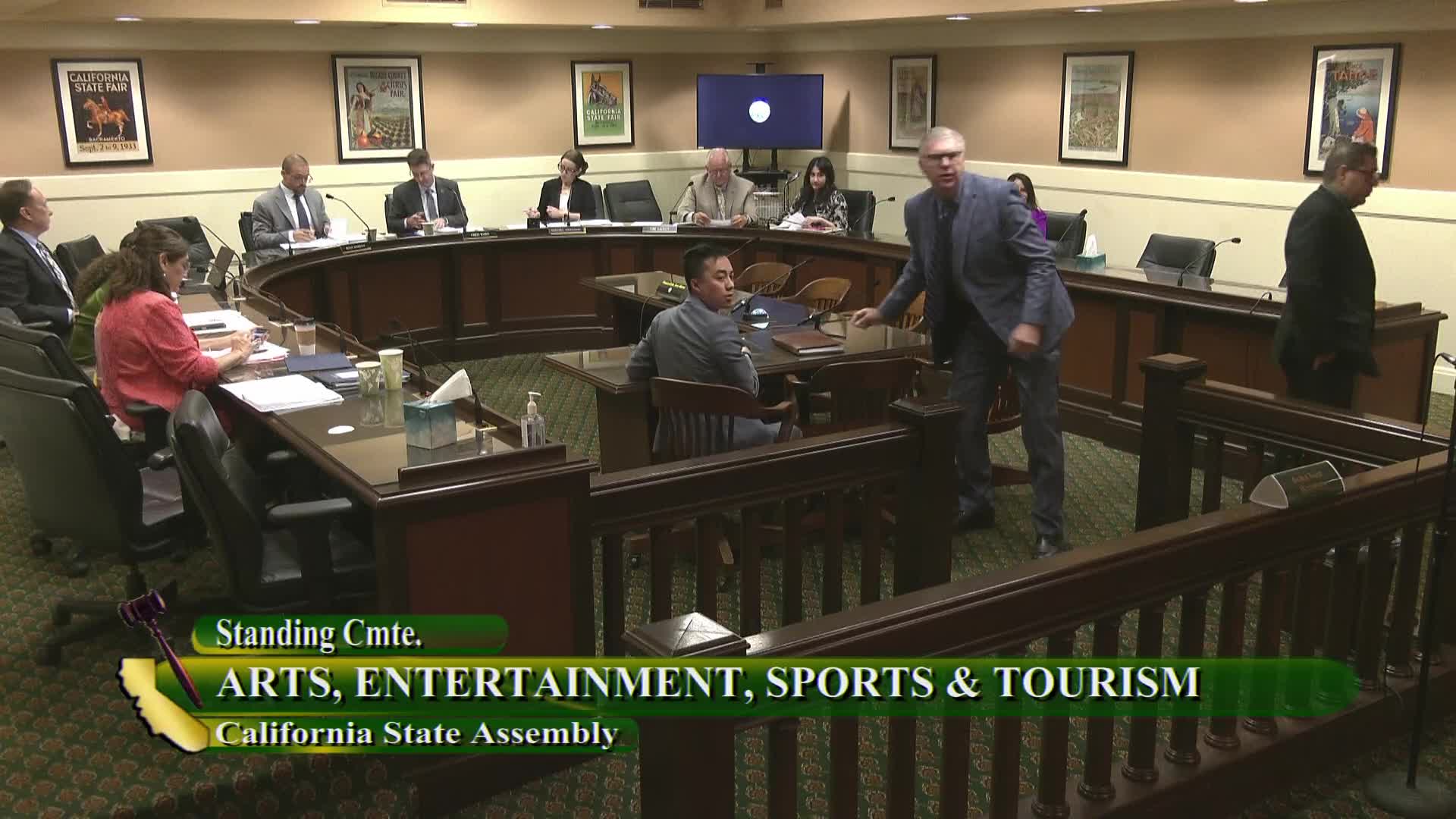
Assembly panel advances bill to require proof‑of‑purchase protections for event ticket buyers
Summary
AB 12 91, a consumer‑protection measure that would require ticket sellers to provide immediate electronic proof of purchase and allow a linked proof to be used for venue entry in certain circumstances, was advanced out of the Assembly committee after supporters and opponents debated security and anti‑scalping tradeoffs.
Assemblymember Lee presented AB 12 91, a bill intended to improve consumers' experience when buying tickets for concerts, sports and live entertainment by requiring ticket sellers to electronically deliver proof of purchase immediately upon purchase and allowing that proof, when linked to a valid, unused ticket, to be used for venue admission if a buyer cannot access their ticket.
Consumer advocates cited ongoing antitrust litigation involving Live Nation/Ticketmaster to argue market structure has contributed to late ticket delivery and consumer confusion. "We think consumers receiving tickets in a timely fashion is really important," said Robert Harrell of the Consumer Federation of California. Ruben Guerra of the Latin Business Association said delayed barcode release often steers buyers to the platform's resale marketplace.
Opponents — including representatives of independent venues, professional sports teams and venue operators — said some primary venues rely on delayed barcode release to combat large‑scale scalping and fraud. Alex Torres of the National Independent Venue Association said delayed release is an important anti‑scalping tool for small venues, and Andrew Governor (representing multiple major sports teams) said the bill in print differed from the amendments the author said he would accept and raised security concerns about admitting patrons on the basis of a purchase receipt alone.
Assemblymembers and witnesses discussed technical solutions and the need for further negotiation. The author stated he would accept committee amendments on proof‑of‑purchase language; the committee passed the bill as amended to the Committee on Privacy and Consumer Protection.