Lifetime Citizen Portal Access — AI Briefings, Alerts & Unlimited Follows
House tourism panel hears Toa Baja bid to expand Boulevard gastronomic zone
Loading...
Summary
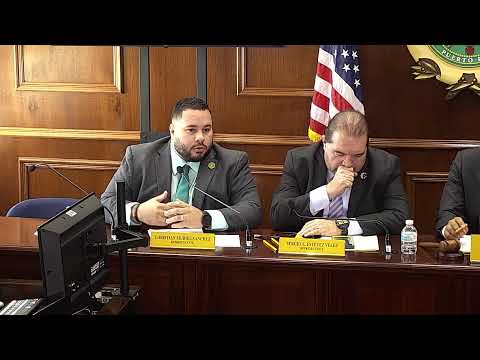
The House Tourism Committee received testimony April 22 on House Bill 3-40, which would expand the Boulevard (Levitán) gastronomic zone in Toa Baja. Municipal and tourism officials said the expansion could spur local economic activity but urged resident consultation, infrastructure study and careful allocation of promotional resources.
The Tourism Committee of the House of Representatives heard testimony April 22 on House Bill 3-40, a proposal to amend Article 1 of Law No. 62 (July 18, 2022) to expand the Boulevard (Levitán) gastronomic zone in Toa Baja to include several additional avenues and streets.
Committee members were told the expansion aims to strengthen local economic and tourism activity by formally designating additional streets as part of the municipality’s gastronomic route. James Ramos Santiago, director of economic development, tourism and culture for the municipality of Toa Baja, told the committee the mayor’s administration supports the bill “condicionado a que se consulte a los residentes y comerciantes de la zona” (conditioned on consulting residents and merchants in the affected streets). Ramos said Toa Baja’s administration has been working on brand development and media plans and highlighted the existing campaign “Siente el sabor de la Boulevard.”
Ramos said the municipality has been coordinating promotional work, on-site visits and branding efforts and that the expansion should be paired with planning to ensure proper land use, permits and parking. He listed potential benefits: increased tourist activity, job creation, support for local agriculture and stronger community identity, but repeatedly emphasized the need to gather input from residents and merchants before final approval.
Municipal clarifications and examples cited during the hearing included an approximate cost range for launching a route-marketing program: “un estudio de viabilidad y detallado para los costos para implementar el corredor gastronómico podría oscilar entre 100000 a 400000 dólares o más,” a figure presented in municipal testimony as an order‑of‑magnitude estimate for infrastructure, promotion and merchant support. Toa Baja officials also described public‑space work the municipality is pursuing to address parking shortages—identifying so‑called “estorbos públicos” for potential acquisition or rehabilitation—and said the administration has begun installing public safety cameras (Ramos said the first phase included about 150 cameras and a second phase was near contract award).
Raúl Márquez, advisor to the Compañía de Turismo de Puerto Rico, told the committee the tourism corporation does not oppose PLC 3-40 but urged technical analysis before any expansion is enacted. “La Compañía de Turismo de Puerto Rico no tiene objeciones que impidan la aprobación del PLC 3 40, siempre y cuando se tomen en consideración los comentarios,” Márquez said, adding that expanding zones without study can dilute finite promotional resources. He described typical company campaigns as involving a promotion “kit,” billboards and social media and noted an average campaign cost the company has borne of about $100,000–$125,000.
Several representatives asked how the company and municipalities coordinate on promotions and whether the current promotional model primarily moves tourist spending between municipalities rather than attracting new external dollars. Márquez and municipal officials said the Compañía focuses primarily on preparing and promoting domestic routes and that promotion to external markets is handled differently under current policy (through the DMO). Committee members asked the Compañía and municipalities for additional data, including metrics on tourism flows and program budgets.
Committee members also raised community impacts often associated with route expansion: parking, noise and short‑term rentals. Representatives pressed municipal witnesses on how Toa Baja planned to address potential nuisance properties and short‑term rental growth (Airbnb-style rentals), enforcement of noise and public‑space ordinances, and accessibility for older residents and people with disabilities.
The committee did not take a vote on PLC 3-40 during the hearing. Members requested the municipality provide follow‑up information, including results of resident and merchant consultations and any technical assessments of infrastructure capacity and costs. The Compañía de Turismo agreed to provide available tourism survey data and program information responsive to the committee’s requests.
The hearing record does not show a formal committee vote on the bill at this session.