Get Full Government Meeting Transcripts, Videos, & Alerts Forever!
Get email alerts on the Economic Development topic
No spam. Unsubscribe anytime.
Cranston economic development director outlines outreach, revolving-loan status and $200,000 ARPA small-business program
Summary
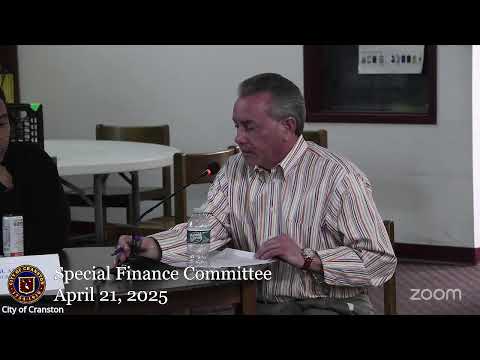
At an April 21 Cranston Finance Committee meeting, Economic Development Director Frank Polino described grant work, a planned $200,000 ARPA small-business mitigation grant, and the city's revolving loan fund, which currently shows one active loan and several defaults in collections.
At a special Finance Committee meeting April 21, Cranston's director of economic development described a mix of grant programs, a planned ARPA-funded small-business mitigation program and the current status of the city's revolving loan fund.
Director Frank Polino said the department will administer a $200,000 ARPA-funded mitigation/small-business grant that the administration previously allocated, and that the program is intended to help roughly 200 businesses along Reservoir Avenue, Park Avenue, Phoenix/Atwood and portions of Knightsville affected by recent construction. "We're gonna be giving those small business $1,000," Polino said, describing outreach plans and walking the commercial corridors with councilors.
Polino told the committee the city's revolving loan fund (Fund 302) has a total loan asset balance of about $2,087,509.24 and cash on hand of approximately $1,000,854.70. He said the fund currently has one active loan and several loans in default that have been referred to the legal department. "There was 6 loans that are on default when I came into the administration. I have resolved 3 of those loans," Polino said, adding that three remained in legal review.
Committee members pressed for more detailed accounting. Council President asked for clearer budgetary tracking and said she would request a follow-up Finance Committee meeting focused on the revolving loan fund. Auditor Audra DeMeo and finance staff said they can provide the special-revenue account detail and that the revolving loan activity is reported separately from the general fund. "Fund302, which is the economic development revolving loan fund on the monthly report," the auditor said when locating the account in the city reports.
Polino described eligibility rules used by the loan review committee, which he said is a seven-member panel made up of bankers, lawyers and business representatives that approves loans. He said the city generally requires collateral and will not accept a third lien position on property: "We either take a first position or second position," he said. He added the committee sometimes rejects loan applications that do not meet credit or collateral standards.
Council members raised operational concerns about outreach and staffing. Multiple councilors and Polino discussed that new business applicants frequently appear before the Safety Services or zoning boards without necessary paperwork and that stronger front-end guidance would reduce delays. Polino said he often meets business owners in person and walks them through permitting and zoning, but he repeatedly noted that he is the sole full-time staff member in his office for many of these tasks and that an assistant role had been cut in a prior budget.
Several councilors asked for a comprehensive report on the revolving loan fund's transactions, defaults and meetings. The clerk and director gave differing statements about the last legally posted meeting of the revolving loan committee; the secretary of state posting appeared to show 2021 as the last published meeting date while the director said the committee last met to consider a loan in late 2023. The director and finance staff agreed to provide meeting dates, the Fund 302 ledger, and status of any legal actions on defaulted loans at a later date.
Why it matters: Council members said expanding economic development activity is part of the city's strategy to increase non-residential revenue without raising residential property taxes. Members asked the director to produce clear, recurring materials that prospective business owners could use (for example, a short checklist of permits and typical costs) and asked that the administration provide the detailed revolving-loan accounting requested by the committee.
The committee asked the director to return with a comprehensive report including the revolving loan fund balance sheet, the dates of recent committee meetings, the status of defaulted loans and details of the planned ARPA mitigation grant rollout.