Get Full Government Meeting Transcripts, Videos, & Alerts Forever!
Get email alerts on the Municipal Budget topic
No spam. Unsubscribe anytime.
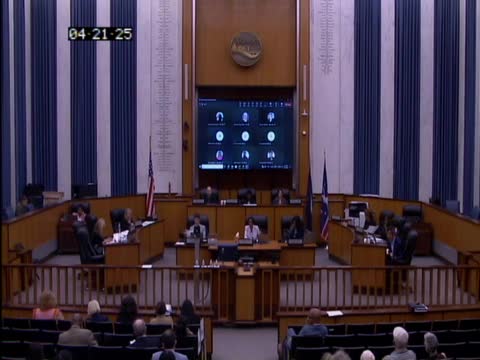
Richmond council hears public pleas to restore housing, schools and crisis funding at special budget hearing
Summary
At a special public hearing on the proposed city budget, residents, nonprofit leaders and city staff urged City Council to restore or increase funding for housing programs, Richmond Public Schools, the Family Crisis Fund, youth programming at Martin Luther King Middle School and cost‑of‑living increases for city employees.
A special public hearing on the proposed Richmond city budget drew dozens of residents, service providers and municipal officials who urged the City Council to restore or increase funding for housing, schools, emergency rent assistance and youth programs.
Speakers pressed council to restore two previously funded line items that support Housing Opportunities Made Equal’s work with Richmond Housing Authority voucher holders and investigations of housing discrimination. “I humbly ask you if you could continue to fund this program and allow us to continue to serve the city of Richmond,” Thomas Fitzpatrick, executive director of Housing Opportunities Made Equal, told council.
The hearing attracted multiple requests tied to housing stability. Several speakers urged the council to add $1 million to the Family Crisis Fund and to approve two full‑time code‑enforcement positions to support a rental inspection program. “We are only funding $1,800,000 to collectively stop evictions in our city,” organizer Warren Campbell said as he urged support for a $1 million increase to the Family Crisis Fund.
Richmond Public Schools funding and transparency were also a recurring theme. Anne Forrester, a Richmond Public Schools teacher and president of the Richmond Education Association, said union leaders support proposed audits of RPS and asked the council to treat collective‑bargained contracts as “a sacred commitment.” Several teachers and parents asked the council to preserve funds that the schools will need to cover contract obligations.
Youth‑serving program UBU 100 at Martin Luther King Middle School drew a large contingent of students, parents and program staff. Coach Michael Bailey thanked council for two years of city support and called the program “an investment that has paid off.” Multiple students and parents described behavioral and academic improvements and urged continued funding so the program can expand.
Municipal operations and pay were a second major theme. City department leaders asked the council to approve the proposed increase for nonunion leadership and cited recruiting and pay‑compression concerns. Charles Todd, director of information technology, said, “I consider 3.25% to be basically a cost of living increase with inflation running in the 2% range,” and urged the council to remain competitive for senior positions. Several department directors and managers warned that failure to remain competitive would hamper recruitment and continuity of services.
At the same time, some speakers asked council to limit or reexamine raises for the highest‑paid nonunion employees while shifting money to frontline needs. Joe Brancoli, a First District resident, supported an amendment to remove salary increases for nonunion employees earning more than $150,000. Several public commenters contrasted proposed leadership raises with ongoing housing instability and with contractor and frontline worker pay.
Other items raised during public comment included a proposed salary supplement for 41 deputy clerks in the Clerk of the Circuit Court’s office (Ed Jewett said deputies start roughly $8,000 below comparable jurisdictions), funding for the Underground Kitchen’s food program, support for climate and resilience staffing, and a bid from contractor workers organizing with 32BJ SEIU for higher contractor wages.
Council members thanked speakers and acknowledged the competing pressures in the budget. Councilmember Robertson praised the UBU students who spoke and said the council would take comments into account; President Newbill said administration staff would compile additional information requested by council and proposed follow‑up meetings to finalize the budget. Council discussed a path forward that includes obtaining administration responses, holding a work session and scheduling a special meeting to introduce budget papers, with a later vote. Council did not adopt final budget amendments at this hearing.
The public hearing closed after the last speaker. Council members said they would continue to review materials and that additional meetings and staff follow‑up would be scheduled before final votes.