Get Full Government Meeting Transcripts, Videos, & Alerts Forever!
Get email alerts on the Operating Budget topic
No spam. Unsubscribe anytime.
Council weighs operating reductions and a proposed 3.25% raise as staff propose cutting guaranteed‑income program and vacant positions
Summary
Administration proposed roughly $1.07 million of operating reductions — including pausing the Richmond Resilience Initiative (a guaranteed‑income program) and eliminating seven vacant positions — as councilors debated equity, compression, and whether raises for high‑paid positions should be limited to preserve funds for frontline services.
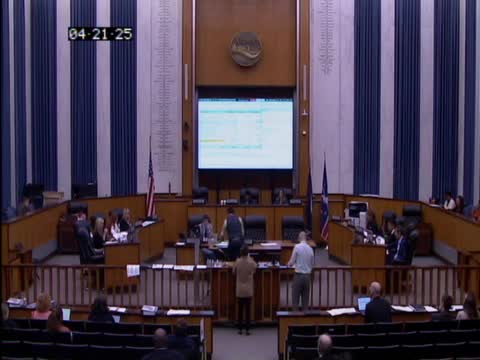
Administration presented a set of operating reductions designed to free roughly $1.07 million to help pay for council amendments, and councilors used the conversation to press for greater transparency about salary changes and the distribution of FY26 raises.
What administration proposed: The administration identified $1,068,971 in possible operating reductions, a package that included a recommended reduction to the Richmond Resilience Initiative (the guaranteed‑income pilot funded earlier), elimination of four currently vacant positions in the Office of Community Wealth Building, a vacant position reduction in Public Works and two positions in the General Registrar’s Office. Staff said the reductions were offered to help council fund member‑proposed enhancements.
Council debate: Several council members said they would prefer to prioritize raises and supports for lower‑paid workers and direct‑service staff (janitors, security contractors, eviction‑prevention and mobile‑home repair programs) rather than cuts to anti‑poverty programs or services that assist vulnerable residents. Council member Gibson and others asked administration to show whether raising low‑paid contracted staff to $20 per hour—or hiring some roles in‑house—would be more cost‑effective than continuing contractor agreements. Administration said it would model the cost of bringing janitorial and security in‑house and return with figures.
Raises and compression: A proposed general 3.25% raise for nonunion employees (and related adjustments) drew scrutiny from council members who pointed to large percentage increases in some individual high‑pay grade positions. Council member Abubakar argued the city must examine top‑tier salary growth and asked that council scrutinize large increases for management‑level positions while frontline employees face modest gains. Human Resources Director Tyrone Alexander and department directors warned that withholding broadly applied compensation increases could harm recruitment and retention for difficult-to‑fill operational roles, and that compression (supervisors paid less than subordinates) is a concurrent concern.
Administration next steps: Staff agreed to provide detailed staff‑level comparisons (FY25 adopted vs FY26 proposed) and to provide clearer documentation about which positions were newly filled or repriced (vacancies budgeted at minimum vs hires at midpoint), plus a modeling exercise on contracting vs hiring janitorial/security staff. Staff also agreed to provide the specifics of the positions in the $1.07M reduction package.
Quote: "We need to ask people if we're asking a refuse worker to live within their means, then we have to ask the city to live within their means," Council member Abubakar said, summarizing concerns about high percentile increases at senior pay grades.
Ending: Administration will return with a written breakdown of the proposed operating reductions, the list of vacant positions recommended for elimination, an apples‑to‑apples salary comparison across FY25 and FY26, and an analysis of contracting versus hiring for janitorial and security.