Get Full Government Meeting Transcripts, Videos, & Alerts Forever!
Get email alerts on the Land Use topic
No spam. Unsubscribe anytime.
Council rescinds March 18 lease for Pleasure Island wind‑solar lease, directs attorneys to resume negotiations
Summary
After public comments and attorney discussion, council voted to rescind a March 18 lease for a proposed wind and solar development on Pleasure Island and instructed city and developer counsel to reopen negotiations on a limited set of terms.
The Port Arthur City Council voted Monday to rescind a March 18 lease related to a proposed ground lease for wind and solar energy development at Pleasure Island and directed attorneys to reopen targeted negotiations.
The action followed a lengthy public exchange during which the developer’s representative, identified in the meeting as Mr. Crawford, said he had not seen the lease the city earlier presented and objected to several provisions. Council and staff said an earlier draft had been circulated and that further negotiation was needed on a limited set of topics: (1) the scope and form of any Phase‑2 environmental testing or site assessment, (2) the allocation and cap of remediation or testing costs, (3) the need to secure easements and clarify rights across adjacent parcels, and (4) sublease and conveyance rules for energy infrastructure and data‑center or substation components.
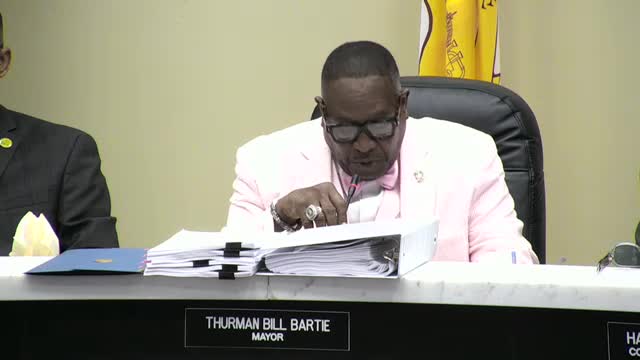
After a discussion in executive session, the council approved a motion to rescind the March 18 lease. The council then instructed both sides’ attorneys to resume discussions focusing on those four topics and to return with redlines and a path forward. City attorney staff said the council had directed that attorneys work to resolve differences; the mayor said staff would try to arrange prompt attorney‑to‑attorney negotiations so the parties could return with a revised agreement.
Why it matters: the proposed development involves large tracts of city land on Pleasure Island and includes infrastructure such as substations, potential data‑center uses, and offshore energy hub facilities. The topic attracted strong public interest and multiple council members pressed for clarity on legal ownership of certain submerged or “bottom” lands, easement paths, and who would assume environmental cleanup costs if contamination emerged during intrusive testing.
What’s next: the council tabled further action pending negotiated redlines from counsel. Council members also asked for clarity about recorded land ownership and whether certain easements had been conveyed; staff said they would gather the land‑record documentation and attorneys would coordinate on draft lease language.