Get Full Government Meeting Transcripts, Videos, & Alerts Forever!
Get email alerts on the Security Council Reform topic
No spam. Unsubscribe anytime.
UN negotiators say momentum building on Security Council reform but key issues remain
Summary
Kuwait's permanent representative and chair of the intergovernmental negotiations said member states have shown "momentum" toward Security Council reform, with proposals and new transparency tools expanding debate; no decision has been taken on member numbers or text-based negotiations.
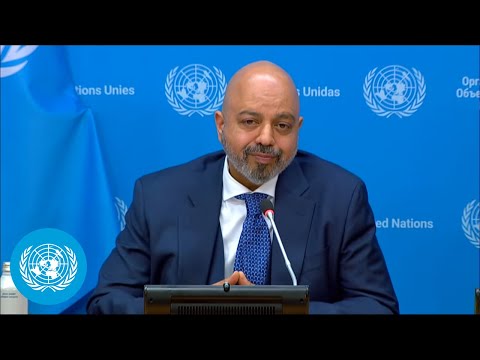
Sharon Birch, a spokesperson for the president of the United Nations General Assembly, opened a press briefing on the intergovernmental negotiations (IGN) over Security Council reform, saying the session would "provide a snapshot of the immense work member states are doing" on the topic.
Tarek Albany, the permanent representative of the State of Kuwait to the United Nations and chair of the IGN, told reporters that the process has gained political backing in recent months and that procedural changes have widened participation. "The Pact for the Future gave us momentum at the highest level," Albany said, adding that the IGN has introduced webcasting and other tools "to improve transparency and accessibility." He said those measures allow academics and civil society to engage more deeply and foster "more informed substantive discussions."
Albany described three broad strands in the Pact's treatment of council reform: clarifying areas of convergence and parameters for reform; encouraging the submission of additional models toward a consolidated proposal; and considering interim measures to maintain the council's capacity while reforms proceed. He said member states are pushing to address "historical injustice against Africa" and to improve representation for underrepresented regions including Asia-Pacific, Latin America and the Caribbean.
On possible expansion, Albany said no decision has been reached and quoted a range heard in talks: "The range of numbers that we have heard is between 21 and 27 member states in a possible expansion of the Security Council." Asked about timing, he described a realistic target as the 2030 horizon but cautioned that "if I were to say we can finish this in a year, I would be misleading you." He emphasized the need for consensus across the membership and noted that any change intended to endure must be carefully considered.
Journalists pressed on several practical points. Edith Lederer of The Associated Press asked whether reform could be completed by 2030; Albany replied, "I am extremely hopeful," while noting that amending the UN Charter, if necessary, is a complex process. Reporters also raised questions about whether major powers such as India would be included among any new permanent members; Albany said that if expansion proceeds, "India will be a contender" but that outcomes depend on the wider membership.
Albany said the IGN encourages model-based discussions so delegations can test and adapt ideas: "A model discussion allows member states to discuss what the vision of a single group or a single state sees the future of the Security Council to be." He also said some governments have submitted or revised models, and that contributions "help enrich our discussions and bring us closer to areas of convergence." He noted a forthcoming model will be presented and discussed at the next IGN meeting in late May.
The chair stressed that working methods are part of the negotiations and acknowledged long-standing concerns about how the Council handles conflicts in which permanent members may have interests. "Working methods determine the outcomes," Albany said, and added that the IGN is discussing ways to improve decision-making and prevent or manage conflicts of interest.
There were no formal votes or decisions announced at the briefing. Albany closed by saying the IGN is ‘‘taking steady and meaningful steps’’ toward reform and that the aim is a Security Council structure that will be "designed to endure for the next century, anchored in the principles of inclusivity, transparency, efficiency, effectiveness, democracy, and accountability." The briefing ended with a housekeeping note that the president of the General Assembly will not travel as previously announced.
The IGN briefing laid out points of convergence, persistent areas of contention and a timetable that remains aspirational; delegates and observers will watch whether additional models and the expanded transparency measures translate into negotiated text in the coming months.