Get Full Government Meeting Transcripts, Videos, & Alerts Forever!
Get email alerts on the Parks Alcohol Policy topic
No spam. Unsubscribe anytime.
Council declines to allow city-run ‘pop-up’ beer gardens in parks after liability and optics concerns
Summary
An ordinance to amend Wausau code to permit city-run pop-up beer gardens in parks failed unanimously after councilors and the Park Commission raised liability, staffing and optics concerns. Members said they are open to vendor-run events but opposed city staff serving alcohol.
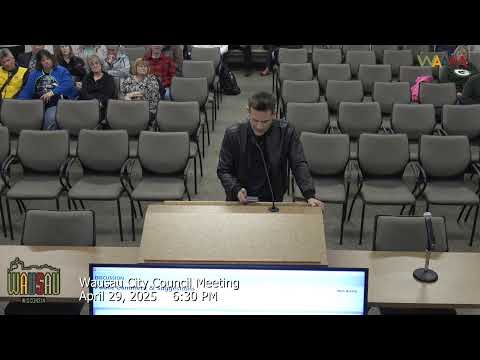
The Wausau Common Council rejected an ordinance amendment April 29 that would have added a provision to allow intoxicants in public parks under a new section of city code. The proposed ordinance (file 250423) would have amended Section 9.2 0.05 (personal conduct and nuisance) and created Section 9.2 0.055 (intoxicants in public policy); the motion failed on a 0-10 vote.
Alder McElhaney, one of two council members who voted against advancing the item in committee, said she opposed government employees selling alcohol in public parks and worried about the optics of staff acting as servers when parks are family spaces. “I feel very strongly the city of Wausau as a government and as a public service organization should not be selling alcohol,” McElhaney said.
Members cited liability concerns—how overserving would be enforced and whether the city would bear responsibility if intoxicated patrons caused harm. Alders and park commissioners reported a split record: the Park Commission voted against the change earlier that day, 0-4, and the Environmental Resources Commission had considered the issue. Alder Watson said the parks department is already stretched thin and that staff capacity and safety concerns weighed on his view.
Parks Director Jamie Pauley (speaking at the parks commission hearing, summarized to council) described municipal models used elsewhere, such as Milwaukee County’s program, where county staff operate beer gardens in partnership with breweries or vendors after completing server training and following controlled-site practices; the director told the council that a vendor-only model would require different licensing and fencing requirements under existing city code.
Alder Tierney, who has past experience as a bartender, said historically servers bore responsibility for overserving and would not want to be assigned to staffed pop-up stands at small neighborhood parks. “If it was my turn to go down to Brockmire Park … there is no way wild horses could drag me there to do it,” Tierney said.
Council members who had previously supported testing park-based alcohol options said they would consider vendor-operated events or a carefully limited pilot, but opposed adopting the proposed ordinance amendment as written. The motion to approve the ordinance failed 0-10.
Speakers quoted included Alders McElhaney, Watson, Tierney and parks staff explaining licensing and model differences.