
Food and nutrition director outlines local sourcing, preschool family‑style dining and sharp rise in school meal participation
Get AI-powered insights, summaries, and transcripts
Sign Up Free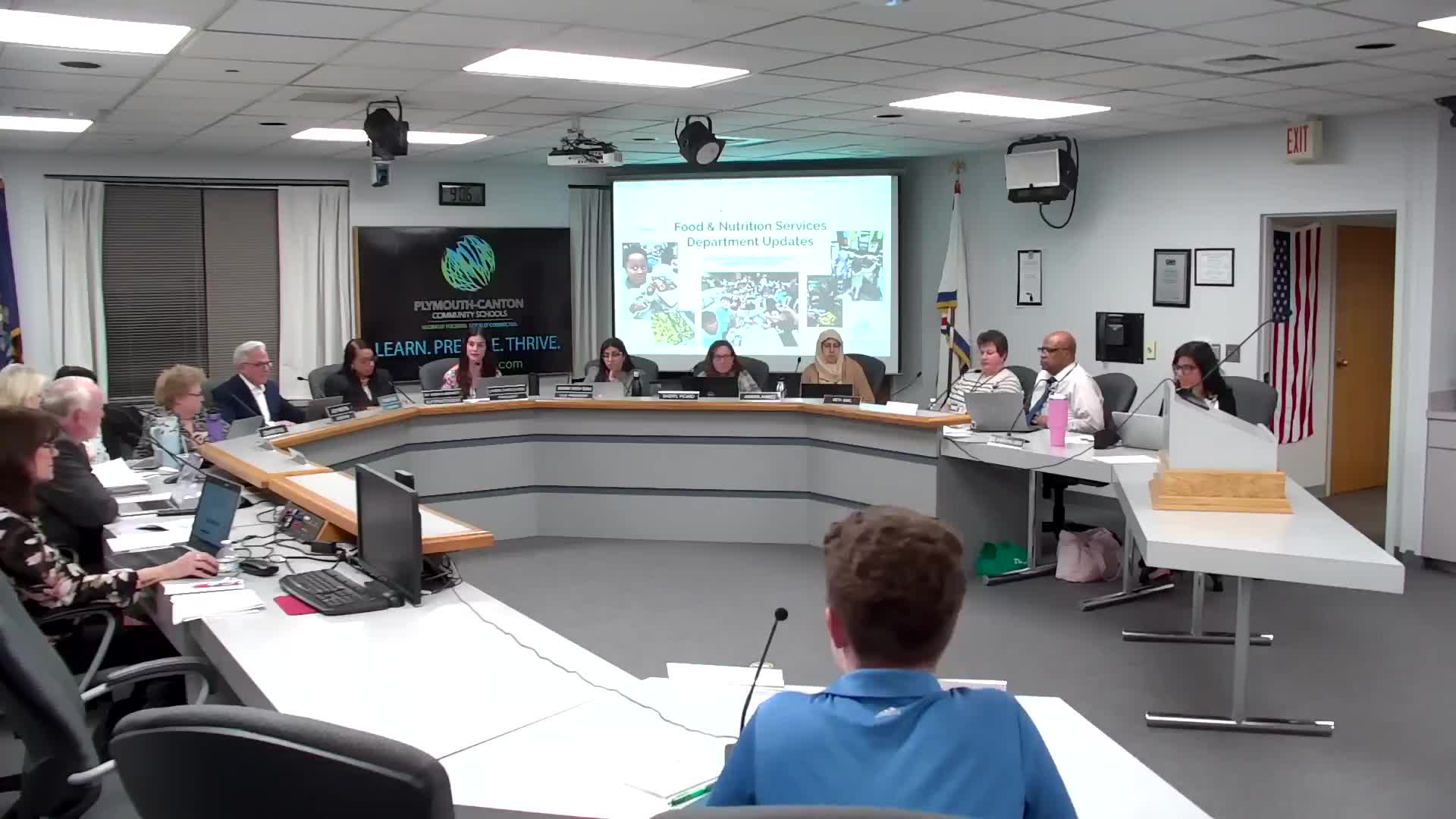
Summary
Director Kayla McDaniel told the board participation has jumped since Michigan meals‑for‑all, the district expanded local procurement and preschool family‑style dining, and the department is preparing facilities and staff for more scratch cooking and increased demand.
Kayla McDaniel, director of Food and Nutrition Services for Plymouth‑Canton Community Schools, presented a districtwide update describing expanded local sourcing, new menu items and operational steps taken after a large increase in meal participation.
Why it matters: participation in school meals affects student nutrition, daily learning and kitchen operations. McDaniel said the department served roughly 31,000 more meals year‑to‑date compared with a recent baseline school year and projected another ~3% growth for the coming year, partly tied to Michigan's School Meals for All program.
Highlights from the presentation: - Local sourcing and scratch cooking: the department has increased Michigan‑sourced produce and succeeded in incorporating local legumes into scratch recipes; Gateway Farms and Plymouth Orchard were named as local partners. - Preschool family‑style dining: four preschool sites adopted family‑style meals this year (children and teachers share food served in the center of the table); the district plans to expand that to all preschool sites next year and join the Child and Adult Care Food Program to eligible for reimbursements. - Cultural and special‑diet accommodations: halal items were added to menus, seafood Fridays and additional vegetarian/plant‑forward options were incorporated, and take‑home meals were provided for students observing Ramadan. - Operations and facilities: increased demand required reassessing kitchen storage and prep capabilities; the department is coordinating with bond projects to secure larger‑scale facility upgrades and is running staff cross‑training and "level‑up" training to improve coverage and retention. - Waste reduction and student voice: the department uses "share carts," taste tests and student feedback to reduce waste and tailor menus; pilot menu items include cucamelons, kumquats and other produce to build acceptance.
McDaniel also noted hiring, staff development and recognition: the district won state healthy‑meals recognition and participates in a USDA study of scratch cooking methods. Board members, students and committee members praised cafeteria staff and urged continued investment in facilities so the department can shift from prepackaged to more scratch meals.
Ending: administrators said they will continue to coordinate with bond projects, the CTE program and other departments to expand scratch cooking capacity and monitor participation and waste metrics.