Get Full Government Meeting Transcripts, Videos, & Alerts Forever!
Get email alerts on the Facilities Referendum topic
No spam. Unsubscribe anytime.
Architects and contractor update Janesville board on referendum-driven facilities work, schedule for phased construction
Summary
Architects from EUA and contractor J.P. Cullen updated the School District of Janesville Board of Education on planning, design and phasing for facilities work funded by the November referendum and earlier security projects. Board approved a capital maintenance plan earlier in the meeting.
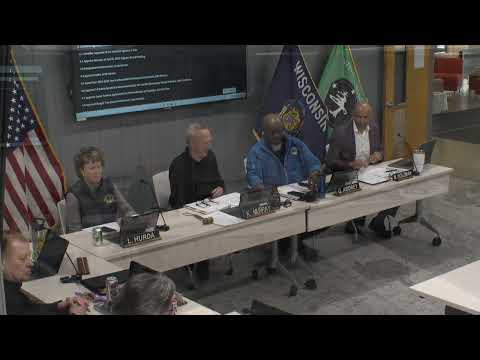
Architects from EUA and representatives of J.P. Cullen presented a detailed update to the School District of Janesville Board of Education on April 22 about planning and scheduling for referendum-funded facility improvements and related security projects.
Tory Schultz of EUA and Mike Johnson of J.P. Cullen told the board the teams have invested extensive preconstruction hours: the firms reported more than 300 hours of internal meetings, roughly 175 hours on-site investigations, and more than 1,300 hours of design work to date. They described a phased delivery approach that separates design and construction work so multiple schools can be designed in staggered cycles and several schools can progress to construction concurrently once documents are complete.
Schultz outlined the program sequence: schematic design, design development and construction documents, followed by Cullen's bidding and construction phases. The first set of work includes high school security upgrades (funded from the 2020 referendum) moving into bidding and construction documents; the next phase (bid package 1a) will move from design development to construction documents in the weeks after the board meeting, followed by bid packages 1b and later phases that were described as a rinse-and-repeat scheduling approach through 2027 and beyond. The presenters noted supply-chain and long-lead procurement considerations (electric panels, chillers, theater equipment) when planning schedules.
The team described use of building scanning and three-dimensional modeling to improve accuracy of plans and to reduce field conflicts. They said virtual design-and-construction techniques and laser scanning of mechanical spaces were already informing mechanical and structural decisions and improving the reliability of cost estimates.
Board members asked questions about community engagement and ceremonial milestones tied to construction (one commissioner asked about a June 2026 ceremony tied to breaking ground on work funded by the November referendum). The presenters and district staff confirmed some referendum-funded work is already starting in the calendar year for security projects and behind-the-scenes maintenance, and they agreed to coordinate ceremonial events to recognize community support.
Separately in the same meeting, the board approved the district's 2025-26 capital maintenance plan, a required 10-year Fund 46 plan that staff said will remain a living document. Presenters and staff warned the district retains hundreds of millions of dollars in deferred needs across facilities; the capital maintenance plan sets priorities and helps coordinate referendum implementation.
Ending: EUA and Cullen said they will continue phased design work, provide regular committee updates and coordinate with principals and faculty during preconstruction kickoffs this summer; facilities staff will publish the updated 10-year capital plan and return with implementation details to the Finance, Buildings & Grounds committee.