Get Full Government Meeting Transcripts, Videos, & Alerts Forever!
Get email alerts on the Community Development topic
No spam. Unsubscribe anytime.
Community groups urge reversal of proposed MOCD cuts; legal aid, gender‑based violence and youth programs singled out
Summary
The Budget and Appropriation Committee on April 23 received MOCD’s funding recommendations and extensive public testimony from community groups warning that proposed cuts to civil legal services, gender‑based violence programs, youth services and community‑building grants would harm the city’s most vulnerable residents.
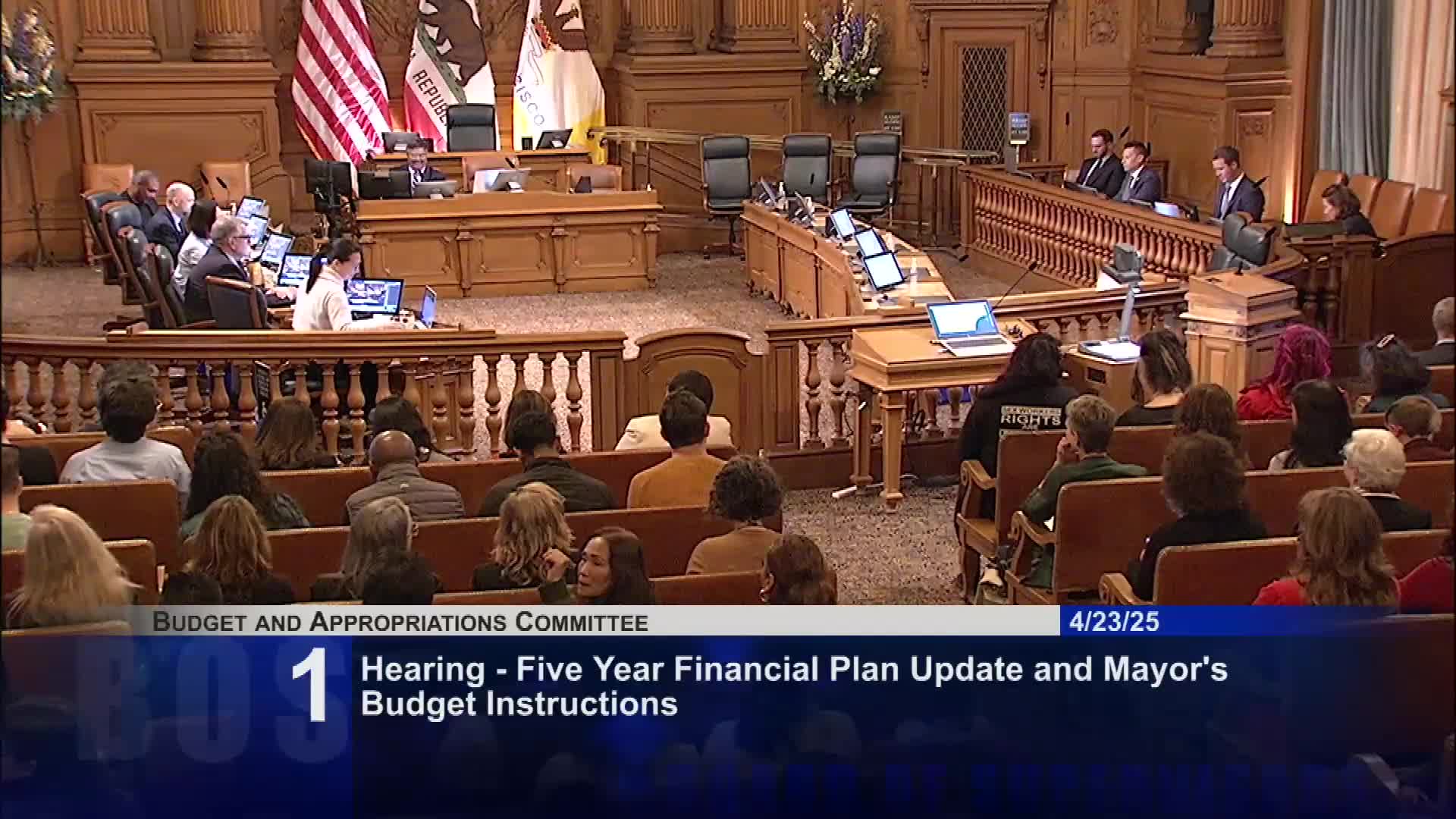
The Budget and Appropriation Committee on April 23 held a hearing on proposed funding recommendations from the Mayor’s Office of Housing and Community Development (MOCD) that would reduce local general fund support for several community development portfolios. MOCD recommended preserving some priority portfolios — including immigrant legal services, eviction prevention and gender‑based violence programs — while proposing cuts or reallocations in other areas because of constrained local general fund resources.
MOCD Director Dan Adams and Deputy Director Julia Sabore presented the division’s RFP process and described the difficult tradeoffs that produced the recommendations. Sabore said the RFP, issued in September 2024 with proposals due in November 2024, drew more than 300 proposals requesting about $198,000,000 — nearly twice the funding available. She said MOCD had initially faced an $11,000,000 reduction and had reduced that exposure to roughly $5,000,000 through personnel reductions and shifts to off‑budget resources, but that the division recently received an additional roughly $2,000,000 departmental reduction target.
“Many of the programs MOCD funds are particularly vulnerable to general fund reductions,” Sabore said. “When MOCD receives a local budget reduction mandate, it is applied to our general fund allocation — approximately 38% of our total grantmaking portfolio for FY 25‑26 — which makes difficult tradeoffs unavoidable.”
Community reaction and examples of impact
Hundreds of community members and scores of service providers attended the hearing and gave one‑minute public comments. Speakers described specific proposed reductions and the human impacts if funding were not restored:
- Civil legal services: Open Door Legal and other providers warned that MOCD’s recommendation to reduce or cancel general civil legal services funding would eliminate a portfolio that agencies say prevents homelessness and protects consumer, benefits, and housing rights. Open Door Legal representatives said a proposed $2.2 million cut to their contract could force layoffs of at least 15 attorneys and reduce legal representation capacity materially; provider testimony cited studies and local estimates that preventing a single household’s homelessness with legal services is far cheaper than paying for shelter and emergency services.
- Gender‑based violence legal services and restraining‑order assistance: Multiple providers said MOCD’s proposals would eliminate restraining‑order legal services and certain family‑law assistance. Amberley Cross of the Cooperative Restraining Order Clinic (CROC) said the cuts would deprive “516 domestic violence survivors and their children” of legal services next year; another CROC speaker later said that one line item would affect “341 individual survivors” (two distinct figures appear in testimony and are recorded here with attribution). Providers characterized restraining‑order and family‑law representation as life‑saving homicide‑prevention measures that also prevent homelessness.
- Harm reduction and sex‑worker outreach: Lion Martin Community Health Services and partners warned that the late‑night mobile outreach program to sex workers — which providers said is unique in the city — faced reallocation and that losing it would increase risk of violence, overdose and infectious disease among a high‑need population.
- Youth services and HYPE Center: Speakers representing HYPE Center said MOCD’s recommendation would cut the nonprofit’s funding by 85%, a reduction they said would force closure of the center that serves 14‑ to 24‑year‑olds with prevention, drop‑in, and workforce services.
- Community building and cultural districts: SOMA Pilipinas and other cultural district representatives testified that community‑building and convening grants enable planning, anti‑displacement work and cultural programming; they urged restoration of line items that support cultural districts and grassroots organizing.
MOCD defended the RFP and scoring process as competitive and legally constrained. Sabore and Director Adams said that MOCD prioritized immigrant legal services, eviction prevention and gender‑based violence among its core priorities and that some cuts reflected the expiration of one‑time or temporary funding streams rather than discretionary, ongoing reductions. Adams said MOCD had cut 11 positions to reduce reliance on the general fund, moved eligible programs to off‑budget sources where possible, and sought to preserve core services for the city’s most vulnerable residents.
Formal action and process clarity
No final budget decisions were adopted at the hearing; MOCD presented funding recommendations that now feed into the broader budget process. Chair Chan moved that the hearing be heard and filed for the record; the committee approved the motion on a 5‑0 roll call (Ayes: Vice Chair Matt Dorsey; Member Ingardio; Member Walton; Member Chen; Chair Chan). Committee members and dozens of providers said they expected further hearings and negotiations before the mayor’s proposed budget is released and before the board votes on final appropriations.
What providers asked for and next steps
Speakers asked supervisors to restore specific line items, prioritize eviction prevention and legal services as homelessness prevention, protect gender‑based violence legal services and late‑night outreach to sex‑worker communities, and maintain community‑building grants for cultural districts. MOCD said procurement rules limit pre‑award negotiations but that this public hearing, the appeals process and subsequent budget deliberations are the forum for further community input. The administration must deliver a balanced budget by June 1; community organizations indicated they will continue to press the board and the mayor to restore funding during the budget process.
Ending: MOCD officials said they would continue to refine recommendations in coordination with the mayor’s office and the budget office; community providers said they would continue outreach to supervisors and the public ahead of the mayor’s June 1 budget submission.