Get Full Government Meeting Transcripts, Videos, & Alerts Forever!
Get email alerts on the Homelessness Shelter Funding topic
No spam. Unsubscribe anytime.
Eau Claire pledges $40,000 to help Sojourner House bridge summer funding gap
Summary
City council directed staff to provide a one-time $40,000 allocation from the flexible housing CIP to help Catholic Charities operate the Sojourner House shelter through the summer while longer-term fundraising continues.
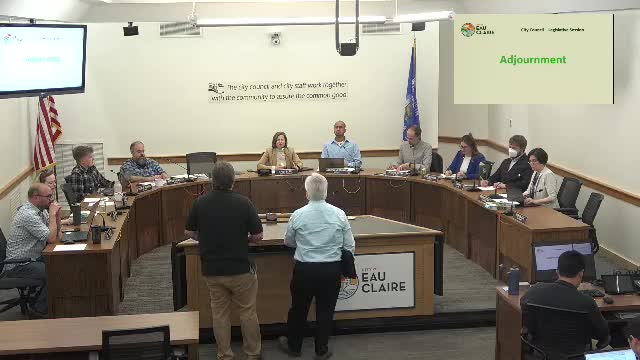
The Eau Claire City Council agreed during an April 22 work session to provide $40,000 from the city’s flexible housing capital improvements fund to help Catholic Charities keep the Sojourner House shelter open through the summer.
Council members discussed whether the city should offer one-time support after Catholic Charities and the Eau Claire Community Foundation described a shortfall. City Manager Stephanie Hirsch said the foundation had asked the city to consider a contribution; Altoona committed $15,000 and the county was still considering a $30,000 contribution.
The city manager and finance staff presented three possible funding sources: the flexible housing CIP line, the city contingency fund, or anticipated unspent funds from the 2025 operating budget. Finance staff cautioned that contingency and end-of-year savings are commonly needed for other unpredictable expenses. After discussion, council members coalesced around using the flexible housing CIP for this one-time support.
Representatives from Catholic Charities described the shelter’s budget situation. Roberto Parker, executive director of Catholic Charities, said Sojourner House’s annual operating cost runs about $850,000–$900,000 and that a “perfect storm” of decreased donations, inflation-driven labor costs and earlier capital shortfalls produced the current gap. Parker said the agency had used internal reserves and secured $80,000 in state support but still faced roughly $200,000 in unmet need for this fiscal year.
Council members voiced unanimous support for short-term help while asking staff and the nonprofit to pursue longer-term, regional funding strategies. Council members also asked staff to supply follow-up information, including how many police or emergency calls relate to people without shelter and what regional partners have been engaged.
City Manager Hirsch summarized council direction at the end of the discussion: the council would commit $40,000 from the flexible housing CIP; staff will prepare the formal transfer and follow-up information for council records.
Proponents said the money was intended to buy time while Catholic Charities, the Community Foundation and regional partners seek sustainable funding.
The direction does not represent a formal ordinance or budget amendment enacted by roll call during that meeting; staff will return with the technical steps needed to move the funds.