Get Full Government Meeting Transcripts, Videos, & Alerts Forever!
Get email alerts on the County Budget Fy2026 topic
No spam. Unsubscribe anytime.
New Castle County presents FY2026 recommended budget; health-care costs and reassessment drive use of reserves and federal funds
Summary
Chief Financial Officer Jill Florie told County Council the administration's recommended FY2026 operating budget relies on reserves and ARPA revenue replacement to cover rising health-care and contract costs; general fund spending is up about 5.17% and the county anticipates an end‑of‑year deficit for FY2025.
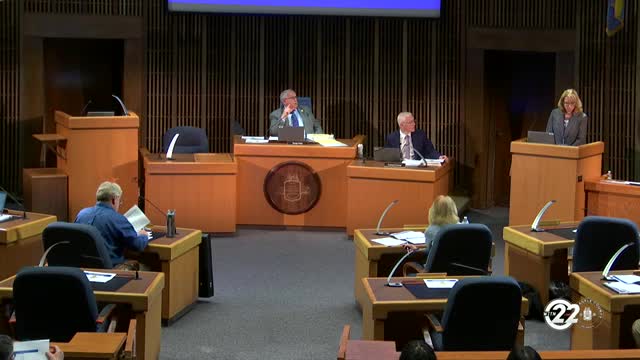
Jill Florie, chief financial officer for New Castle County, told county council at an FY2026 budget hearing that the administration’s recommended operating budget relies on reserves and federal revenue replacement to absorb sharply higher health-care and contractual costs. Florie presented an overall operating budget recommendation of about $371,000,000 and said the general fund budget is up roughly 5.17% from the prior year.
Florie said negotiated wages and benefits were the largest cost drivers in the FY2026 recommendation and that prescription and medical expenses had risen significantly since October. “We are anticipating at this point a $4,800,000 deficit going into the end of the fiscal year,” she said, citing year‑to‑date actuals. To balance the FY2026 recommendation, the county is drawing more heavily on prior‑year reserves and on ARPA (American Rescue Plan Act) revenue replacement; Florie said the budget uses about $5,300,000 more of reserves or ARPA than the prior year.
Why it matters: the budget outlines how the county intends to fund ongoing services while coping with rising personnel and benefits costs and the fallout from a countywide reassessment that substantially changed assessed values. The presentation also previewed how reassessment will affect tax rates and exemptions that determine individual property bills.
Key details from the presentation
- Overall operating recommendation: about $371 million (county executive and administration recommendation). - General fund: presented as a 5.17% increase year over year. - Capital: general‑fund capital authorizations highlighted at about $23.9 million; most sewer capital requests are carryovers from previously authorized multiyear projects. - Reserves and ARPA: Florie said FY2025 relied on several non‑recurring funding sources (reported totals included RTT reserve, tax stabilization reserve and ARPA revenue replacement) and that FY2026 increases the use of alternate sources by roughly $5.3 million compared with FY2025. - Deficit projection: $4.8 million estimated deficit at the close of FY2025, mainly from health‑care and prescription spending increases.
Reassessment, tax base and appeals
Florie described the county’s recent reassessment as the underlying factor changing the tax base. She presented an average assessed‑value increase of roughly 375% compared with the 1983 base, with residential values increasing their share of total assessed value (from about 66% previously to roughly 76% under the new values). The administration reported 5,208 appeals filed during the reassessment process.
Florie explained the administration’s revenue‑neutral target (the “revenue neutrality” definition used in the checkbook presentation) and said the proposed tax rates incorporate a proposed low‑income property tax exemption; she noted the rates would be different without that exemption. She also said the reassessment shift affects how tax burdens move between residential and nonresidential parcels and urged council members to consider the county’s collection assumptions when setting rates.
Other revenue notes
- Realty Transfer Tax (RTT): the administration recommended budgeting RTT at about 37.9% (presented as a line item projection); the budget schedules RTT collections conservatively at 95% of the estimate to protect against swings. - Hotel tax: an MOU with the state for state collection of hotel tax has been signed; the county expects a transition beginning in July with county receipts delayed one month (first county receipts expected in September after the state begins collections). - Charges for services, licenses and permits, intergovernmental revenue and interest earnings were presented as mostly flat or slightly down based on FY2025 experience; interest earnings were shown lower because the county expects to use more reserves.
Council questions and context
Councilman Carter thanked staff for clarity and raised concern about delaying a municipal bond issuance, saying he worried a federal change to municipal bond tax treatment in Congressional reconciliation could add an estimated 2.1 percentage points to borrowing costs and therefore push the county to weigh whether to go to market sooner. Councilman Street asked for a later briefing showing the specific federal funds the administration projects to receive and where those funds are budgeted, citing concern that federal funding could be at risk.
Next steps
Florie and county staff said department‑level hearings and presentations will follow; department representatives will explain contingencies, position changes and capital project details in subsequent sessions.