Get Full Government Meeting Transcripts, Videos, & Alerts Forever!
Get email alerts on the Bh Connect Prop1 topic
No spam. Unsubscribe anytime.
DHCS outlines BH Connect rollout and Prop 1 awards; housing and IMD guidance emphasized
Summary
DHCS described federal approval and a staged implementation for BH Connect (1115 waiver components and state plan changes), an outcomes incentive program, expanded evidence-based practices and IMD financing options, and imminent award announcements for Prop 1 Behavioral Health Continuum Infrastructure Program funding.
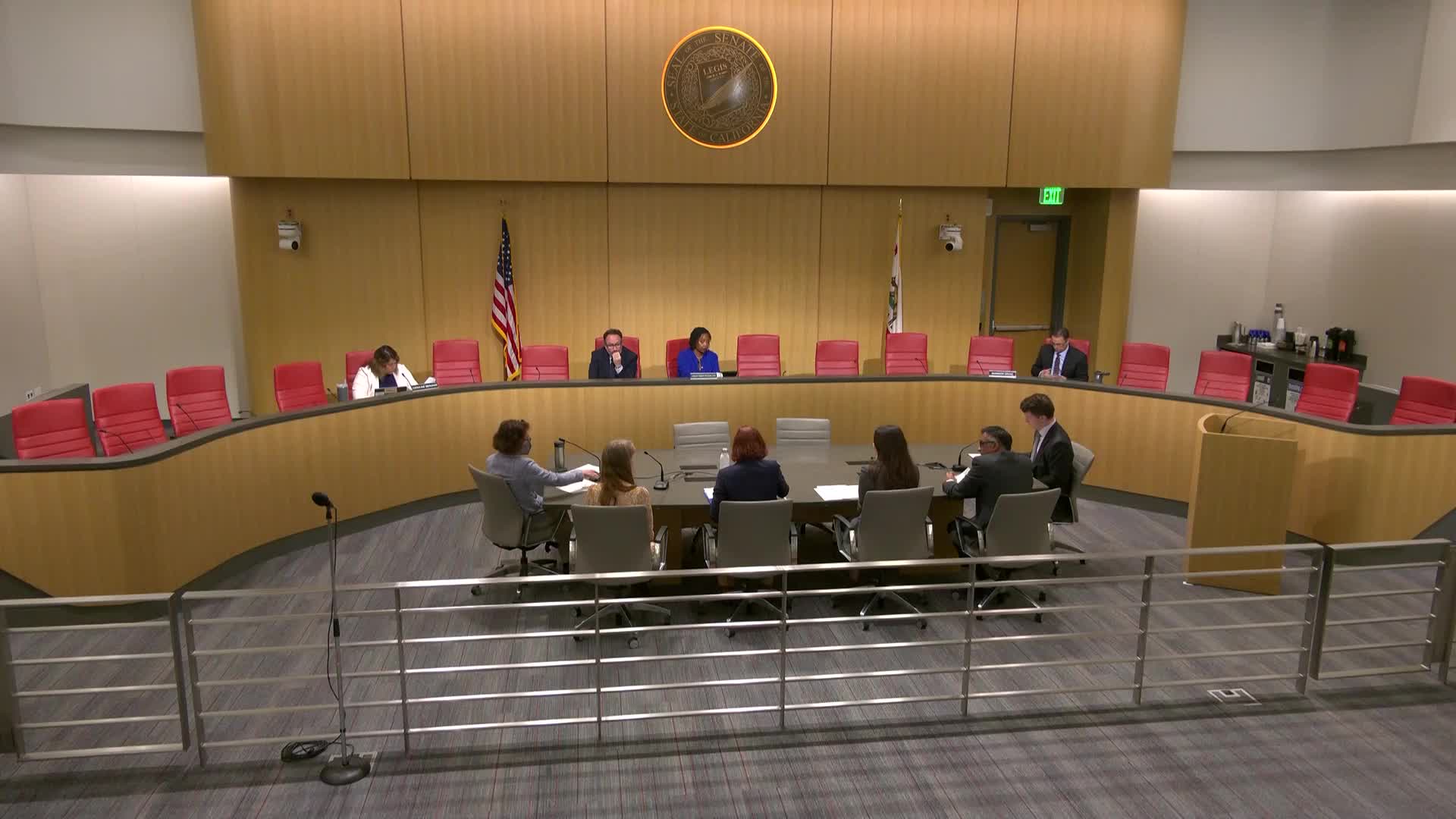
The Department of Health Care Services briefed the subcommittee on implementation of BH Connect and the behavioral health elements of Proposition 1.
Federal approvals and timeline Marlise Perez (DHCS) reported that DHCS received federal approvals for portions of the BH Connect package in December 2024 and is moving to staged implementation. Key components will go live between spring 2025 and July 2026. DHCS said it is finalizing a multiyear fiscal plan and will include additional detail in the May revise.
Key program components DHCS outlined several near-term elements: - Access reform and outcomes incentive program: Up to $1,900,000,000 in incentive funding is available to reward behavioral health plans for improved performance on quality metrics; 45 counties representing about 90 percent of Medi‑Cal members have submitted letters of commitment to participate. - New adult community-based evidence-based practices: Counties may begin to cover expanded models such as Assertive Community Treatment, Coordinated Specialty Care for first-episode psychosis, and supportive employment; counties that implement these models and meet quality milestones may access federal financial participation for short-term stays in institutions for mental disease (IMDs). DHCS emphasized that IMD funding is conditional on a continuum of community care. - Transitional rent and housing: DHCS said up to 30 percent of BHSA funding is dedicated to housing interventions (rental subsidies, operating subsidies, shared housing, project-based assistance), with 50 percent of that portion required for people who are chronically homeless; up to 25 percent of BHSA funds may be used for capital development.
Prop 1 infrastructure awards On the bond side, DHCS said it is administering the Behavioral Health Continuum Infrastructure Program and expects to announce awards of up to $3.3 billion in the current month; the full program is authorized up to roughly $4.4 billion and DHCS will release future RFAs for additional rounds.
Why it matters BH Connect and the BHSA implementation reshape funding flows and authorize new services and financing mechanisms intended to expand community-based capacity, increase federal matching funds, and connect housing supports to behavioral health. Counties and providers must align service arrays to access IMD funds and incentive payments.
Sources: Testimony from DHCS (Marlise Perez, Paula Wilhelm) and public comments from county and stakeholder representatives.