Get Full Government Meeting Transcripts, Videos, & Alerts Forever!
Get email alerts on the Financial Regulation topic
No spam. Unsubscribe anytime.
DFPI seeks fee increases after multi‑year shortfall; LAO urges temporary review, regulated industries press for details
Summary
The Department of Financial Protection and Innovation presented trailer‑bill language to raise licensing and examination fees to avert a projected fund insolvency; the LAO recommended time‑limited approval with follow‑up monitoring, and industry groups asked for clarity on assessments that could be billed in September.
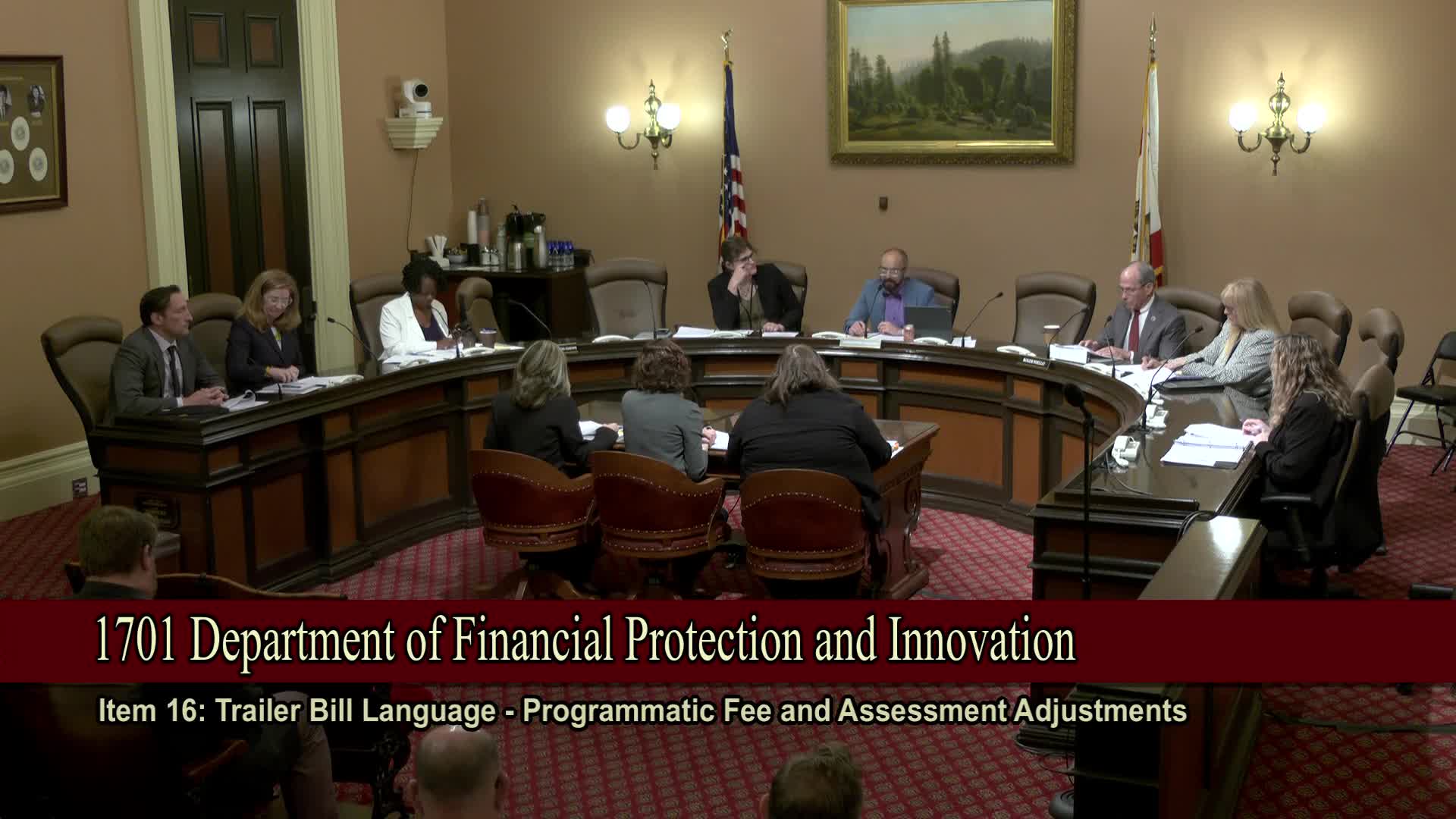
The Department of Financial Protection and Innovation told the Senate Budget and Fiscal Review Subcommittee No. 4 that statutory licensing fees have not kept pace with workload and inflation and that the Financial Protection Fund faces a structural shortfall. DFPI presented proposed trailer‑bill language to raise fees for several licensing programs and to allow the commissioner to set an hourly examination rate; DFPI said without changes it risks insolvency by fiscal year 2025–26.
What was proposed DFPI said it commissioned Crowe LLP to analyze program revenues and costs; the firm recommended fee adjustments to cover increased staffing, new statutory responsibilities and higher examination and overhead costs. DFPI asked the Legislature to authorize increases that would be implemented across selected programs and to allow an annual hour‑based examination rate (DFPI cited a proposed $120 per hour examination rate for several programs).
LAO recommendation and agency response The Legislative Analyst's Office recommended the Legislature approve fee increases on a limited three‑year basis, with DFPI reporting actual revenues collected, industry market condition reports, and plans for programs not covered by the trailer bill. LAO said the independent evaluation estimated nearly $193 million was needed through 2027–28 to stabilize DFPI, and the trailer bill covers part of the gap. DFPI opposed a three‑year sunset, arguing its licensees seek predictability and the fee package is intended to put the fund on a sustainable long‑term footing.
Industry concerns Representatives of affected industries — including mortgage bankers — told the subcommittee they were in ongoing negotiations with DFPI and expressed concern about assessment timing and magnitude. Industry groups asked for clarity on how pro rata assessments and any deficit collections would be implemented for invoices sent this September.
Why it matters DFPI's regulatory portfolio has expanded in recent years (digital financial assets, debt collection licensing, student loan servicing and the state consumer financial protection law), increasing supervisory and enforcement workloads. DFPI said settlements have temporarily bolstered its fund in recent years but are not reliable recurring revenue; the department told the subcommittee it will conduct annual reviews of program revenues and expenditures going forward.
Next steps The subcommittee heard DFPI, Finance and LAO viewpoints and held the item open for follow‑up. LAO asked DFPI to produce market‑condition reporting and specific revenue plans for programs not addressed in the current trailer‑bill request.
Speakers from the transcript: Suzanne Martindale (Chief Deputy Commissioner, DFPI); Sophia Smith (Deputy Commissioner for Administration, DFPI); Taylor McCrow (Department of Finance); Heather Gonzalez (Legislative Analyst's Office); industry representatives (mortgage bankers).