Get Full Government Meeting Transcripts, Videos, & Alerts Forever!
Get email alerts on the Health Care Affordability topic
No spam. Unsubscribe anytime.
Office of Health Care Affordability draws scrutiny after board sets hospital sector targets
Summary
HCAI briefed the Senate subcommittee on the Office of Health Care Affordability’s newly adopted statewide spending-growth target (3.5% in 2025 to 3.0% in 2029) and a lower sector target for a set of high-cost hospitals, prompting questions about accounting for inflation, seismic costs, and near-term impacts on consumers and hospitals.
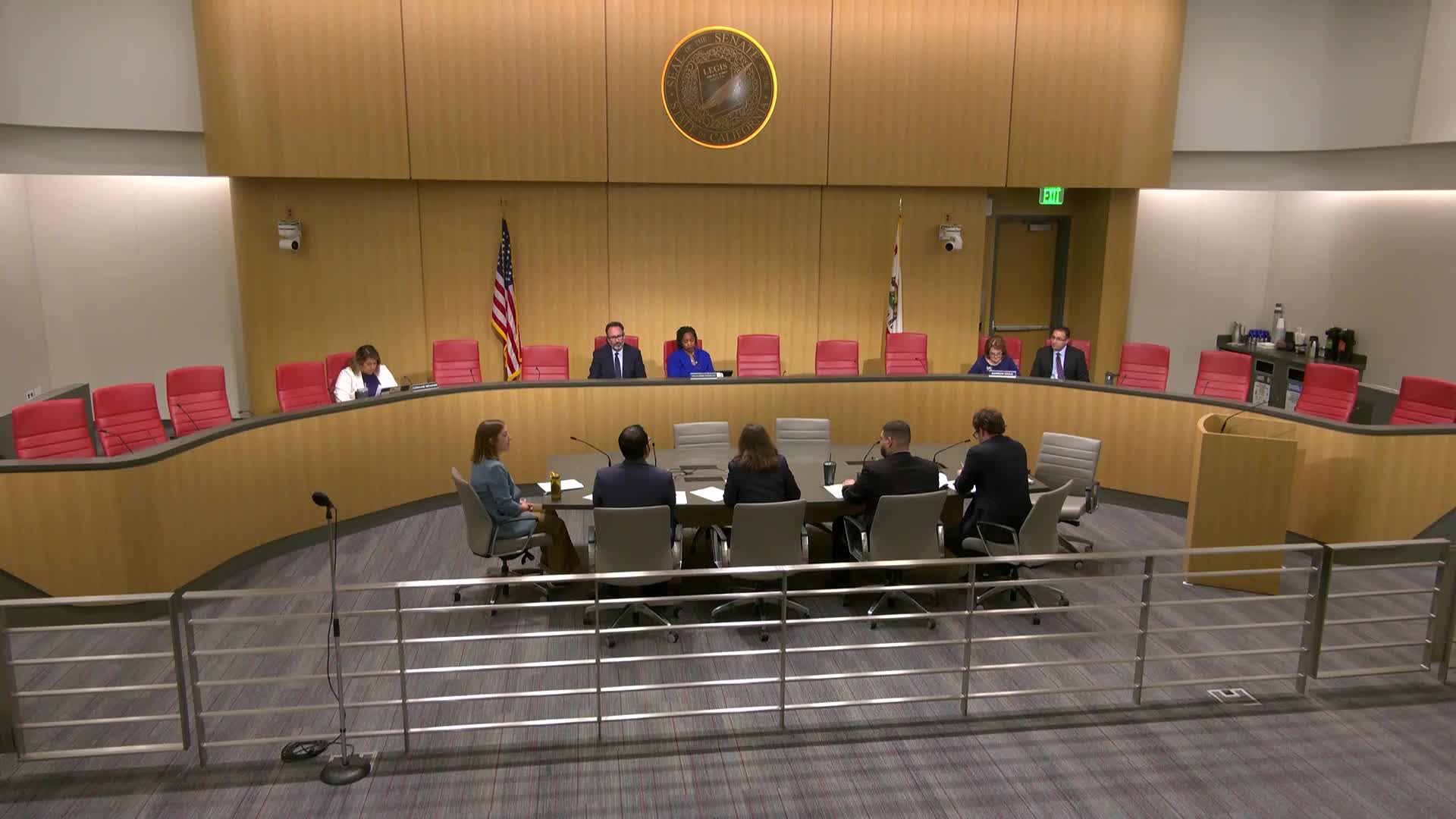
The director of the Department of Health Care Access and Information (HCAI) told the Senate Budget Subcommittee No. 3 that the Office of Health Care Affordability (OCA) is implementing a statewide spending-growth target for the health system and a separate, lower target for a group of identified “high-cost” hospitals.
Elizabeth Landsberg, HCAI director, said the statewide target adopted by the affordability board is a five-year sequence beginning at 3.5 percent in 2025 and decreasing to 3.0 percent in 2029. The target is intended to moderate health spending growth in excess of median household income and to slow long-term price escalation.
The hospital-sector decision Landsberg said the board authorized a hospital sector target after public testimony and an eight-month methodology development process. The office recommended identifying high-cost hospitals as those above the 85th percentile on two measures (a per-unit commercial price measure and a relative commercial-to-Medicare price) for at least three of five years between 2018 and 2022. The initial screening produced 11 hospitals; after deliberation the board settled on a final list of seven hospitals and a lower sector target (1.8% in 2026 falling to 1.6% in 2029) to apply to them.
"We looked at a number of economic indicators and decided to start with a modest statewide target," Landsberg said. "The board then developed a sector target for hospitals identified as outliers in commercial prices." She said the office has engaged hospital representatives and stakeholders and will publish reports and baseline data as required by statute.
Questions from committee members and stakeholders Senators pressed HCAI on whether the targets accounted for recent or anticipated cost pressures, including inflation, seismic compliance costs (SB 525), staffing wage mandates, and capital investments. Committee members repeatedly asked when consumers might see premium or out‑of‑pocket savings and whether the targets would be adjusted for major capital or mandated costs.
Jason Constanturo (Legislative Analyst's Office) told the committee that LAO had raised implementation, targeting, and oversight questions in its analysis; other hospital and safety-net groups testified in public comment that the OCA targets may be premature without fuller data or exemptions for unique hospital costs. Several testifiers urged legislative oversight and more clarity on how exceptions for capital projects and seismic work would be handled.
What’s next Landsberg said HCAI will publish a baseline report (statutorily required) and that the office will continue stakeholder engagement. The department also said a preliminary OCA report will be issued shortly and annual reporting to the Legislature is required. The committee signaled close interest in whether the office will make allowance for mandated seismic investments and for how the targets will be enforced without harming access.
Sources: Testimony of Elizabeth Landsberg; LAO commentary from Jason Constanturo; public comment from hospitals and stakeholder groups.