Columbus committee hears competing views on utility reselling, submetering; no vote taken
Loading...
Summary
Columbus City Council’s Public Utilities & Sustainability Committee heard detailed testimony on utility reselling and submetering from residents, service providers and housing industry representatives during a public hearing called by Councilmember Shayla Weiss.
Columbus City Council’s Public Utilities & Sustainability Committee heard detailed testimony on utility reselling and submetering from residents, service providers and housing industry representatives during a public hearing called by Councilmember Shayla Weiss.
The hearing examined a proposed reintroduction of earlier legislation addressing third-party reselling and submetering in multiunit buildings. Proponents said the change would increase billing transparency and expand access to state utility-assistance programs; industry and property managers warned an overly broad ban could reduce conservation incentives and create operational and legal problems for landlords and tenants.
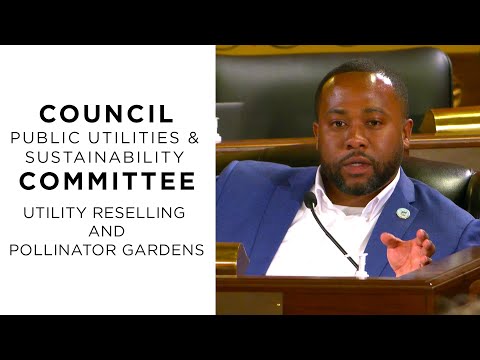
Committee chair Councilmember Shayla Weiss opened the discussion by saying the proposal is an early draft and the hearing was intended to collect feedback that will shape future language. “We propose ideas. We get feedback. We make changes. We present it,” Weiss said.
Grant Ames, Government and Strategic Initiatives Manager with the Central Ohio Area Agency on Aging, told the committee his agency serves roughly 11,000 residents across eight central Ohio counties and that its case managers completed nearly 47,000 home visits last year. “We really see ourselves as a lifeline,” Ames said. He stressed that many older renters are housing-cost burdened and that access to assistance programs such as HEAP requires the applicant to be the named utility customer. Ames said submetered tenants who are not the account holder can be excluded from assistance and that increased transparency would “support older adults in being able to remain in their homes.”
Naya Walters of the council’s Legislative Research Office gave a technical overview of submetering and utility reselling, defining submetering as installation of meters downstream of a master meter to measure individual-unit usage and reselling as third parties purchasing from regulated utilities and billing tenants. Walters summarized state and municipal approaches: 23 states and Washington, D.C., have some regulation of submetering; 29 states regulate resale markups in some form. She cited prior Ohio regulatory actions and pending state bills that address exemptions and registration for certain providers.
Representatives from the industry and property owners emphasized benefits they said submetering provides. Theresa Ringenbach of Nationwide Energy Partners said state Public Utilities Commission (PUCO) orders require disclosures and a bill-cap mechanism, and that submeters can provide monthly billing, usage alerts and pre-move-in usage estimates. “We actively will send high bill usage alerts and text messages to the residents in any key properties when we see them doing something that’s going to cause them to have a high bill,” Ringenbach said.
Apartment management groups and property owners said the practice can reduce consumption. Dimitri Hancifotinos of the Columbus Apartment Association cautioned that criminal penalties in the ordinance would “criminalize a business practice” and could penalize managers who rely on established lease addenda. He said disclosure requirements already exist in PUCO rulings and that the association favors education and civil remedies rather than criminal penalties.
Multiple property owners and managers echoed operational concerns: quarterly municipal billing cycles can create large arrearages for tenants if billing is not monthly; submetering can allow for more timely monthly bills and faster leak detection and credits. Speakers also noted that some state and municipal regulations already bar excessive marking up of resold utilities and that tariff tools and calculators exist to reconcile third-party bills with regulated utility charges.
Committee members and witnesses discussed draft statutory and regulatory references, including a 2017 PUCO ruling, a 2023 PUCO order referenced by industry witnesses, and introduced state bills (House Bill 173 and Senate Bill 108) that would clarify treatment of behind-the-meter services. No formal amendments or votes were taken at the hearing. Councilmember Weiss said staff will work with stakeholders on revisions and announced the committee will reconvene May 21 for further discussion.
The hearing record includes several recurring points of dispute the committee must resolve: whether submetering denies tenants access to assistance programs that require the utility account holder; whether municipal regulation should create civil remedies or criminal penalties for providers or landlords who violate disclosure or billing parity rules; and how to balance conservation incentives tied to individual billing against tenant protections. Witnesses urged the committee to coordinate city-level code or ordinance language with state PUCO rules to avoid conflicting requirements.
The committee received written submissions and asked parties to provide technical billing disclosures and example lease addenda so staff can draft alternate language. Committee staff and the city’s water department indicated ongoing work on a monthly-billing feasibility study for water customers as part of the broader review.