Get Full Government Meeting Transcripts, Videos, & Alerts Forever!
Get email alerts on the Wildfire Ecology topic
No spam. Unsubscribe anytime.
Chico State students present early findings: prescribed burns reduce star thistle, native ‘fire followers’ colonize Park Fire burn scar
Summary
A Chico State class presented early field data from Upper Bidwell Park after the July 2024 Park Fire: prescribed burns showed the lowest recorded yellow starthistle cover in sampled transects, and students documented 58 fire-following native species including bird’s-eye gilia, wavy-leaf soap plant and red larkspur.
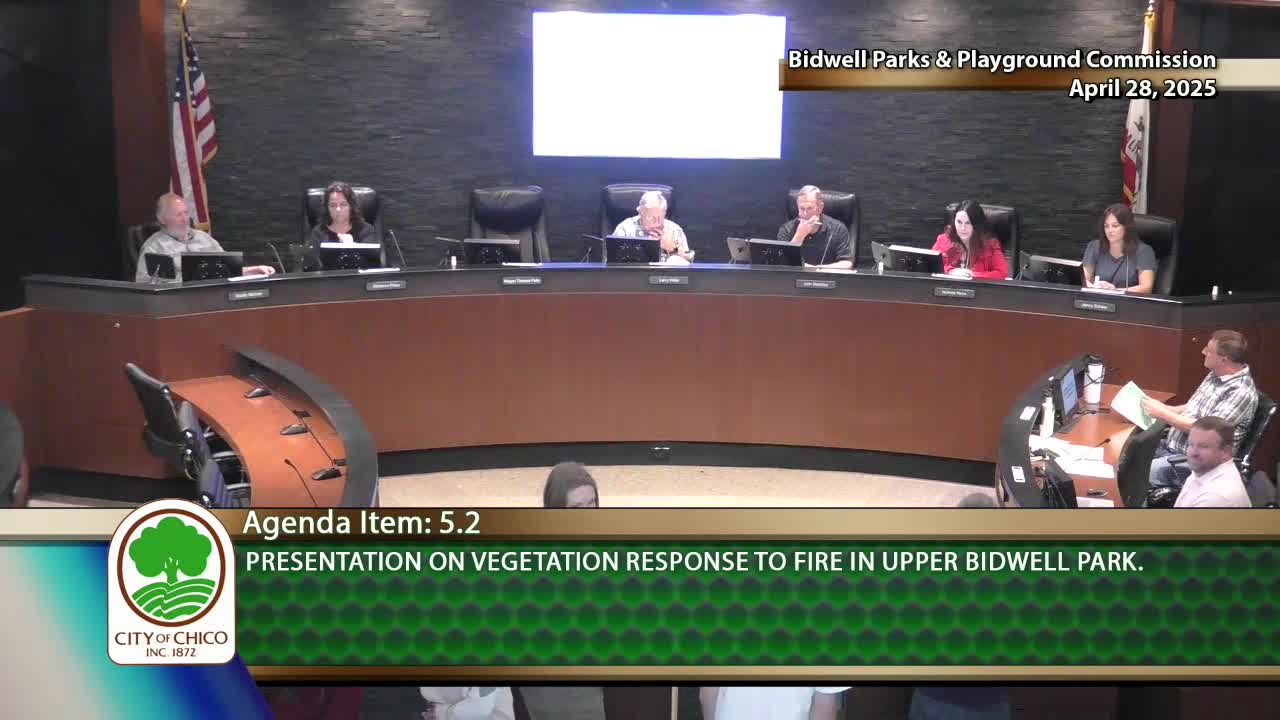
A Chico State applied-ecology class reported early findings from field sampling in Upper Bidwell Park after the July 2024 Park Fire, telling the Park and Playground Commission that prescribed burns were associated with substantially lower early‑season cover of yellow starthistle and that dozens of native “fire followers” are recolonizing the burn scar.
Dr. Kristen Kosinski and student researchers described two projects: a quantitative transect study of yellow starthistle cover and a crowdsourced inventory of post-fire native plants using iNaturalist. Students sampled three treatment types—areas that had received prescribed burns, unburned areas, and ground affected by the Park Fire—using 12 transects per treatment and a line‑point intercept method. They cautioned their March sampling likely undercounts this year’s starthistle because the plant peaks later in spring.
In the student sample, the prescribed‑burn sites had the lowest measured yellow starthistle cover (0.17 percent in early March sampling). The Park Fire area showed greater cover than the prescribed-burn sites and resembled unburned areas in early-season measurements, a pattern the presenters attributed to the timing of the wildfire (August 2024) after starthistle seed set. Students recommended continued, strategically timed prescribed burns and early spring weed abatement to reduce starthistle seed production.
The class also used iNaturalist photographs to identify fire‑follower plants in the burn scar and reported 58 species observed since the fire; the three most commonly recorded were bird’s‑eye gilia (a California endemic annual), the wavy‑leaf soap plant (a fire‑resprouting bulb important to pollinators and culturally significant to indigenous people), and red larkspur (a native that can resprout or appear from seed after fire). Presenters noted limitations of the iNaturalist method—public observers tend to photograph conspicuous or showy species—so the list is not a complete survey of the groundcover.
Presenters discussed management implications with commissioners and staff: prescribed burns can reduce starthistle where conducted in consecutive years, but a single large wildfire may temporarily increase starthistle abundance because seeds remain in the soil seedbank. Park staff said the city is continuing prescribed-burn work west of Horseshoe Lake and is discussing potential expansion, subject to staffing, weather windows and coordination with Chico Fire.
The student team recommended multi-year monitoring, additional sampling across burn-severity classes, and continued prescribed burns coupled with early-season weed abatement to limit reinfestation.