Get Full Government Meeting Transcripts, Videos, & Alerts Forever!
Get email alerts on the Medical Aid In Dying topic
No spam. Unsubscribe anytime.
Assembly approves medical aid‑in‑dying law after hours of debate
Summary
The New York State Assembly passed legislation to allow mentally competent, terminally ill adults to receive medication to end their lives, following hours of testimony and close floor debate. The bill requires two physicians, self‑administration, and several procedural safeguards; opponents warned of risks to vulnerable New Yorkers.
The New York State Assembly on Tuesday approved legislation amending the Public Health Law to permit mentally capable adults with a medically confirmed prognosis of six months or less to request, receive and self‑administer medication to end their own lives.
The bill, sponsored on the floor by Assemblymember Pollan, passed after a slow roll call with 81 votes in favor and 67 opposed. The law takes effect immediately, according to the measure’s text.
Supporters said the measure gives a narrow, carefully regulated option to a small number of patients who face unbearable pain and imminent death. “Most people who get [a prescription] are going to die their natural course,” Assemblymember Pollan said during floor debate, describing the law as a last‑resort option for a very small percentage of patients. Pollan and other backers stressed requirements in the bill: two physicians must confirm the terminal diagnosis, the patient must be at least 18, the drug must be self‑administered, and mental‑health evaluation is required when capacity is in doubt.
The bill also requires documentation and independent witnesses for written requests, bars witnesses with financial interest in the patient’s estate, and directs the Department of Health to collect data and publish information about hospice and palliative options in multiple languages. Sponsors said the measure includes protections to detect coercion and preserve patient autonomy.
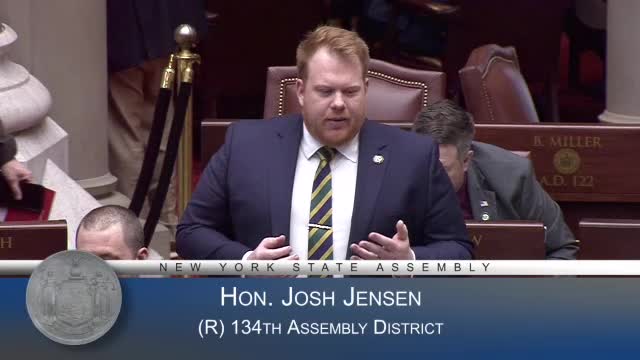
Opponents raised concerns that the safeguards are insufficient and that the policy could create risks for vulnerable groups, including people with disabilities, low‑income patients and racial and ethnic minorities who face unequal access to hospice and palliative care. Several members warned of a “slippery slope” after noting changes in other countries’ laws and urged more investment in hospice and palliative services before adopting medical aid‑in‑dying. One legislator who opposed the bill said in floor remarks that New York should be “number one in hospice and palliative care” before allowing government‑authorized endings of life.
Debate also focused on technical issues in the text: how “terminal” and “incurable” are defined, whether treatment options that prolong life disqualify a patient, the circumstances that should trigger mandatory mental‑health reviews, and how to handle medications that are prescribed but not used (the bill cites that in other jurisdictions roughly 38 percent of prescriptions are never used). Lawmakers asked whether the requirement that the attending physician ‘‘examine’’ the patient permits telehealth in some circumstances, whether out‑of‑state patients could seek New York providers, and how death certificates should be completed after a self‑administered lethal dose.
The legislation prohibits insurers from promoting the option and includes a provision allowing returned unused medication to be handled according to usual controlled‑substance rules; sponsors said the bill allows regulators to adopt further rules. Penal provisions already on the books would apply to coercion or criminal misuse of the medication, and sponsors told the chamber the measure does not reduce any existing criminal penalties.
Advocates for the bill — including patients, physicians and hospice groups that testified for the measure — said it provides dignity, choice and control to people facing imminent, unbearable decline. Opponents, including disability advocates and some medical and faith groups, said the law risks pressuring disadvantaged patients, could increase inequities, and should wait until New York’s hospice and palliative infrastructure is strengthened. Several members called for additional hearings and implementation planning.
With the passage, New York joins other U.S. jurisdictions that allow medical aid‑in‑dying, subject to the terms of the enacted law. The measure requires the Department of Health to collect data on use and outcomes and includes an immediate effective date.