Get Full Government Meeting Transcripts, Videos, & Alerts Forever!
Get email alerts on the Parks Recreation Facility Financing topic
No spam. Unsubscribe anytime.
Brentwood residents and commissioners clash over proposed racket facility, financing and recent state bill
Summary
Residents pressed the Brentwood Board of Commissioners about a proposed indoor racket facility’s cost, funding and whether a new state bill enabling public‑private partnerships was advanced without local input. Commissioners said cost estimates, pro formas and community input remain under review.
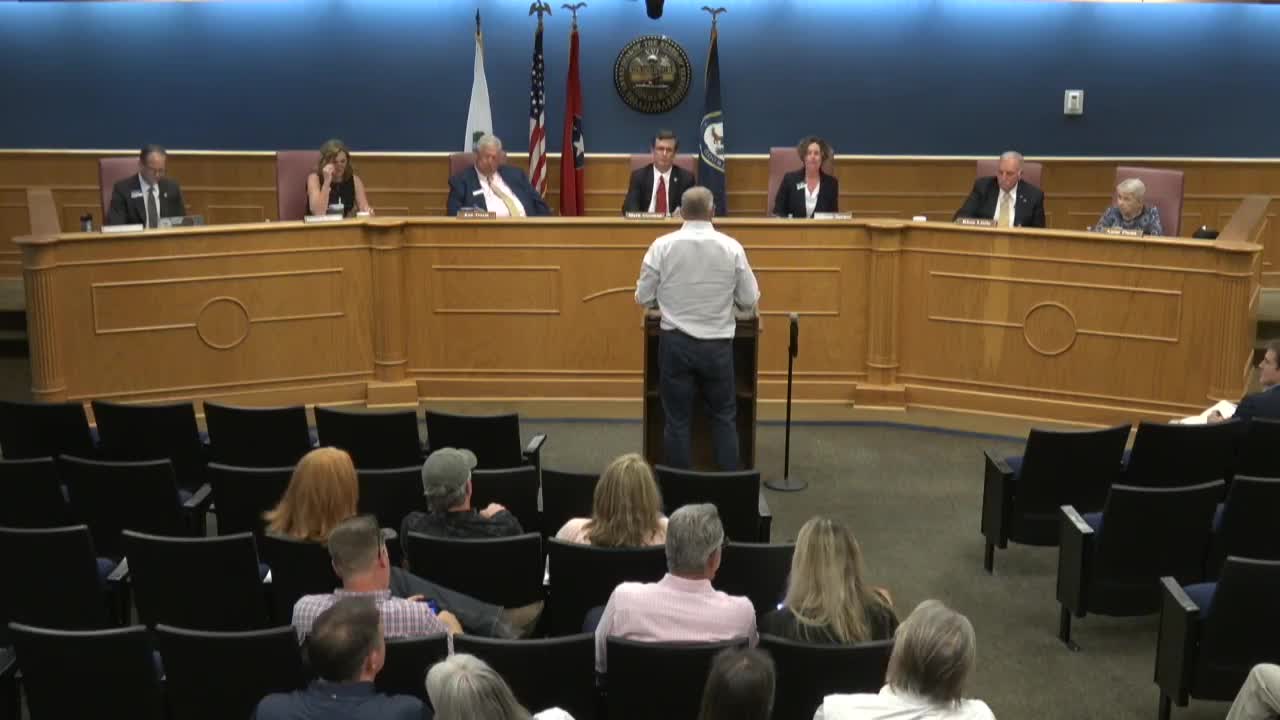
Several residents and commissioners at the Brentwood Board of Commissioners meeting on April 28 pressed for clarity about a proposed indoor “racket” facility (tennis/pickleball) and a recent state bill that could affect how such a facility is financed and operated. Citizens raised concerns about project costs, the absence of a referendum and the transparency of contacts between city officials and state lawmakers.
Resident Mace Lindy, who said he attended multiple ad hoc committee meetings about the project, told commissioners, “So I'm here about the tennis.” He criticized the committee’s financial projections and fundraising, saying the plan “started out as a $12,000,000 tennis amenity” and later expanded and that he could not find comparable facilities with the returns claimed by proponents. “I couldn't find, I haven't found any, tennis facility that claims that they have more than a 7% return,” Lindy said, adding that the group did not conduct outside financial validation.
Why it matters: Commissioners are weighing whether to put a bond referendum to voters to fund any city share of a facility; bonds require documented project costs. Several commissioners and staff said a definitive cost estimate and a pro forma are still being finalized before any formal decision on financing or a referendum can occur.
Commissioners and staff said the city is seeking better cost information. Commissioner Suzanne McMillan, responding to rumors that the facility would host national tournaments, said the community “don't want it to be a location where people nationally come from” and that planners have been envisioning primarily local or regional use. Vice Mayor Travis urged patience while staff completes financial analyses and pro formas, saying those documents should be available within about a week to 10 days.
Residents and some commissioners also raised concerns about a recent action in the Tennessee legislature. Several speakers, including Commissioner Nelson Andrews and Commissioner Dunn, said a state bill (identified in the meeting as House Bill 65) was advanced in Nashville in a way that they found excluded local review. Andrews said the commission had not been asked to approve or formally endorse the legislation and that legislators had moved the bill forward without prior local consultation. Commissioner Dunn called an amendment to the city charter “a big deal” and said he was troubled that the city learned about it online rather than through direct contact from state lawmakers.
City staff and commissioners described the local process as still in an exploratory stage. Interim staff and commissioners said the city had authorized staff to talk with private partners about feasibility in a prior memorandum of intent, but that a private partner who had been in early talks eventually withdrew. Commissioners said that if a public‑private partnership were to be considered, it would be presented publicly and would require legal review and, if it required bonding, a referendum.
Cost and design clarifications provided in the meeting included an estimate that preliminary design expenditures to date were “somewhere between $125,000 to $200,000,” not the $1 million figure circulating online, and that earlier rough project estimates discussed in briefings had ranged from roughly $16 million to $20 million depending on program options, with private‑partner scenarios discussed informally that proponents said could substantially reduce the city’s upfront cost to a lower figure (one commissioner referenced a possible reduction to about $6.5 million if certain partnership terms were achieved). Commissioners emphasized that none of those partnership terms had been approved by the commission.
Resident requests for more public discussion and formal community meetings were echoed by multiple commissioners. Commission leaders said pro formas and updated cost estimates will be published and that the planning commission and public informational meetings will occur before any formal action is taken. No formal vote on the project or on bond authorization occurred at the April 28 meeting.