Get Full Government Meeting Transcripts, Videos, & Alerts Forever!
Get email alerts on the Public Health Pest Control topic
No spam. Unsubscribe anytime.
DOHMH outlines rat-mitigation work in Greenwich and West Village; residents press for more on-the-ground abatement
Summary
New York City Department of Health and Mental Hygiene officials described inspection, case‑management and limited treatment steps for rat control in Manhattan Community Board 2, citing data on inspections and failed compliance checks. Community members pressed for greater direct abatement, tree‑pit work and budget detail.
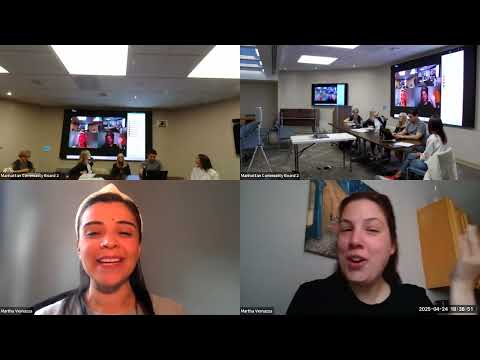
Martha Renaza, who leads outreach and education for the New York City Department of Health and Mental Hygiene (DOHMH) Pest Control Services, told Manhattan Community Board 2 on a virtual call that the department enforces the New York City Health Code Article 151.02 and focuses on inspections, case management and outreach to reduce rat activity in identified problem areas.
DOHMH officials said they conduct proactive inspections in higher‑burden “rat mitigation zones” and smaller, concentrated “reservoirs,” and that property owners who fail an initial inspection receive a commissioner’s order followed by a compliance inspection. "We promote healthy and safe environment for New Yorkers," Renaza said. If violations persist after a compliance visit, the property owner on record receives a summons to the city’s Office of Administrative Trials and Hearings (OATH). Fines at OATH range from $300 to $2,000, officials said.
The DOHMH presentation included local statistics for calendar year 2024: 5,062 initial inspections were conducted across Community Board 2, of which about 9% failed. DOHMH said roughly 60% of follow‑up compliance inspections subsequently failed. The agency also identified two reservoirs in CB2: the Greenwich Village reservoir (631 tax lots, about 8% failed in 2024) and the West Village reservoir (918 lots, about 9% failed). Christine Gargano, the DOHMH case manager for CB2, and Angela Travis, supervisor for the Lower Manhattan team, said case managers perform walk‑throughs and work directly with property managers and supers in those areas.
Community members questioned where DOHMH actually places its resources. One resident who said they received a violation for droppings around properly closed Department of Sanitation bins on West 10th Street asked whether the department treats tree pits and other public infrastructure. Renaza replied that DOHMH’s “stoppage” team fills burrows and addresses structural issues in tree pits within mitigation zones, and that tree‑pit treatment is not charged to adjacent property owners. By contrast, DOHMH said it will treat private property only when property owners fail to act and that treatment of private properties is charged to the property owner.
Officials said inspectors create work orders for tree pits and catch basins when they observe activity, but they also acknowledged capacity constraints: "Our stoppage team, our extermination team are not the largest, so those tickets don't always expedite as fast as we would like," Renaza said. Board members urged DOHMH to provide a clearer budget breakdown—how much the agency spends on outreach and education versus contracts or direct abatement—before the board considers any formal resolution or budget request.
DOHMH pointed the public to its rat information portal (nyc.gov/rats), which staff said shows inspection history and outcomes for properties and includes resources and multilingual materials, the free Rat Academy training, and ordering information for printed guides. The agency recommended reporting localized problems to 311 so inspectors can get details needed to access sites and create work orders.
Why it matters: CB2 residents said rat activity affects quality of life and can cause anxiety among neighbors; DOHMH emphasized public‑health risks tied to concentrated infestations and said its program combines enforcement, education and targeted treatment when owners do not comply. Residents and board members urged follow‑up data—particularly a budget breakdown for education vs. abatement and clearer timelines for tree‑pit work—before committing to a formal budget request or resolution.
The DOHMH team said it will share the slide deck and follow up with requested budget and program details through the board’s liaison.
Ending note: Board members agreed to request more detailed budget information and operational metrics from DOHMH before deciding whether to pursue a resolution or a budget request tied to expanded abatement work.