Get Full Government Meeting Transcripts, Videos, & Alerts Forever!
Get email alerts on the Legacy Omnibus Hf2563 topic
No spam. Unsubscribe anytime.
Minnesota House passes legacy omnibus bill funding clean water, habitat, parks and arts
Summary
The Minnesota House approved House File 2563, the 2025 legacy omnibus bill, on third reading after floor debate praising its funding for clean water, outdoor habitat, parks and trails and arts and cultural heritage; the roll call showed 115 ayes and 19 nays.
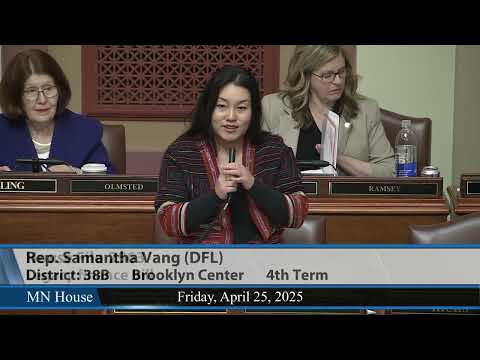
Representative Vang, the bill author and chair on the House floor, introduced House File 2563 as the chamber's legacy omnibus bill, saying it implements priorities of the 2008 Clean Water, Land and Legacy Amendment and funds projects statewide.
The bill allocates about $779,000,000 across legacy accounts, including roughly $160,000,000 from the Outdoor Heritage Fund for about 47 projects preserving or restoring roughly 7,000 acres of wildlife habitat; about $304,000,000 in the Clean Water Fund for roughly 61 projects and programs aimed at cleaning waterways; about $130,000,000 for parks and trails; and about $180,000,000 for arts and cultural heritage. Representative Vang and other members emphasized that much of the Clean Water Fund money will flow from state agencies to local governments and conservation districts to do on-the-ground work.
Members from both parties spoke in support, highlighting different parts of the bill. Representative Faulconer (Hennepin) said the bill “allocates about $779,000,000 in projects” and framed the package as bipartisan support for clean water and public lands. Representative McDonald, a committee co-chair, described the bill's arts-and-culture approach as moving away from earmarks toward a $17.5 million competitive pool administered through the Minnesota Humanities Center for community identity and heritage grants, and noted new disclosure requirements for nonprofits seeking funds. Representative Hussain (vice chair) and other members praised the bill's statewide reach; Representative Nash asked that future recognition for groups affected by the Vietnam War be considered where members felt communities were not named in this package.
Several speakers described procedural details on the floor: the clerk reported there were no amendments at the desk and called the bill for third reading. After floor debate the clerk called the roll of members voting remotely and then closed the roll. The clerk recorded a final tally of 115 ayes and 19 nays; the clerk announced that the bill "is passed" and that its title was agreed to.
Direct quotes from the floor included Representative Vang's description of the bill as this year's legacy bill and Representative Faulconer's statement that "this bill allocates about $779,000,000 in projects." Representative McDonald summarized the arts-and-culture funding approach: the humanities pool would vet projects "and award a grant if they deem it both constitutionally, first and foremost, and importantly, and necessary." Representative Nash urged attention to commemorations for Vietnamese, Lao and Cambodian communities.