Get Full Government Meeting Transcripts, Videos, & Alerts Forever!
Get email alerts on the State Housing Preemption topic
No spam. Unsubscribe anytime.
Clemmons leaders, residents urge withdrawal of House Bill 765, warn it would curb local land‑use control
Summary
At a special April 23 meeting, Village of Clemmons Councilman Mike Thomas and residents criticized House Bill 765 and related measures introduced in Raleigh, saying the bills would limit local planning authority, raise density mandates, and shift regulatory decisions to the state; attendees were urged to contact sponsors and ask them to withdraw.
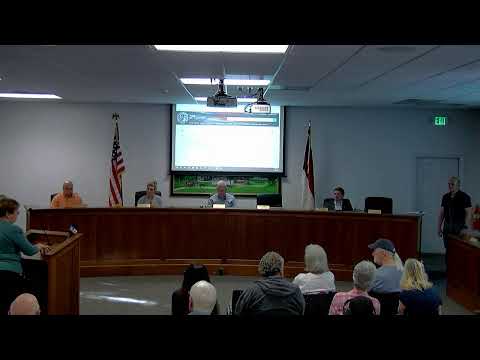
CLEMMONS, N.C. — Village of Clemmons Councilman Mike Thomas told a packed special meeting on April 23 that House Bill 765 and several companion bills introduced in the North Carolina General Assembly would “fundamentally change Clemmons as we know it today” and asked residents to press legislators to withdraw the measures.
Thomas led a roughly 30‑minute presentation that focused on five bills he described as the most impactful of a larger legislative package. He said one provision would require an official assessment by the (as presented) “Physical Research Division” whenever a proposed law could affect the net cost of housing; the presenter argued that the bills themselves lacked the assessments they would mandate.
“The more I read about this legislation and study it, the more clear it becomes that if this legislation passes, it will…fundamentally change Clemmons as we know it today,” Thomas said in his presentation. He also urged constituents to ask sponsors to withdraw the bills: “Withdraw it if you're a sponsor. Withdraw your sponsorship.”
Why it matters
Thomas told attendees he believes the bills would remove key local zoning tools — including parking and lot‑size rules — set minimum residential densities (he cited a minimum of five dwellings per acre as written in the bill text he presented) and expose local elected and appointed board members to new legal liability for land‑use decisions. He said those changes, combined with other measures that would allow multifamily structures by right in areas now zoned for single‑family homes, would sharply increase local population density and strain roads, schools and other infrastructure without accompanying state funding.
Thomas used local traffic counts to illustrate the point: he said the average daily traffic at the Middlebrook/158 intersection is about 56,500 vehicles now and that, under the bill’s density assumptions, his analysis showed traffic at that intersection rising to 124,800 vehicles per day. He framed that projection as an example of infrastructure demand increasing without funding from the state.
Presentation claims and sources
Thomas cited a mix of national and state sources during his presentation, including data he attributed to the Federal Reserve Bank of St. Louis and the National Association of Realtors’ housing‑shortage tracker. He argued that states that preempt local land‑use authority have seen greater housing price inflation and reduced availability, and he said North Carolina’s existing statute often referenced in land‑use work — described in the meeting as “160” or “160D” — already allows municipalities flexibility.
Public questions and council guidance
After the presentation the mayor opened the meeting for questions. Residents asked how to contact sponsors, whether local elected officials would retain authority, and where decision‑making power would shift. An attendee identified in the meeting as Jean Engle asked, “Where does our representative stand on this bill as of now? Are they for it or against it?” A council member replied that the named sponsor had filed the bill and that, as of the meeting, there were 22 sponsors and co‑sponsors on the measure (described in the meeting as 13 Republicans and 9 Democrats).
When asked who would make planning decisions if local authority is removed, Thomas said the bills “essentially elevat[e]” planning decisions to the state level and that developers could focus advocacy efforts on a smaller set of state decision makers.
Timing and next steps
A resident asked about the legislative calendar; a council member replied that the legislature’s crossover deadline is May 7, giving residents a short window to act. Thomas and the mayor urged people to contact representatives by phone, email and in person, and to use the presentation materials and a planned script that the council said would be posted on the village website for homeowner associations and neighborhood groups.
Public comments and proposed tactics
Speakers urged both local and statewide organizing. Bob Carr said public demonstrations and media coverage could be needed to persuade sponsors; former mayor John Waite connected the bills to broader concerns about legislative power and gerrymandering. Tim Rayhill recommended coordinated talking points and attending sessions in Raleigh to pressure lawmakers. The council indicated it would post materials and suggested residents look for a coordinated message and contact information on clemmons.org.
Formal actions
The council did not adopt a formal resolution at the meeting. At the end of the session the council adjourned on a motion from Councilman Mike Thomas; a second was moved from the floor and the chair called the meeting adjourned on a voice vote.
What the meeting did not do
No legislation, formal resolution or referral was approved or sent to other bodies at this meeting. The council limited the session to discussion of the state bills and did not take votes on local policy changes.
Next steps noted by council members
Council members said presentation slides and a suggested script would be posted on the village website and that members would be available to talk individually after the meeting. They also urged residents to contact their state representatives and senators and to consider attending the North Carolina League of Municipalities’ CityVision events; a council member said he planned to present concerns at an upcoming meeting in Greenville.
Ending
The special meeting concluded after roughly 45–50 minutes of presentation and public comment. Council members repeated the call for residents to register their views with legislators and to encourage sponsors to withdraw the measures rather than simply vote them down.