Get Full Government Meeting Transcripts, Videos, & Alerts Forever!
Get email alerts on the Pensions First Responders topic
No spam. Unsubscribe anytime.
Committee advances bill to lower retirement age for first responders to 55
Summary
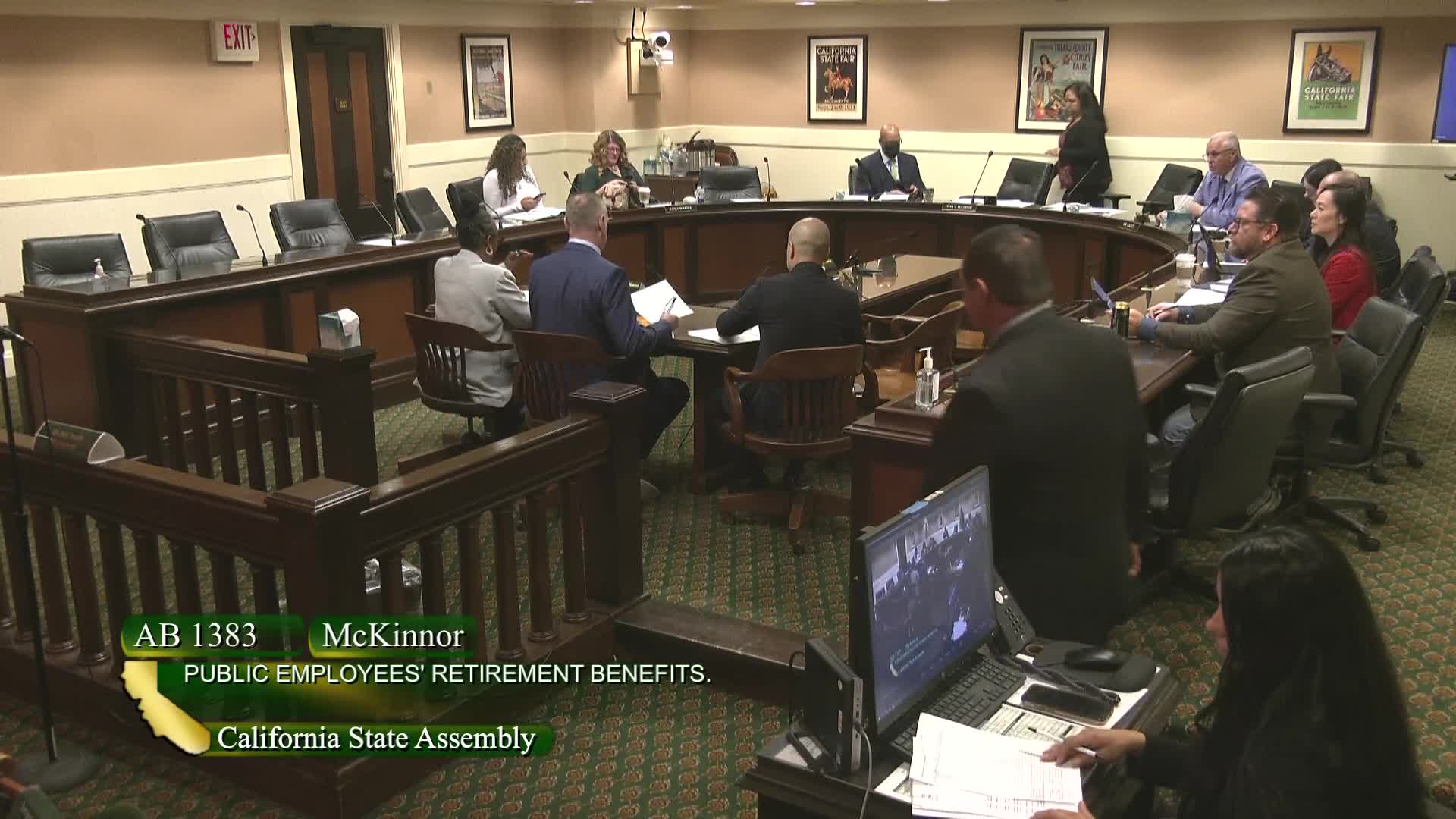
At a hearing of the Assembly Committee on the Public Employment and Retirement, members voted to pass AB 13 83 as amended and refer it to the Committee on Appropriations.
At a hearing of the Assembly Committee on the Public Employment and Retirement, members voted to pass AB 13 83 as amended and refer it to the Committee on Appropriations. The bill would lower the normal retirement age for designated first responders to 55 and restore specified collective-bargaining rights related to retirement benefits while maintaining other PEPRA protections.
AB 13 83’s supporters said the bill responds to serious, long-term health risks for firefighters and other first responders and restores negotiation space for local bargaining units. Brian Rice, president of the California Professional Firefighters, said the physical and toxic exposures in the job are cumulative and severe, and argued the bill is a measured step to protect workers’ health. “We’re trading firefighters and police officers lives for money, period,” Rice told the committee.
The bill’s author and supporters said AB 13 83 is prospective only and does not grant retroactive pension increases or “pension holidays.” Lamont Nguyen, president of the Long Beach Firefighters Local 372, told the committee the measure would not itself decide benefit levels but would “restore collective bargaining rights in a manner that doesn't make any affirmative decisions, but does give us all room to discuss at the table.”
Opponents focused on the bill’s fiscal implications for local governments and pension funds. Lisa Murphy, assistant city manager for Salinas, said returning to earlier benefit structures would threaten the long-term viability of public retirement systems and impose large new costs on cities already paying millions in pension contributions. “This bill, in its current form, will not resolve staffing shortages,” Murphy said, adding that higher pension costs could reduce funds available for salaries and services.
Bob Nelson, a Santa Barbara County supervisor and second vice chair of the Rural County Representatives of California, said his county has spent tens of millions stabilizing pension funding and warned AB 13 83 would revive unsustainable obligations from earlier eras. He said rising pension costs can force reductions to public safety staffing, mental-health services and other local programs.
Committee members pressed for technical detail and highlighted tradeoffs between workforce health and local fiscal constraints. Multiple members said they wanted further negotiations between sponsors and local-government associations before the bill reaches the floor.
The committee recorded the motion to pass as amended and refer the bill to appropriations; clerks announced the measure received the seven votes needed to advance. The author requested additional coauthors and said she and staff will continue working with stakeholders on technical refinements.
Votes at a glance: motion passed as amended; referred to Committee on Appropriations; roll-call tally recorded by the committee indicated sufficient affirmative votes to advance the bill.