Get Full Government Meeting Transcripts, Videos, & Alerts Forever!
Get email alerts on the Workers Compensation Fund topic
No spam. Unsubscribe anytime.
Committee advances overhaul of subsequent injury benefit trust fund to reduce employer assessments
Summary
AB 13 29 would align medical‑legal and permanent disability rules for the Subsequent Injuries Benefits Trust Fund (SIBTF), with sponsors saying the changes would reduce employer assessments by about 20–25%; opponents urged amendments and raised cost and process concerns.
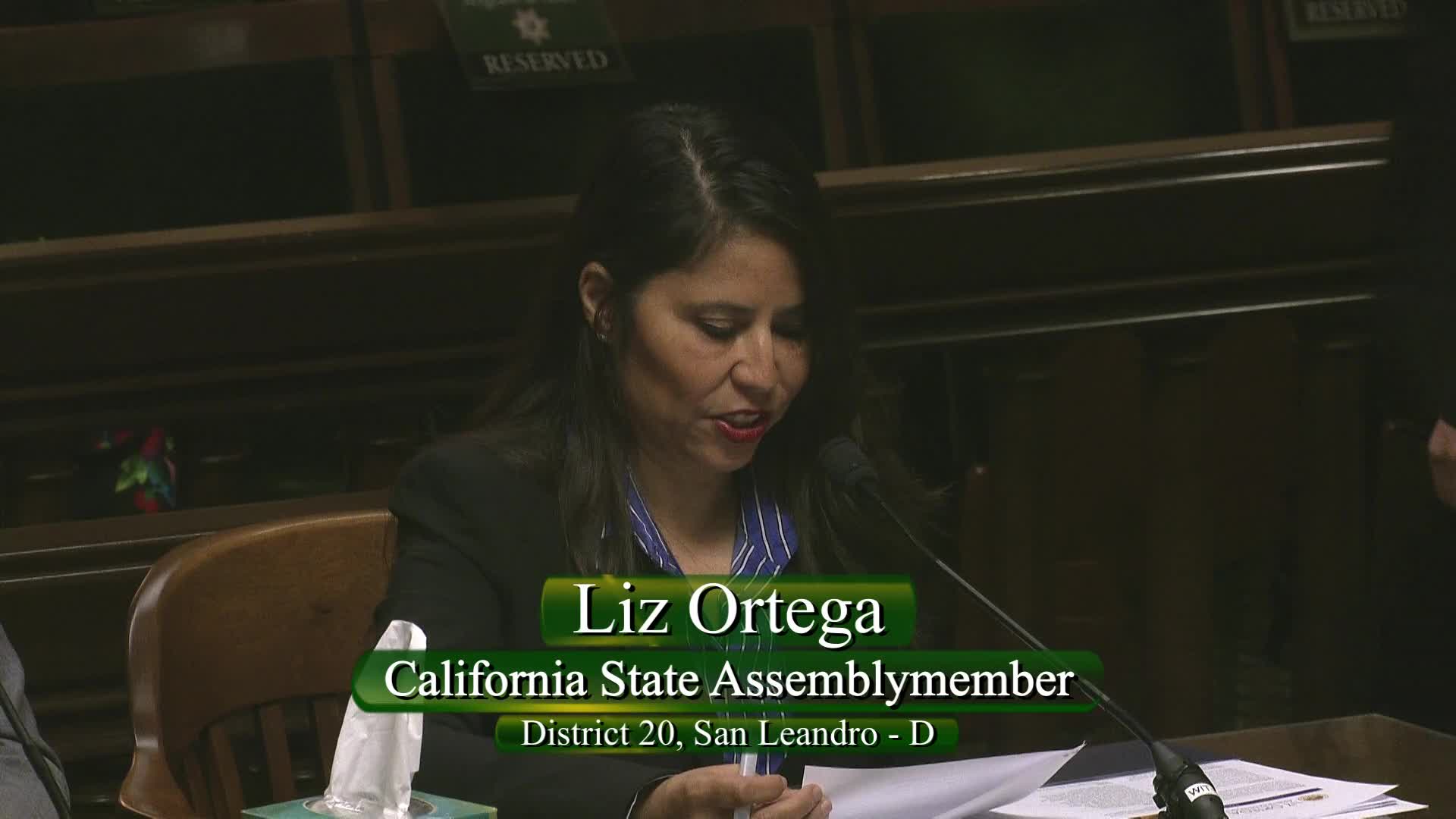
Assemblymember Lorena Ortega’s AB 13 29 was advanced to the Appropriations Committee after proponents said the bill modernizes processes that govern claims from workers with preexisting disabilities and would lower employer assessments.
Supporters, including the California Applicants’ Attorneys Association, asked the committee to align the fund’s medical‑legal (QME) procedures and the definition of permanent disability with general workers’ compensation law. Jason Marcus, legislative chair for the California Applicants’ Attorneys Association, cited a 2024 RAND study at the request of the Department of Industrial Relations and said aligning procedures would reduce litigation and medical‑legal costs and lower assessments by 20–25%.
Opponents representing carriers and public agencies—led by Jason Schmelzer of the California Coalition on Workers’ Compensation, the California Association of Joint Powers Authorities, the American Property Casualty Insurance Association and the Chamber of Commerce—said they were preparing amendments. Schmelzer noted that total SIBTF payments grew from $13.6 million in 2010 to about $232 million in 2022 and flagged concerns about eligibility definitions and QME adjustments. He said proposed amendments would remove eligibility questions and focus on QME adjustments.
Committee members asked questions and the author requested an “aye” vote. The committee recorded the measure as passed to Appropriations; later hearing log entries list the bill “out 14 to 0.”
If enacted, AB 13 29 would change how subsequent injury claims are adjudicated by defining eligibility standards and aligning the QME process with general workers’ compensation practice, according to proponents’ testimony. The transcript shows the parties agreeing to continue negotiations over technical amendments.