Get Full Government Meeting Transcripts, Videos, & Alerts Forever!
Get email alerts on the Workplace Privacy Surveillance topic
No spam. Unsubscribe anytime.
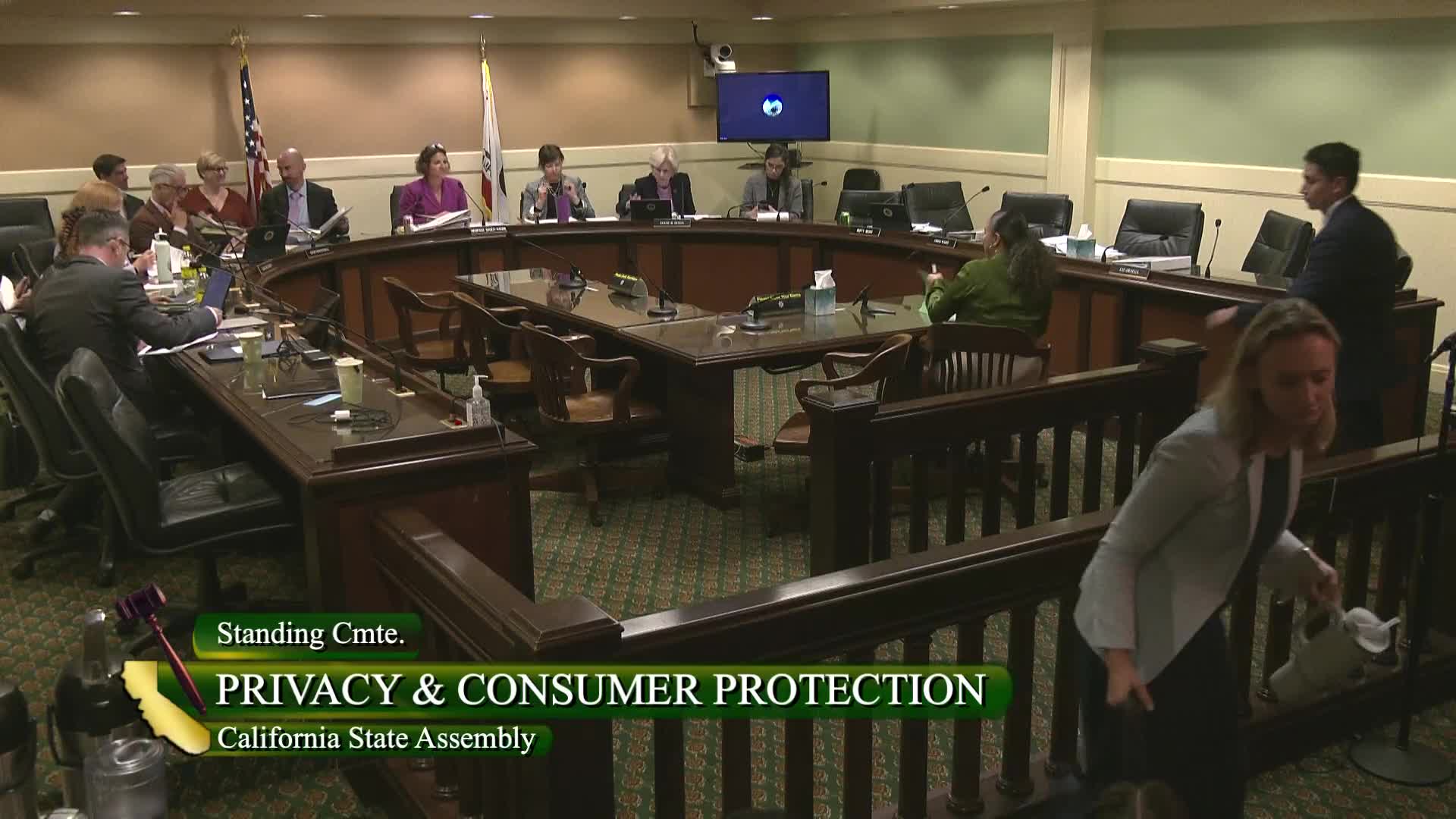
Committee advances AB 1331 to curb invasive workplace surveillance; unions support, broad business opposition
Summary
AB 1331 would limit employer surveillance in private spaces and off‑duty locations and require narrower limits on certain monitoring; labor unions and worker groups strongly supported the bill while hospitals, chambers and many business groups opposed or urged exemptions for safety‑sensitive settings.
Assemblymember Elwari’s AB 1331 was presented as a modernization of workplace privacy laws to respond to increasingly invasive employer technologies such as wearable trackers, facial recognition, speech monitoring and algorithmic productivity systems.
Labor unions, worker advocates and public‑interest groups testified in strong support, describing how surveillance disproportionately affects lower‑wage, Black, Latino and immigrant workers and can harm mental health, privacy and collective organizing. Yvonne Fernandez of the California Labor Federation said modern surveillance is “military grade” and urged the committee to adopt protections so workers are not monitored around the clock.
Opposition came from a broad coalition of business groups, hospitals, public agencies and insurers. The California Hospital Association said the bill, as drafted, is “not practical” for hospitals because cameras and security systems are integral to patient and staff safety; the association warned that prohibiting monitoring in common areas and parking lots could undermine protocols for violence prevention, infant protection and emergency response. The Cal Chamber and trade associations raised concerns about operational costs, cybersecurity monitoring, and legitimate security and compliance uses.
Members and the author discussed amendments to preserve surveillance in general public areas while prohibiting intrusive monitoring in explicitly private spaces such as bathrooms and locker rooms. The author and sponsors said they accepted committee amendments that allow common‑area cameras to remain operational while guarding private and off‑duty areas.
The committee recorded a vote to pass the bill as amended to the Judiciary Committee; the roll call showed five ayes recorded and the item was left on call for remaining members.