Get Full Government Meeting Transcripts, Videos, & Alerts Forever!
Get email alerts on the Csam Reporting topic
No spam. Unsubscribe anytime.
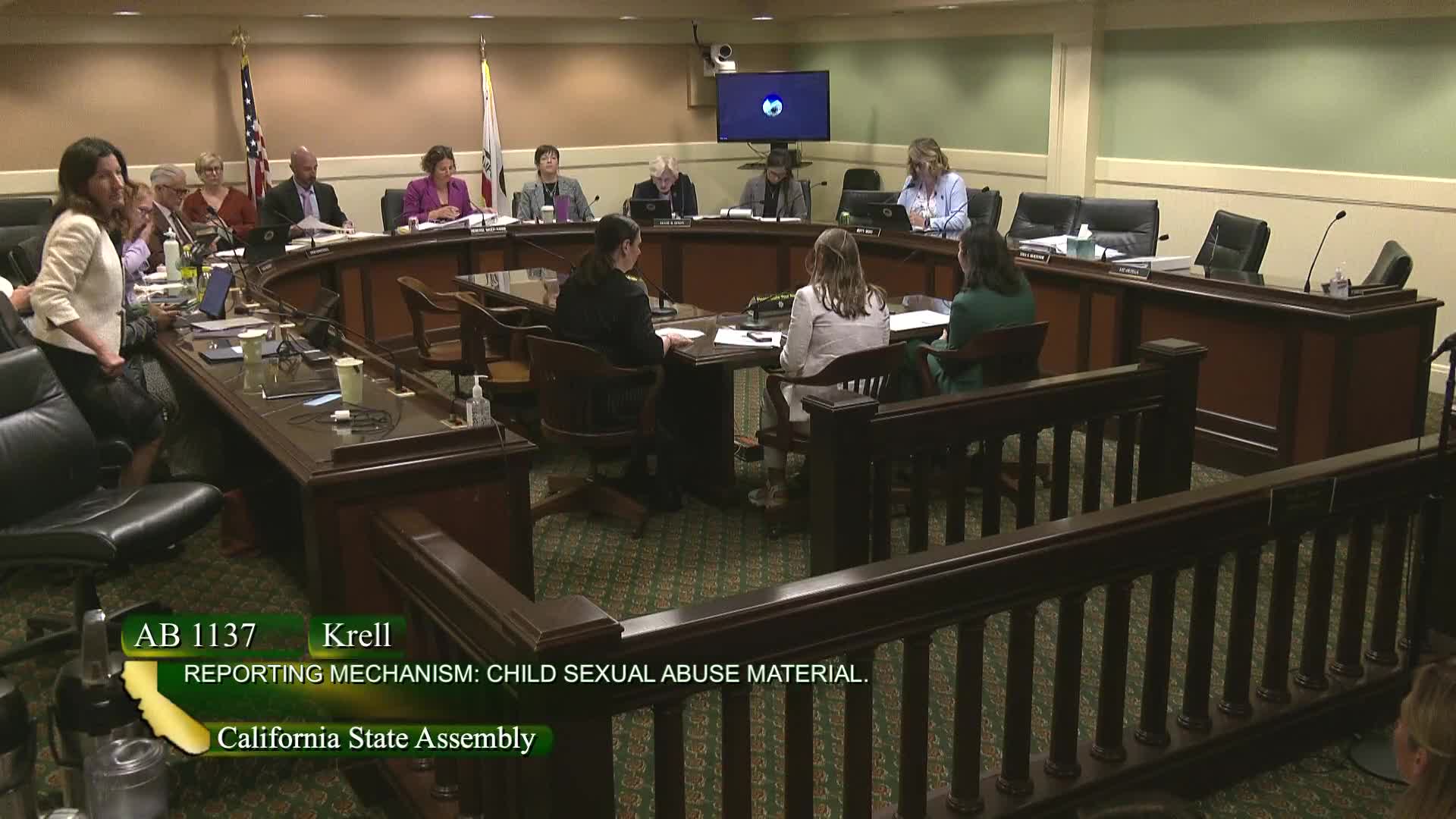
Assembly committee advances AB 1137 to expand and audit CSAM reporting on social platforms
Summary
AB 1137 would broaden who can report child sexual‑abuse material (CSAM) on social platforms, require clear reporting mechanisms and independent audits, and permit civil enforcement by public prosecutors; the committee advanced the bill while industry groups urged amendments to balance safety, automation and security concerns.
Assemblymember Krell presented AB 1137 as an implementation and strengthening measure to last year’s CSAM reporting law (AB 1394). The bill would allow anyone — not only a person depicted — to use the CSAM reporting mechanism, require that reporting tools be clear and conspicuous, mandate human review in certain cases where hash matches are not found, create biannual independent audits, and authorize public prosecutors to bring civil enforcement actions for noncompliance.
Survivor‑advocacy groups and service organizations told the committee the bill would relieve survivors of the burden of finding and reporting their own abuse and would require more rigorous review when automated systems cannot locate known CSAM. Hillary Evans of 3 Strands Global Foundation said the change “removes the painful burden that survivors currently face” and called for human review in non‑hash situations.
Industry witnesses — including TechNet, CCIA and others — said they support the goals but warned that human review requirements and public, detailed audits risk revictimization, worker harm (for moderators) and security risks by exposing moderation details to bad actors. TechNet proposed less frequent or non‑public third‑party audits and suggested better tailoring of enforcement to avoid penalties for inadvertent technical failures.
Committee members said they supported the bill’s goals and noted concerns about moderator mental‑health impacts, audit frequency, and the need to avoid creating information that would help criminals. The author said she would continue to work with industry and advocates on definitions, auditor scope and public‑reporting requirements.
The committee recorded a vote to send AB 1137 to the Judiciary Committee; the roll indicated the motion carried and the bill was placed on call for additional votes.