Get Full Government Meeting Transcripts, Videos, & Alerts Forever!
Get email alerts on the Public Safety topic
No spam. Unsubscribe anytime.
House approves bill to expand benefits and powers for municipal police after heated debate
Summary
The Puerto Rico House of Representatives approved Proyecto de la Cámara 139, a measure to extend benefits and some powers to municipal police and shift associated costs to the Commonwealth; the bill drew sustained debate over its interaction with the ongoing police reform and potential fiscal and civil‑rights implications.
Representative Ángel Morey, author of Proyecto de la Cámara 139, told the House on April 22 that the bill seeks “to do justice” for municipal police by extending benefits and privileges now enjoyed by state police and having the Commonwealth assume the increased cost rather than municipalities.
The measure, which passed the chamber after amendment, would align certain benefits and legal protections between municipal and state officers and has provisions authorizing the State to assume the fiscal burden of those benefits. “This project recognizes the need to extend benefits and privileges that previously were limited to state police,” Morey said during floor debate.
The bill drew sustained opposition from Representative José Márquez Lebrón and the Puerto Rican Independence Party delegation, who said key provisions risked undermining the federally supervised reform of the Puerto Rico Police. Márquez Lebrón warned the measure could “trastocar el proceso de reforma” overseen in federal court and cited a security‑department critique saying the reform process is “únicamente vinculante al negociado” (the state police). He also raised concerns about fiscal impacts and potential agreements between municipal forces and federal agencies that could produce unintended civil‑liberties consequences.
Supporters, including Representative Vargas Laureano (co‑sponsor), said municipal police frequently are the first responders and that the bill answers long‑standing disparities. “This measure seeks to make justice for municipal police so they can perform their duties and we can protect the families of officers who have died in the line of duty,” Vargas Laureano said, noting about 30 municipal officers have died while serving.
Floor debate addressed three separate threads: parity of compensation and benefits, preservation of municipal autonomy, and the bill’s relationship to the federal‑court–driven police reform. The bill was amended in committee to exclude municipal forces from the state police reform schedule; proponents said that change responded to municipalities’ concerns. Opponents said that exclusion risks fragmenting accountability and could complicate compliance with federal monitors.
Fiscal impacts were discussed on the floor. Morey cited an estimate in committee testimony—“unos 148.8 dólares al año” per capita impact—calling it a modest cost relative to the state security budget. Opponents disputed the adequacy of the fiscal analysis and argued the full budgetary effect had not been fully mapped.
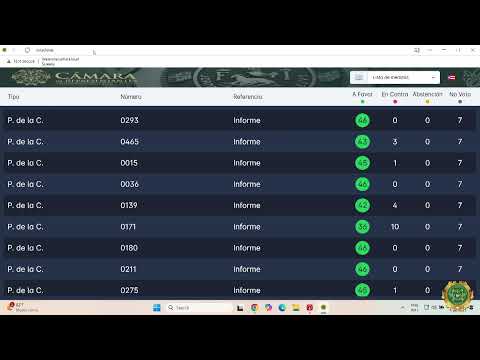
The measure passed in final vote 42–4. The House recorded the bill as approved; the next procedural steps are transmittal to the Senate and any further conference or technical corrections there.
Ending: The House approved Proyecto de la Cámara 139 as amended on April 22. The debate made clear the bill’s supporters framed it as a remedy for long‑standing disparities for municipal police, while opponents warned it could undermine federal reform efforts and impose unaccounted fiscal or civil‑liberties risks. No implementation timetable or effective date was specified on the House floor.