Get Full Government Meeting Transcripts, Videos, & Alerts Forever!
Get email alerts on the Budget Health topic
No spam. Unsubscribe anytime.
Forsyth County proposes benefit changes after sharp rise in health claims; staff seeks board sign‑off before open enrollment
Summary
County staff told commissioners April 21 that rising claims have driven the health plan toward a $5.3 million FY25 deficit and a projected FY26 funding gap. Staff proposed plan design changes, increased stop‑loss limits, pharmacy copay adjustments and a new five‑tier premium structure to reduce the gap.
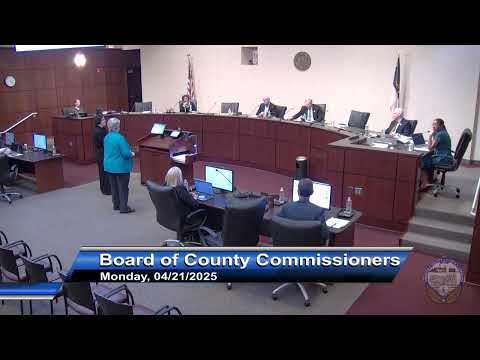
Forsyth County staff briefed the Board of Commissioners on April 21 about a sharp increase in health insurance claims that has left the county's self‑insured plan running a deficit and prompted proposed plan design changes for FY2026.
The county's benefits team and finance staff said that claims through March 31 exceeded the premium revenue the plan was budgeted to collect, producing a projected FY2025 internal fund shortfall of about $5.3 million. County leadership has identified $4.45 million of one‑time general‑fund balance to shore up the internal service health fund through June 30.
Why it matters: Forsyth County provides employer‑sponsored health coverage to roughly 4,000 members (employees, dependents and eligible retirees under age 65). The plan is partially self‑funded; changes to premiums and design affect county budgets and employee take‑home costs.
Findings presented - Claims and budget mismatch: Staff said 3‑year averages used in past forecasting under‑predicted current claims as staffing and use rebounded after COVID. The county's consultant and Cigna renewal data showed increasing claim costs. - Projected gap: Without changes, the FY2026 funding gap was estimated at about $7.8 million. Staff's proposed plan design changes reduce the gap to roughly $4.7 million; county contributions would cover about $4.1 million of that remaining amount.
Proposed short‑term changes for FY2026 - Change premium tiers from three to five (employee only; employee + child; employee + children; employee + spouse; family) to better align premiums with actual dependent composition and to offer more choice for employees. - Increase the stop‑loss attachment point from $175,000 to $300,000; staff said this reduces the county's stop‑loss premium and is supported by claims analysis showing relatively few claims in the $175k–$300k band. - Raise emergency‑room copay from $250 to $500 (waived if admitted). Estimated savings: ~$245,000. - Increase individual out‑of‑pocket maximum to $5,000 and family maximum to $10,000 (estimated savings: ~$942,000). - Raise some prescription copays (estimated savings: ~$380,000). Specialty drug copay suggested at $100 (current $60) and other small adjustments. - Cigna renewal includes an annual administrative credit (~$600,000) and higher pharmacy rebates (~$1.45 million projected) that will be applied to the plan.
Net effect and next steps Staff estimated that the package of plan design changes would save about $3.09 million and reduce the FY2026 gap to $4.7 million; the county share of the remaining gap would be about $4.1 million under the proposed premium and employer contribution levels presented to commissioners. The county plans to rebid the health plan for FY2027 and examine additional plan design options (including possible high‑low or HSA options) in that procurement.
Board reaction and timeline Commissioners and staff said they were uncomfortable with some of the employee impacts but acknowledged the magnitude of increased claims and the short timetable for open enrollment. The manager's office said it would prepare the plan changes and a resolution for board action in the coming week so open enrollment can proceed on schedule.
Clarifying details - Members: approximately 4,000 employees, dependents and retirees under 65 are on the plan (staff figure). - FY2025 projected internal fund deficit (to June 30): ~$5.3 million (staff projection through March 31 claims data). - One‑time transfer proposed from general fund to health internal service fund for FY2025: $4.45 million.
Ending Staff will issue open‑enrollment materials and return with a formal board resolution on the proposed FY2026 plan design on the next public meeting agenda; staff said they will continue to work with benefits consultants to seek longer‑term solutions for FY2027.