Get email alerts on the Public Safety topic
No spam. Unsubscribe anytime.
Forsyth County study finds gaps in fire coverage; staff recommends systemwide funding and policy changes
Summary
A staff fire‑service study presented April 21 found uneven coverage, steep declines in volunteer staffing and growing reliance on mutual aid. County staff recommended operating and funding fire services as a system, creating an advisory fire commission and a systemwide capital plan.
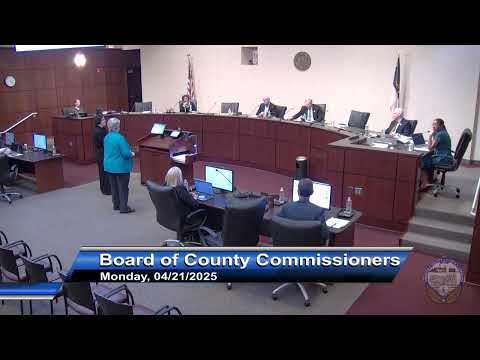
At an April 21 Forsyth County briefing, staff presented the county's fire‑service study and recommended shifting to a systemwide approach to funding and operations after finding coverage gaps in parts of the county.
The report, led by Deputy County Manager Kyle Haney, said primary concerns are declining volunteer participation and uneven resources across the county's 25 fire tax and service districts. "The basic coverage is not being met in some areas of the county," Haney told commissioners as he summarized the study group's findings.
Why it matters: county residents in different tax districts currently receive markedly different levels of funding and staffing. That variation has produced differences in response times and a growing dependence on automatic mutual aid when local apparatus or personnel are unavailable.
Key findings and evidence - Volunteer decline: The study group found volunteer rosters had fallen from more than 1,000 volunteers historically to about 285 countywide; only 136 of those were certified for interior structural firefighting. Haney said volunteers now run roughly 7% of emergency calls. - Reliance on mutual aid: Several departments rely on neighboring units when personnel or apparatus are not available, a dynamic that can leave a tax district temporarily uncovered and shifts cost burdens between districts. - Funding disparities: The briefing cited large differences in district revenue. For example, the Clemens district receives roughly $2.7 million at an 8¢ tax rate while other districts bring in under $400,000 despite higher rates, a gap driven by differences in assessed property value and development patterns.
Staff recommendations - Operate and fund the county's contracted fire services as a coordinated system rather than as independent tax jurisdictions. Haney said the county should fund a minimum, countywide baseline of 24/7 coverage from the fire overlay district, and use individual fire tax districts to support needs above that baseline. - Create an advisory fire commission to build policies and priorities that apply systemwide, including uniform training definitions, common policies for use of personal vehicles and a recommended, system‑wide pay plan for part‑time and full‑time positions. - Commission a systemwide capital improvement plan (CIP) and hire a consultant to assess facilities, apparatus and equipment needs so replacements and repairs can be prioritized over time. - Revise county contracts with nonprofit and municipal fire departments to clarify expectations and measures for both sides and to explore more predictable funding approaches for multi‑jurisdictional departments.
County and fire officials' responses Several volunteer and combination‑career chiefs attended the briefing and expressed support for the proposed direction. Chief Gary Stiers (Clemens), Chief Carl Walker (Piney Grove) and Chief Walt B. Roth (Vienna) were among the chiefs who participated in the study group and spoke during the briefing about the operational challenges; Walkertown Chief Eddie Bottoms participated but was not present at the briefing.
Commissioners praised the engagement of the chiefs and staff. Commissioner McDaniel said the change will be difficult but necessary, and lauded the chiefs for endorsing the study team's recommendations.
Next steps and implementation risk Haney said the recommendations are a multi‑year program, not an overnight change. Staff proposed the overlay fund be used to seed the first year of systemwide capital work and called for the advisory commission to provide detailed policy and budget recommendations that will inform the FY2026 budget process. The presentation flagged a medium implementation risk because several recommendations require interagency coordination, potential contract changes and multi‑year funding commitments.
Clarifying details - Volunteer headcount: ~285 volunteers countywide; ~136 certified for interior firefighting (study group figures). - Tax districts: 25 separate service/tax districts funded to 16 contracted departments. - Example revenues cited: Clemens ≈ $2.7 million at an 8¢ rate; smaller districts under $400,000 despite higher rates.
Ending Haney and the chiefs requested that the board establish the advisory commission to steer policy, priorities and the proposed system CIP. Commissioners signaled broad support for moving the recommendations forward and said they expect staff to return with proposed commission membership, a timeline and cost estimates as part of the FY2026 budget cycle.
AI generated
The text on this page is AI generated. Summaries, highlights, analysis, and video transcripts are all produced from the original source material.
AI can make mistakes, so if you spot one, and we will fix it for everyone.
Note: the source content is unaltered by us. Any content source we link to, be it a video, an audio recording, or a document, is presented exactly as its publisher released it. That publisher is usually a government body, sometimes an individual official or another organisation.