Get Full Government Meeting Transcripts, Videos, & Alerts Forever!
Get email alerts on the City Budget topic
No spam. Unsubscribe anytime.
San Mateo projects $15.2 million general fund deficit for 2025-26; officials propose mix of reserves, cost recovery and a possible revenue measure
Summary
Finance Director Karen Huang told the San Mateo City Council on April 20 that the preliminary 2025-26 general fund budget projects a $15.2 million shortfall on $172.4 million in revenue; staff proposed drawing on reserves, expanding cost-recovery and possibly placing a revenue measure on the 2026 ballot.
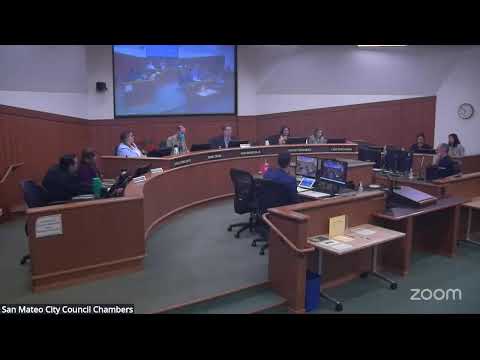
Finance Director Karen Huang told the San Mateo City Council at a special meeting Monday, April 20, 2025, that the preliminary 2025-26 general fund budget projects a $15.2 million deficit on $172.4 million in revenue.
Huang said the city built the forecast on conservative assumptions amid national economic uncertainty, budgeting 4% growth in property tax, assuming sales tax will stay flat and including only half of a proposed state backfill for the vehicle license fee (VLF) shortfall. She told the council staff had budgeted the real property transfer tax at a baseline of $8 million plus $600,000 tied to Measure CC and set transient occupancy tax at about $4 million.
“The best course of action actually is go back to our fundamentals and look at our core revenue and see our core financial status,” Finance Director Karen Huang said. “We are taking a more conservative approach when we develop the budget.”
Why it matters: The projected shortfall would force the city to draw on stabilization reserves and consider a combination of one-time and ongoing strategies — including increased cost recovery, temporary use of reserves and exploring a 2026 revenue measure — to protect services and fund capital projects cited as city priorities.
Key revenue and expenditure figures presented
- Projected 2025-26 general fund revenue: $172.4 million (preliminary). Huang said a full state backfill of the VLF shortfall would add about $3.3 million and raise the total to roughly $175.7 million if it materializes. - Projected 2025-26 general fund expenditures: $187.6 million. - Resulting budget gap: approximately $15.2 million. - Beginning general fund balance (estimated): about $112 million; projected ending balance after the deficit: roughly $70 million to $75 million. - Personnel costs: about 70% of general fund expenditures. - Transfers out (including contribution to CIP): $11.2 million; of that, $3.0 million is debt service and $410,000 is equipment/replacement set-aside. - Insurance premium increase: projected to rise by roughly $1 million (about 23%). - Pension stabilization set-aside: $10 million.
Assumptions and risks
Huang described multiple economic risks used in the forecast, including elevated interest rates, trade policy shifts and volatility in markets. The city assumed conservative receipts for the VLF backfill and budgeted only half of the city’s $6.6 million portion of the state VLF shortfall as revenue in 2025-26, citing uncertainty about a full state payment. She also said housing market resilience led staff to assume modest property tax growth, while sales tax was budgeted as flat.
Staff proposals to address the gap
Huang outlined several actions already underway and under consideration to reduce the budget gap:
- Cost recovery: departments reviewed fee schedules and are enhancing mechanisms to charge CIP staff time back to capital projects; Huang estimated this could reduce the general fund burden by about $1 million per year. - Temporary use of reserves: staff identified excess reserves in the workers’ compensation fund and proposed lowering that reserve to provide roughly $1.5 million per year in budget stabilization for the next three years (Huang described this as temporary relief). - Pension management: Huang said CalPERS’ smoothing and amortization policies mean any new unfunded liability is phased in over several years; the city retains a $10 million pension stabilization reserve and will consider discretionary pension payments only if surplus funds are available. - Grants and economic development: staff are engaging a grant-writing consultant and developing an economic development action plan intended to increase non-tax revenues. - Possible 2026 revenue measure: Huang and staff indicated looking at a potential revenue measure for 2026 to cover infrastructure and long-term capital needs, noting that capital demands exceed ongoing revenue. - Community budgeting: staff proposed setting aside $500,000 from Measure CC to pilot a community-based budgeting process; council members debated whether to move forward immediately or request a smaller pilot and additional information.
Council and public response
Resident Mason Fong, a lifelong San Mateo resident, urged the council to use reserves for capital projects and to pursue revenue-generating strategies tied to city assets, saying, “You have $700,000,000 in reserves doing almost nothing that could be put towards those capital projects.”
Councilmember Diaz Nash said the presentation was “exhausting” but useful and pressed staff to update review criteria more frequently than the current midyear cadence: “We need to be looking at this much more regularly given the incredible volatility,” Diaz Nash said.
Several council members asked for more detail on specific line items. Councilmembers requested staff return in June with a proposed budget for council review and two public hearings scheduled before final adoption at the last council meeting in June.
Next steps
Huang said staff will return with a proposed budget for council review at a June meeting, followed by two public hearings and final adoption at the council’s last June meeting. Staff will also provide additional information on Measure CC revenues, the proposed community-budgeting approach and options to address insurance and pension cost pressures.
Ending note
Council discussion reflected tension between using reserves and preserving long-term stability. Staff framed several near-term, one-time tools as temporary measures while urging the council to consider structural options for 2026 to address capital shortfalls and persistent revenue pressures.