Get Full Government Meeting Transcripts, Videos, & Alerts Forever!
Get email alerts on the Public Safety Budget topic
No spam. Unsubscribe anytime.
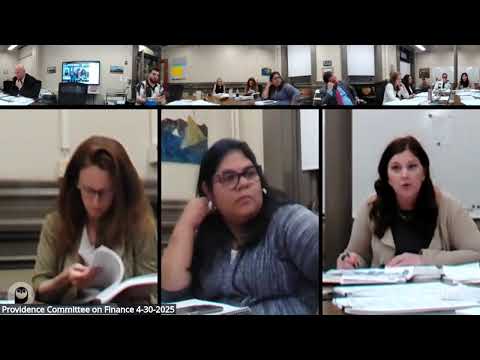
Finance committee presses public safety on overtime, union MOA and revenue from school bus cameras
Summary
Providence City Finance Committee on April 30 reviewed the Public Safety and Telecommunications budgets, pressing department leaders on rising overtime and callback costs, a memorandum of agreement with Local 1033 that increased wages for control-center operators, and new camera-based revenues from school buses and red-light enforcement.
Providence — The Providence City Finance Committee on April 30 reviewed the Public Safety and Telecommunications departmental budgets, focusing committee attention on rising overtime and callback costs, an in-year memorandum of agreement with Local 1033 that lifted call-center wages, and new camera-generated revenues shared with the city.
The hearing covered two linked budgets: Telecommunications, which the administration budgets to generate $750,000 in revenue in fiscal 2026, and the Police Department, whose proposed operating budget totals about $118.7 million for FY2026. Committee members pressed department leaders about the $159,641 line in Telecommunications tied to a Local 1033 MOA that raises control‑center pay, an internal reclassification that converts a telephone technician position into a radio‑repair technician, and vacancies that drive costly callback and overtime payments.
Why it matters: Public safety is the largest component of the operating budget and decisions about staffing, collective bargaining and technology affect response times, community policing, and the city’s fiscal capacity.
The Finance Department’s presentation said FY2026 Telecommunications revenue will remain level at $750,000 and outlined salary impacts from recent bargaining. “The idea there was to make the position more competitive for the market,” said David Redley, identified in the presentation as Telecommunications director, describing the MOA with Local 1033 to retain call‑center staff. Redley told the committee the department reallocated one funded telephone technician to a radio‑repair technician because the radio work requires more technical skills.
Committee members repeatedly asked how the city learned of the MOA after it had been executed and why Finance had not been involved earlier. The administration said some MOAs are handled by the Department of People and Culture during the year and later incorporated into budget documents. The committee requested copies of the MOA and related documents for review.
On overtime and callback, members noted the year‑to‑date callback spending was higher than the $1.8 million budgeted for FY2025. “This is unpredictable, and it drives significant costs,” Councilor Peterson said. Police officials said unexpected events, extended investigations and festivals can require extra staffing, and that long‑term staff shortages and workers’‑compensation absences have increased callbacks. The police presentation identified a multi‑year trend of retirements and vacancies that make staffing targets fragile.
The Police Department reported new and expanded camera revenues. Chief of Police Colonel Oscar Perez said school‑bus cameras implemented by the school district and administered through a vendor have begun to produce revenue; the city receives 12.5% of fines adjudicated by the Rhode Island Traffic Tribunal and the vendor and state receive the remainder. Perez said March receipts reflected a marked increase and the administration is pursuing legislative changes to secure a larger share of future revenue.
Committee members also discussed the police academy and grant support. The department has selected 40 recruits for an upcoming academy. The city expects a federal COPS grant to partially fund 20 of those positions; the grant will pay up to $125,000 per officer over three years and covers salary and benefits for a declining federal share (about 40% in year one). The Finance Department said the general‑fund share of those positions has been budgeted.
Council members asked for more granular tracking of revenues and of overtime/ callback by cause, and requested the MOA and associated documents from People and Culture. The committee also asked the police for a clear accounting of the traffic‑camera funds that by ordinance dedicate a share to traffic‑safety projects.
The committee voted to accept the department presentations for the record; the vote was taken by voice and recorded as approved.
Looking ahead: The committee requested follow‑up documents — the Local 1033 MOA, detailed overtime and callback reconciliations, the COPS grant terms, and reconciliation of traffic‑camera revenues and transfers — and scheduled further review as the budget process continues.