Get Full Government Meeting Transcripts, Videos, & Alerts Forever!
Get email alerts on the Wildfire Preparedness topic
No spam. Unsubscribe anytime.
Big Sur Fire announces two‑year funded hand‑crew program for wildfire readiness; residents and agencies urge regulatory clarity
Summary
Big Sur Fire announced a new, privately funded 21‑person hand‑crew program intended to expand local wildfire preparedness and response capacity, with training, equipment and two years of initial funding from a private donor.
Big Sur Fire announced a new, privately funded 21‑person hand‑crew program intended to expand local wildfire preparedness and response capacity, with training, equipment and two years of initial funding provided by a private donor.
Fire Chief Matt Harrison outlined the plan as a 21‑member team divided into five modules that will work 40 hours per week on non‑emergency vegetation management, defensible‑space improvements (Zone 0/Zone 1 focus), and critical ingress/egress road clearances. He said the program is fully funded for two years and that the department had received 64 applicants for positions and will give preference to Monterey County and local residents. Harrison said the initial funding would cover vehicles, tools, chippers and salaries and that additional revenue could come from mutual‑aid deployments and service contracts with federal or state land managers.
Harrison described the program as “a non‑emergency entity working 40 hours a week to prepare this community for wildfire,” and said the crew would also respond on wildland incidents under mutual aid. The department described a budget envelope “up to $4,000,000” for initial establishment and two years of operation.
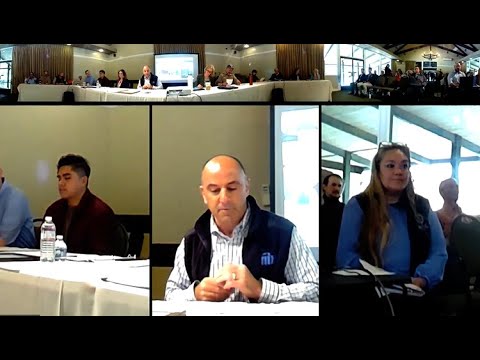
Several speakers at the council meeting — including county planning staff, a representative of the California Coastal Commission, and residents active on fuel‑reduction topics — welcomed the program but urged early coordination to avoid permitting conflicts and environmental impacts. Coastal Commission representatives and Monterey County planning staff said large‑scale fuel projects often qualify for programmatic pathways but noted that environmental‑sensitive‑habitat rules can apply outside the standard permit process. Residents and local advisory members asked that resource and habitat advisors be integrated into planning so that work in chaparral, red‑legged frog habitat or monarch butterfly areas is handled with appropriate mitigation.
Harrison said private property work will be easier to authorize than work on state or federal lands and said the crew would incorporate resource advisors when outside private property. He emphasized the program will prioritize defensible space within 30 feet of structures and critical road routes, and said the crew can be paired with the county’s chipper program to remove material.
Council members asked how community members can request work by the crew; Chief Harrison said he planned to use a request system modeled on the county chipper program and that the department would report back on operations at a future meeting. Planning staff and the Coastal Commission proposed convening a cross‑agency meeting to align the program with the county’s Big Sur Land Use Plan and coastal permit requirements.
Ending — The hand‑crew launch was broadly welcomed as a practical, funded response to wildfire risk, but local officials and residents pressed the fire department and regulatory agencies to jointly clarify permit paths and ecological safeguards before program scale‑up.