Get Full Government Meeting Transcripts, Videos, & Alerts Forever!
Get email alerts on the Public Safety Technology topic
No spam. Unsubscribe anytime.
State Parks installs automated license-plate reader at Point Sur; community seeks data and process transparency
Summary
California State Parks representatives defended a new automated license‑plate reader camera installed near the Point Sur entrance, saying the device is intended as a law‑enforcement “force multiplier” to help flag stolen vehicles, felony‑associated cars and AMBER alerts.
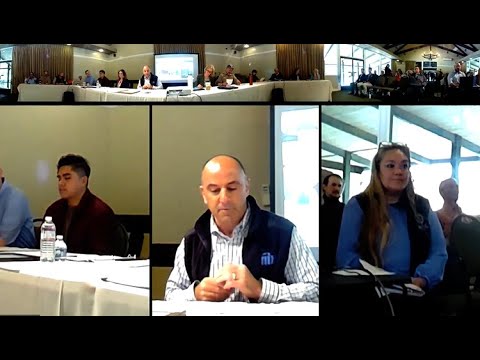
California State Parks representatives defended a new automated license-plate reader camera installed near the Point Sur entrance, saying the device is intended as a law-enforcement “force multiplier” to help flag stolen vehicles, felony-associated cars and AMBER alerts. The installation drew sustained public concern at the Big Sur Multi-Agency Advisory Council meeting about information-sharing, data retention and whether the community had been given advance notice.
State Parks Chief Ranger Mike Dippel said the camera is part of a statewide ALPR network and is intended to alert officers to wanted or stolen vehicles and give officers a 10–15 minute heads-up when a flagged vehicle approaches. He described the system as focused on “stolen vehicles, felony vehicles and AMBER alerts” and said State Parks deletes its camera data on a 30-day cycle unless footage is retained as evidence.
Residents and local officials said the agency failed to consult the community before installing the device and asked for regular public reports showing vehicle counts and times to inform land‑use and visitor‑management decisions. Council member Martha Neal pressed State Parks for aggregated vehicle-count data to assist traffic‑capacity planning on Highway 1. Dippel and other State Parks staff said they can provide southbound counts and time‑of‑day breakdowns in aggregate.
Speakers also asked who can access the camera feed and whether data could be shared with federal agencies or third‑party data brokers. State Parks said the ALPRs in California typically are connected to state law‑enforcement databases (Cal DOJ / CLETS) and that sharing is restricted to state and local agencies; Assemblymember representatives at the meeting noted proposed state legislation aimed at restricting the sale and broad sharing of such data. State Parks said their agency’s retention policy is 30 days and that the system does not perform facial recognition or collect names or Social Security numbers.
Law enforcement officials at the meeting, including Monterey County Sheriff and the CHP commander for the area, said the cameras have helped solve crimes and locate missing people in other jurisdictions and that the devices are intended to increase officer and public safety given limited local policing resources. Some residents urged stronger safeguards: clarifying exactly which agencies may query the network, whether third‑party vendors retain copies, and whether deidentified summary data could be made regularly available to the public.
The council requested that State Parks share aggregated vehicle counts and timing data and that agencies coordinate in advance before installing additional equipment in the Big Sur corridor. Assemblymember staff and Coastal Commission representatives also said the state legislature and the commission are watching ALPR use closely; two state bills (SB 274 and AB 1499) were mentioned in the meeting as part of a broader legislative effort to limit sale/sharing of such data.
State Parks said it will supply aggregated counts to the council and follow up about policy details, including whether any agency other than the state can retain camera data longer than 30 days.
Ending — The camera prompted intense local interest in balancing public‑safety uses with privacy and process expectations. Council members and State Parks agreed to follow up with aggregated traffic counts and to discuss a clearer, pre‑installation consultation process before future sensor placements in the Big Sur corridor.