Get Full Government Meeting Transcripts, Videos, & Alerts Forever!
Get email alerts on the Water Conservation topic
No spam. Unsubscribe anytime.
Derby updates water‑conservation rules to align with Wichita stages; first reading set, council schedules second reading
Summary
Council gave first reading to amendments aligning Derby's emergency water regulations and conservation plan with Wichita's multi‑stage drought framework; council moved to provide feedback and set a second reading, and staff explained impacts of stages, contract terms and smart‑meter benefits.
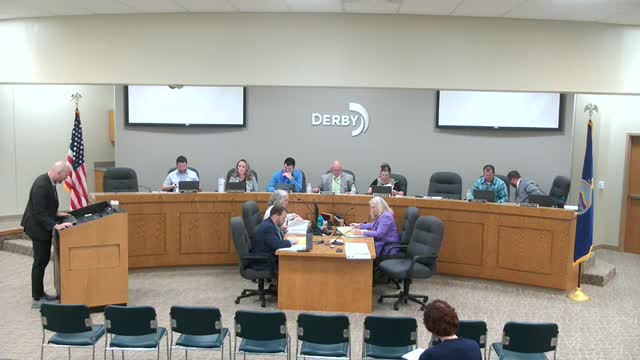
Derby City Council on April 22 held a detailed discussion of emergency water regulations and an updated water conservation plan and approved a motion to provide feedback on the updates and schedule a second reading. The city is updating code and plan language to align with Wichita’s four‑stage drought framework under the wholesale purchase contract while preserving flexibility for local application.
City Manager Cal Mangus (Mangus) and staff reviewed the city’s history as a water purchaser from Wichita and explained how the conservation plan ties to the city’s contract. Derby purchases most of its treated water from the City of Wichita; staff said Derby recently purchased roughly a billion gallons a year on average, but purchases fell in a drought year when customers conserved. Under the city’s March 2020 wholesale contract Derby follows Wichita’s conservation measures when Wichita triggers stages tied to reservoir and aquifer conditions.
Staff outlined the proposed change to add a fourth stage that would match Wichita’s critical “stage 4,” and to adjust ordinance and plan wording to reflect operational practice. In practice, staff said, stages are implemented by a short‑term operational plan rather than by passing new ordinance language each time, which allows faster responses to changing conditions. Under the proposed framework, Stage 3 (water emergency) would ban most outdoor watering; Stage 4 would add indoor‑use reductions (staff cited a 15 percent reduction target relative to average winter consumption used by Wichita) and stricter prohibitions such as a halt to new pool permits.
Cal Mangus said Wichita’s new treatment plant and the Equus Beds aquifer make regional supply planning complex; staff described Wichita’s progress on testing a new plant and the role of Cheney Lake and Equus Beds in regional supply. Derby staff said they will continue to push Wichita for clearer data on regional savings because wholesale purchases and supply availability affect Derby customers directly.
Council members asked about private wells (staff said private residential wells are regulated by the Kansas Department of Water Resources and are not automatically subject to municipal watering restrictions; the city would coordinate with the state if conditions required regulation of private wells), smart meters (Derby has roughly 11,000 smart meters and staff encouraged customers to sign up on the portal so unusual usage or leaks are detected), and potential billing changes if Stage 4 demand‑reduction measures are ever needed (staff said Derby would need to adjust billing calculations if moving to average winter consumption billing for enforcement purposes).
Council President Nick Engel moved to provide feedback on the updates and schedule a second reading; the motion carried 6‑0. Staff said the conservation plan and ordinance language are posted on derbyks.com and that staff will continue communications and outreach as stages change. Council members repeatedly urged residents to conserve; staff emphasized the city will follow Wichita’s triggers while retaining local operational flexibility.