Get Full Government Meeting Transcripts, Videos, & Alerts Forever!
Get email alerts on the Homelessness Women Survivors topic
No spam. Unsubscribe anytime.
Bill would prioritize survivors of domestic violence and trafficking in future state shelter and housing funding allocations
Summary
SB 802 would require the state to consider survivors of violence and trafficking — including women and women with children — when allocating shelter and housing assistance funds; committee recommended the bill be referred to the Senate Housing Committee.
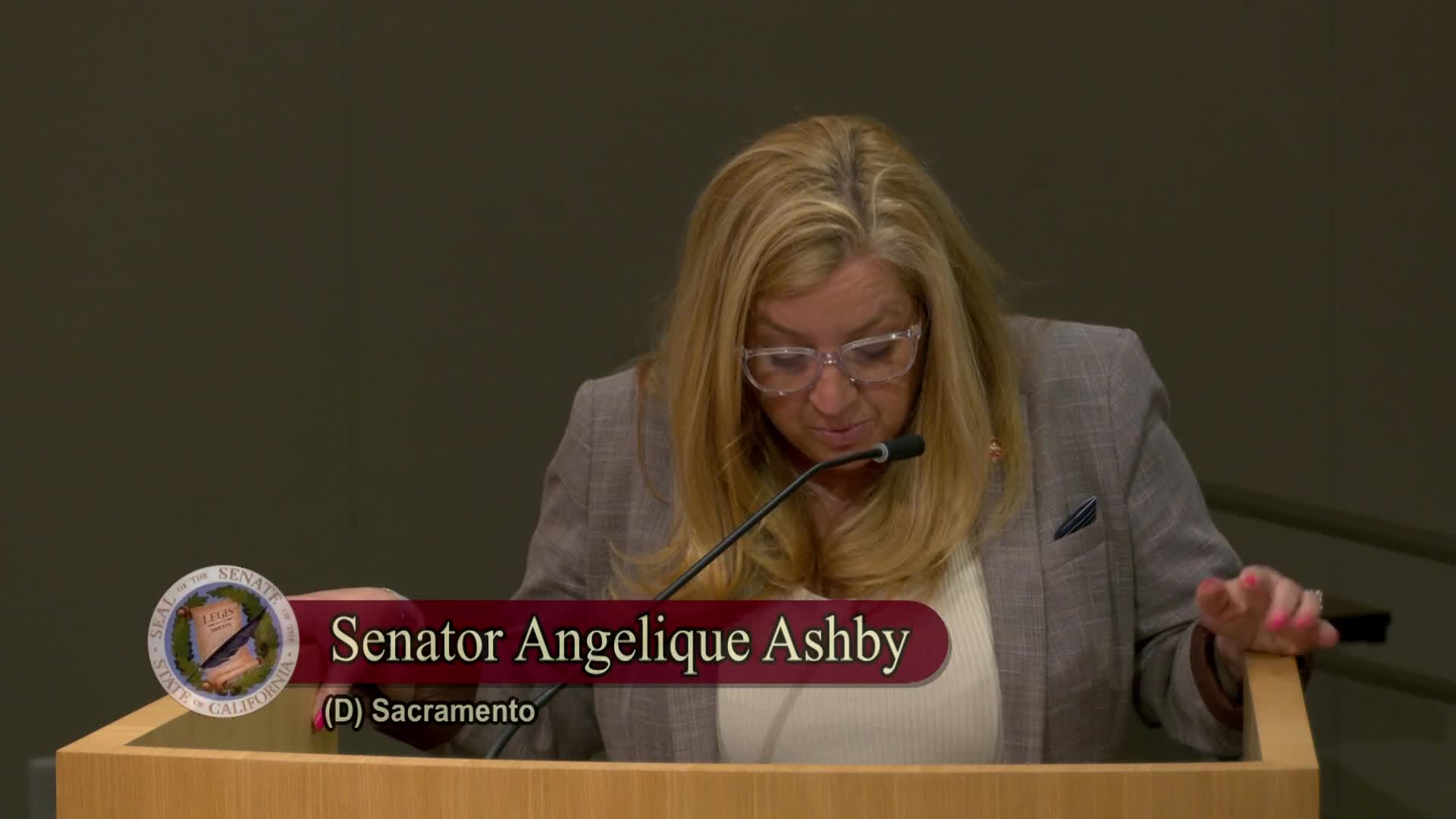
Sen. Ashby introduced SB 802, the Women’s Housing Priority Act, which directs state shelter and housing funding processes to prioritize survivors of domestic violence, sexual assault and human trafficking when awarding future shelter and housing assistance. The author and witnesses said co‑ed shelters frequently fail to meet survivor needs and that survivors often become homeless as a direct consequence of escaping abuse.
Chelsea Leonard of San Francisco Safe House and Joyce Blue, deputy director of the Sacramento Regional Family Justice Center and a survivor, testified in support. Leonard said San Francisco has seen women‑specific housing programs close or convert to co‑ed programs due to lack of funding; Blue said 40% of survivors who come to Sacramento’s Family Justice Center report homelessness tied to abuse and called the bill an “act of justice and compassion” that would create trauma‑informed, gender‑specific housing and services.
Supporters noted voter measures and local policy (for example, Proposition A in San Francisco) that created resources for gender‑specific housing. No witnesses testified in opposition at the hearing. The committee recommended the bill be referred to the Senate Housing Committee, recording a unanimous vote among members present (5–0).
The author said the measure is intended to close an unintended gap in existing homelessness funding and allocation rules and to increase resources for survivors who need single‑sex or women‑centered accommodations paired with wraparound services.
The committee’s action was a policy referral; fiscal implications and details of how priorities would be operationalized were left for subsequent committee review and implementing guidance.