Get Full Government Meeting Transcripts, Videos, & Alerts Forever!
Get email alerts on the Homelessness Youth Student Support topic
No spam. Unsubscribe anytime.
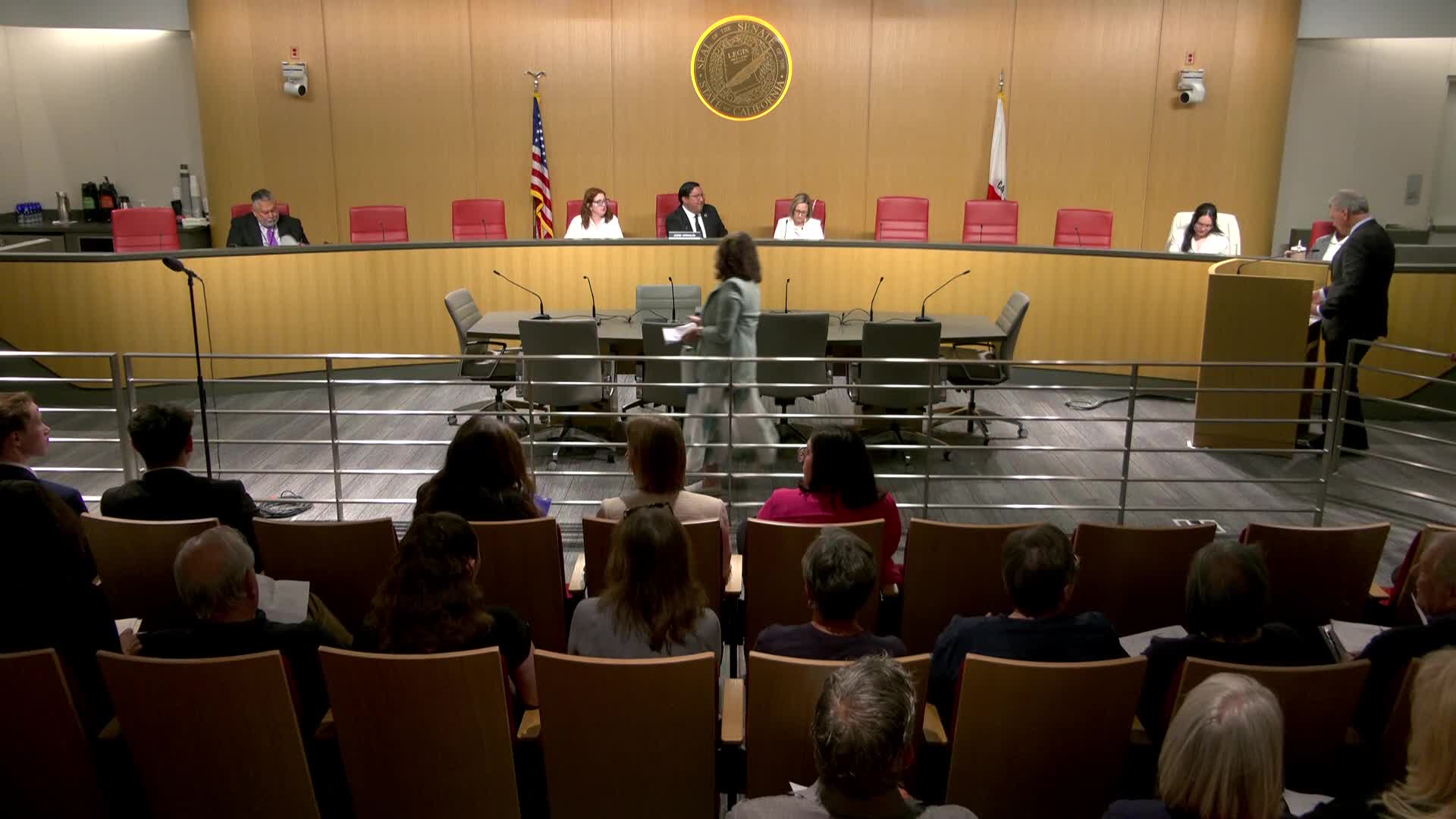
Senate committee hears bill to provide short-term cash aid to high‑school students experiencing homelessness
Summary
Sen. Cortese’s SB 33 would create a four‑month, no‑strings $1,000/month guaranteed income pilot for high‑school seniors who are experiencing homelessness; witnesses and a county pilot were cited in committee testimony. Committee recommended the bill be referred to appropriations.
Sen. John Cortese presented SB 33 to the Senate Committee on Human Services, proposing a statewide guaranteed‑income pilot that would give eligible high‑school seniors $1,000 per month for four months as they transition out of high school. The bill’s stated purpose is to reduce the risk that graduates who are homeless fall into long‑term adult homelessness or forgo postsecondary enrollment because of immediate financial instability.
The bill’s sponsor and supporters said the proposal mirrors smaller local pilots and an existing state program for transition‑age foster youth. Cortese told the committee there are more than 280,000 K–12 students in California who are at risk of or experiencing homelessness; he and witnesses estimated about 24,000 students graduate into homelessness each year. The sponsor said the program’s short duration is deliberate: the benefit is intended only to bridge the months between graduation and the start of work or school.
Melanie Jimenez Perez, identified in testimony as the guaranteed basic income program manager for Santa Clara County, described a county pilot of 175 participants (average age about 18) and said the local program had increased persistence in education and helped stabilize basic needs such as food and housing. Youth witness DJ Anthony Gaffield described his lived experience of homelessness after high school and said a short guaranteed payment after graduation could have allowed him to secure housing and pursue college earlier. Several advocacy organizations and counties stated support during the public‑comment period.
Committee members asked about work disincentives and the bill’s fiscal implications. Cortese and witnesses said past guaranteed‑income pilots generally showed beneficiaries used payments to look for work, continue education, or stabilize housing; they also emphasized the relatively small dollar amount and the fixed, temporary duration as limits on any disincentive effect. Committee members suggested appropriation questions would need to be addressed in budget hearings.
The committee recorded a motion to refer the bill to the appropriations committee (motion noted on the record); the clerk later recorded the committee’s vote as unanimous among members present (5–0) to send SB 33 onward for fiscal review.
SB 33 text ties into federal McKinney‑Vento protections for unhoused students and cites Santa Clara County pilots and the earlier SB 739 foster‑youth transition program as precedents. The committee recommended referral to the Senate Appropriations Committee for consideration of funding and implementation details.
Looking ahead, SB 33 would require an appropriation to operate at any meaningful scale; the bill’s author acknowledged the committee must evaluate fiscal impacts before statewide implementation.
At the hearing the main spoken authorities cited were the federal McKinney‑Vento Act and the local Santa Clara County pilot programs; no final appropriation was specified at committee action time.