Get Full Government Meeting Transcripts, Videos, & Alerts Forever!
Get email alerts on the Public Safety topic
No spam. Unsubscribe anytime.
Council approves $≈$4M radio system upgrade for public‑safety communications; quarterly status reports required
Summary
The Fresno City Council voted 5–1 on May 1 to authorize a multimillion‑dollar contract to upgrade the city's public‑safety radio system, requiring the vendor to guarantee modeled coverage and deliver quarterly implementation updates to the council.
The Fresno City Council approved a contract on May 1 to upgrade the city’s public‑safety radio communications system, moving the system from its current end‑of‑life configuration to simulcast base stations and upgraded hardware that staff and the vendor said will improve coverage and in‑building penetration.
Councilmembers debated technical details and long‑standing concerns about dead spots and in‑building reception before voting 5–1 to authorize the contract. The approved contract includes a vendor coverage guarantee and requires quarterly status reports to the council and a full implementation update planned for December 2026.
Background and technical briefing Tait Communications representatives described engineering work and modeling intended to address choke points that have produced intermittent reception and coverage gaps. Vendor engineers said the implementation is technical: the work requires replacing base stations and moving from unicast to simulcast transmission so multiple towers carry the same signals in synchronization, which improves coverage and redundancy; the vendor estimated a roll‑out of roughly 12–18 months. The contract includes warranty and service coverage and a vendor commitment to meet modeled coverage targets.
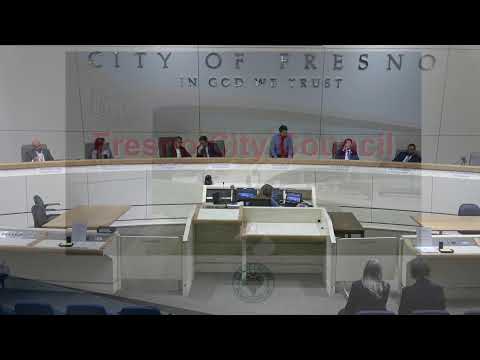
Council and public safety response Police and fire representatives joined staff in the Council chambers and told the council they had participated in review of vendor modeling and considered the proposed solution to address known coverage gaps. Multiple councilmembers pressed for specific assurances that the upgrade will improve in‑building reception in older downtown and multi‑story structures; vendor engineers said the modeling included a range of building penetration assumptions and promised additional site‑by‑site engineering where required.
Vote and reporting conditions Council President Carbassi moved to approve the contract and the motion was seconded by Councilmember Maxwell. The motion passed 5–1 with Councilmember Maxwell recording the lone “no” vote, citing continued concern about in‑building testing in specific high‑density buildings. Before the vote the council extracted a written commitment from staff and the vendor to provide quarterly public updates on implementation progress and to present a full technical status briefing in December 2026.
What the contract covers The purchased work is focused on upgrading radio base stations, associated hardware and software and does not add new tower sites; staff told the council existing tower locations plus upgraded equipment will provide the modeled coverage. Staff estimated the program cost at about $3.8–4.0 million and said a portion of the funding had been included in earlier budget proposals and the remainder is included in the FY‑26 budget planning package.
Implications and next steps Vendors and staff will begin the multi‑step roll‑out, including pre‑installation site work, progressive replacement of base station components and staged cutovers. Quarterly public briefings are required. Councilmembers asked staff to provide documentation of the vendor’s coverage tests and modeling for specific multi‑story buildings in the downtown core and other commonly cited problem sites.